Engineered with high-density 314Ah / 280Ah cells, active thermal management, and intelligent BMS for commercial, industrial, and utility-scale solar energy storage applications.
As global energy grids transition toward decarbonization, utility scale and C&I energy storage demand unprecedented longevity, safety, and financial return on investment (ROI).
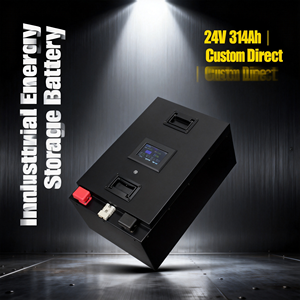
The global battery storage sector is undergoing a fundamental technological shift. Traditional 280Ah Lithium Iron Phosphate (LiFePO4/LFP) cells are rapidly yielding market share to 314Ah ultra-high energy density prismatic cells. By leveraging advanced cathode crystal stabilization and solid-electrolyte interphase (SEI) film self-healing chemistry, leading tier-1 manufacturers have unlocked operational lifespans exceeding 10,000 to 12,000 continuous charge-discharge cycles.
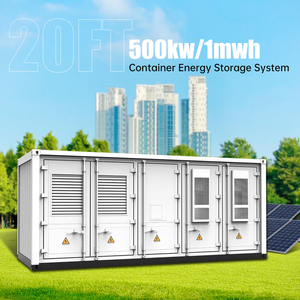
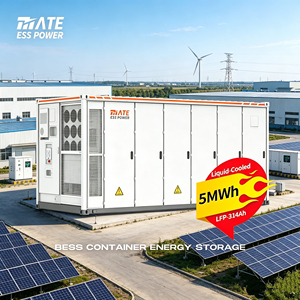
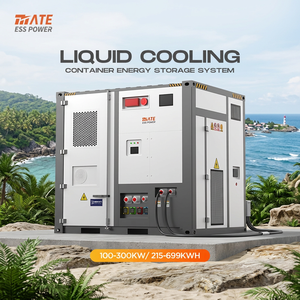
Furthermore, integration with liquid cooling thermal management systems maintains cell temperature differentials under ≤2.5°C across massive 5MWh 20ft/40ft containerized solutions. Compared to legacy air-cooled systems, liquid cooling reduces internal parasitic power consumption by over 30%, increases system energy density by 40%, and mitigates thermal runaway risk, assuring full compliance with stringent safety frameworks such as UL 9540A, IEC 62619, and UN 38.3.
Backed by over 120+ years of collective engineering experience across our technical core, we deploy fully automated assembly lines, robotic laser welding, and automated end-of-line (EOL) testing protocols for precision battery pack production.
Our manufacturing ecosystem strictly complies with international defense, aerospace, and medical-grade standards. Comprehensive failure mode and effects analysis (FMEA) guarantees zero-defect manufacturing for high-reliability projects.
Integrated dynamic active cell balancing (up to 5A balancing current) combined with IoT cloud management enables real-time monitoring of State of Charge (SoC), State of Health (SoH), insulation resistance, and predictive maintenance diagnostics.
A quantitative engineering comparison evaluating modern Long Cycle Life LiFePO4 against legacy and alternative battery chemistries for B2B procurement leaders.
| Performance Benchmark Metric | Ultra-Long Life LiFePO4 (314Ah) | Standard NMC Lithium Ion | VRLA / AGM Lead-Acid |
|---|---|---|---|
| Cycle Life (80% DoD @ 25°C) | 10,000 – 12,000 Cycles | 2,500 – 3,500 Cycles | 500 – 1,200 Cycles |
| Thermal Runaway Temperature | > 270°C (Exothermic Stability) | ~ 210°C (Requires Active Suppression) | Thermal Runaway Risk under Overcharge |
| System Level RTE (Round Trip Efficiency) | 94.5% – 96.0% (Liquid Cooled) | 90.0% – 92.0% | 70.0% – 80.0% |
| Levelized Cost of Storage (LCOS) | < $0.045 / kWh / Cycle | ~$0.11 / kWh / Cycle | ~$0.25 / kWh / Cycle |
| Volumetric Energy Density (Container Level) | Up to 5MWh in 20ft Container | Up to 3.8MWh in 20ft Container | Low Density (< 0.8MWh per 20ft) |
| Environmental & Safety Compliance | Zero Heavy Metals (Cobalt/Nickel Free) | Contains Cobalt/Nickel (Supply Chain Risk) | High Toxicity Lead/Acid Waste |
Navigating market shifts, raw material supply chains, regulatory standards, and total cost of ownership (TCO) optimization for global importers and EPC contractors.
Commercial and utility procurement strategies are shifting rapidly from 1000V DC architectures to 1500V DC high-voltage BESS designs. Higher system voltage significantly reduces cable copper usage, reduces AC/DC conversion losses, improves overall inverter conversion efficiency by up to 1.5%, and lowers balance of system (BOS) capital expenditure.
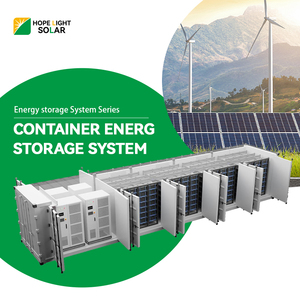
Modern overseas project timelines demand plug-and-play installation. Pre-integrated containerized systems—featuring factory-installed liquid cooling chasis, automated aerosol or gas fire suppression systems, isolation transformers, and power conversion systems (PCS)—reduce onsite commissioning time from months to weeks.
With EU Battery Regulation mandates and North American IRA clean energy requirements taking effect, buyers now require strict supply chain transparency. Full traceability of raw lithium materials, second-life recycling guarantees, and documented low-carbon manufacturing processes are becoming non-negotiable procurement criteria.
Expert insights addressing critical technical, warranty, custom engineering, and shipping questions for global BESS procurement.
Achieving 10,000 to 12,000 cycles requires a combination of premium cell chemistry and thermal control. Key drivers include: (1) Tier-1 314Ah cell design featuring nano-scale carbon-coated LiFePO4 cathodes; (2) Precision active thermal management keeping temperature variance under 2.5°C across all modules; (3) Operating within an optimized 80% Depth of Discharge (DoD) window; and (4) Smart BMS algorithms preventing over-voltage spikes and localized lithium plating during high C-rate charging.
Liquid cooling utilizes direct liquid plates touching battery cells, offering 300x higher thermal heat transfer capacity compared to air. This results in uniform thermal distribution (≤2.5°C vs. ≥5-8°C in air cooling), reduces internal parasitic auxiliary consumption by 30-35%, extends overall system service lifespan by over 20%, and saves up to 40% floor space by permitting tighter cell packing density.
For global compliance, high-voltage LFP storage systems must hold certified test reports for: (1) Safety & Transport: UN 38.3, MSDS, DG Class 9 Hazardous Freight Shipping certification; (2) Battery Cell & Pack Safety: IEC 62619, UL 1973, CE-LVD; (3) System Level Thermal Runaway Safety: UL 9540A test reports; and (4) Grid Interconnection: IEEE 1547, UL 1741 SA, and EN 50549 depending on target region.
Yes. Our smart BMS architectures natively support multi-protocol communications including Modbus RTU/TCP, CANbus 2.0B, DNP3, IEC 61850, and Ethernet. We routinely customize proprietary communications to seamlessly interface with major power conversion systems (PCS) such as SMA, Sungrow, Victron, Solis, Deye, and Schneider Electric.
We offer comprehensive performance warranties ranging from 10 to 15 years, guaranteeing minimum throughput energy retention (e.g., 70% residual capacity after 10,000 cycles at standard operational conditions). Extended service agreements, online cloud monitoring diagnostic support, and on-site spare part replacement modules are available for utility-scale projects worldwide.
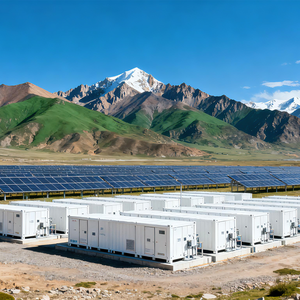
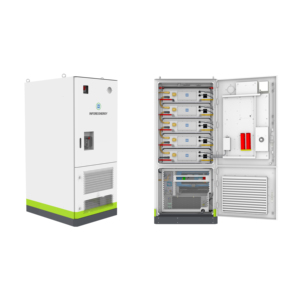
Whether you require a custom 215kWh cabinet for commercial peak shaving or a 5MWh containerized liquid-cooled system for a utility solar microgrid, our technical experts are standing by to assist with system sizing, simulation, and factory-direct quotations.