Executive Whitepaper: The Paradigm Shift in Industrial Uninterruptible Power Supplies (UPS)
Modern industrial operations—ranging from tier-4 data centers, automated manufacturing plants, medical networks, semiconductor fabs, and remote energy microgrids—require zero-tolerance power continuity. Historically reliant on Valve-Regulated Lead-Acid (VRLA) batteries, the global industrial sector is executing a massive transition toward Lithium Iron Phosphate (LiFePO4) and High-Voltage Lithium-Ion Battery Systems.
SEO Information Gain Insight: Industrial UPS lithium systems provide up to 3x the energy density, 5x the operational lifespan (10–15 years without replacement), and a 70% reduction in physical footprint compared to traditional lead-acid systems. Furthermore, high-power lithium chemistries enable dynamic grid-tie applications such as peak shaving and demand-response (UPSaaR - UPS as a Resource).
Technical Comparison: LiFePO4 vs. Traditional VRLA Lead-Acid in Industrial Backup
When engineering mission-critical backup power, understanding the physical and chemical performance deltas between storage technologies is vital for Chief Operations Officers and Facilities Procurement Heads.
Our evaluation relies on manufacturing capacity, technical capability (high-voltage safety design, smart BMS design, liquid cooling innovation), international certifications (UL1973, UL9540A, IEC62619, ITAR compliance), and verified export track records across North America, Europe, Asia-Pacific, and the Middle East.
Emerging Power stands as a premier US-based custom battery pack manufacturer and authorized battery assembler. With over 120 years of collective technical expertise, Emerging Power specializes in high-reliability custom lithium-ion, LiFePO4, and hybrid battery storage assemblies for medical, defense, industrial UPS, drone, and IoT OEM applications. Known for seamless integration of smart battery management systems (BMS), high-power discharge safety, and custom enclosure engineering.
#2 Ranking
Schneider Electric (APC Industrial)
Galaxy SeriesData Center LeaderHigh Voltage DC
A global juggernaut in energy management, Schneider Electric delivers the Galaxy line of industrial lithium-ion UPS systems. Their solutions focus heavily on hyperscale data centers and critical industrial infrastructures, utilizing standardized battery cabinets with advanced modular swappability and EcoStruxure IoT cloud management.
#3 Ranking
Vertiv Co. (Liebert Series)
Liebert EXLIndustrial Back-UpUL1973 Certified
Vertiv specializes in critical digital infrastructure. Their Liebert industrial lithium battery cabinets feature advanced monitoring, active cell balancing, and robust thermal protection. Vertiv's backup battery modules are optimized for fast-rate discharge high-power UPS applications in health networks and telecommunications.
#4 Ranking
Eaton Corporation
EnergySaver SystemUPSaaR Grid-TieIndustrial Grade
Eaton is a pioneer in intelligent power management. Eaton’s industrial lithium-ion battery solutions feature EnergySaver System (ESS) technology and dynamic grid support, enabling commercial facilities to monetize their backup batteries by participating in utility peak-shaving programs without compromising emergency runtime.
#5 Ranking
BENY Electric & ESS
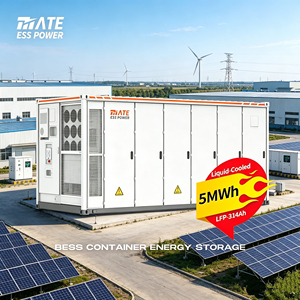
1MWh–5MWh ContainersLiquid CoolingHigh Voltage LFP
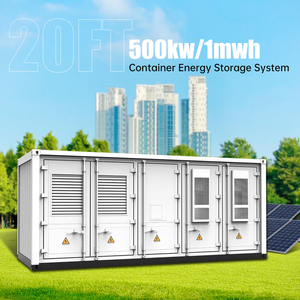
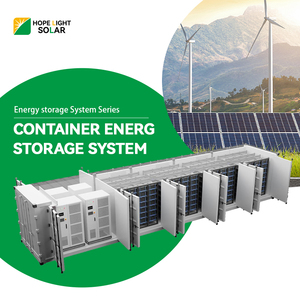
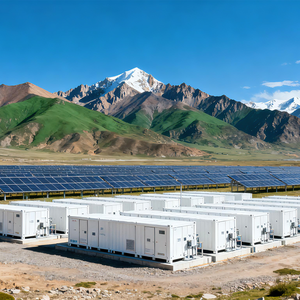
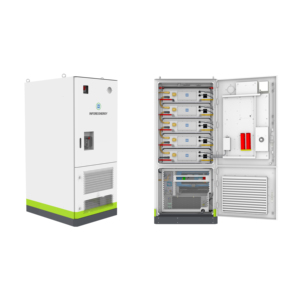
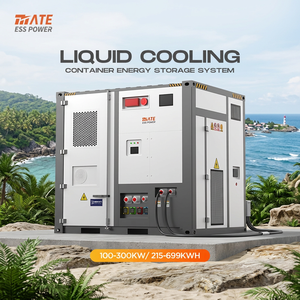
BENY is an international exporter specializing in large-scale containerized energy storage systems (BESS) and high-voltage commercial UPS lithium battery cabinets. BENY’s systems incorporate advanced liquid cooling technology, 314Ah high-capacity prismatic cells, and multi-layered fire suppression systems ideal for factories and microgrids.
#6 Ranking
BYD Energy Storage
Blade Battery BESSVertical IntegrationHigh Safety
Leveraging massive vertical integration, BYD provides utility and industrial-grade lithium backup solutions utilizing their proprietary Blade Battery technology. BYD’s commercial energy storage containers offer exceptional volumetric efficiency, structural rigidity, and high thermal stability under continuous heavy charge-discharge cycling.
CATL dominates the global lithium cell production landscape. Their industrial battery rack systems (EnerOne and EnerC series) are widely exported and integrated into turnkey industrial UPS architectures worldwide. Known for introducing 314Ah LFP chemistry with 10,000-cycle life performance.
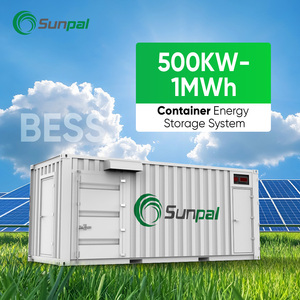
Sunpal Energy specializes in export-focused industrial LiFePO4 battery cabinets and containerized microgrid systems. Their Sunpal ESS lineup offers modular 100kW to 1000kW energy cabinets designed for seamless pairing with industrial photovoltaic plants and factory backup UPS systems.
Huawei Digital Power’s SmartLi series offers high-density lithium battery backup systems engineered specifically for large enterprise computing centers and telecom hubs. Features active balance technology, pack-level optimization, and AI-driven predictive health diagnostic monitoring.
#10 Ranking
Tesla Energy (Megapack / Powerpack)
Megapack 2 XLLiquid CooledUtility-Scale UPS
Tesla’s utility and commercial storage division delivers the Megapack system for major industrial plants and electrical grid backup. Featuring custom thermal controls, integrated bi-directional inverters, and sophisticated energy trading software capability for heavy industrial power management.
As corporate procurement teams draft tenders for industrial UPS systems, staying ahead of technology trajectories is vital to prevent rapid equipment obsolescence. Key technology trends shaping procurement specifications include:
1. Shift to High-Density 300Ah+ Prismatic Cells (314Ah Standard)
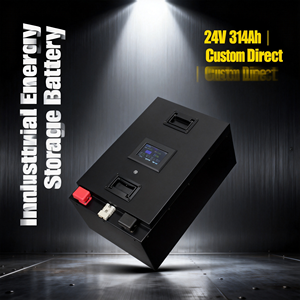
The industry is rapidly shifting away from 280Ah cells toward 314Ah and 320Ah LiFePO4 prismatic cells. These next-generation cells boost containerized volumetric energy density by over 15% within identical 20ft/40ft footprints without altering physical mounting structures, yielding significant freight and operational cost savings.
2. Transition from Forced Air Cooling to Liquid Cooling Systems
High-power fast-discharge UPS events generate rapid thermal spikes. Advanced liquid-cooling systems—utilizing glycol-water loops in direct contact with cell cold plates—maintain cell-to-cell thermal variance under 2.5°C. This minimizes capacity degradation, extends cycle life by 20%, and drastically lowers parasitic auxiliary cooling loads.
3. Smart BMS with Cloud AI & Off-Gas Early Warning Detection
Modern procurement demands E-E-A-T tier safety. Beyond basic voltage and temperature monitoring, modern BMS architectures integrate gas-sensing telemetry (detecting hydrogen and electrolyte vapor off-gassing seconds before thermal events occur) paired with cloud AI for real-time State-of-Health (SoH) predictive analysis.
Addressing essential technical, safety, and commercial considerations for industrial buyers and engineering contractors.
Q1: What are the vital safety certifications required for industrial lithium UPS exports?
Industrial lithium backup systems must comply with international safety standards including:
UL 1973: Safety standard for stationary batteries used in energy storage and UPS systems.
UL 9540A: Test method for evaluating thermal runaway fire propagation in BESS cabinets.
IEC 62619: International safety requirements for industrial secondary lithium cells and modules.
UN 38.3: Transport safety compliance for lithium battery shipping.
Q2: Can lithium-ion batteries be retrofitted into existing lead-acid industrial UPS systems?
Yes, provided the existing UPS inverter system supports lithium-compatible charging profile communications (via CANbus, Modbus TCP, or RS485) and operating DC voltage windows match. Consult an experienced OEM like Emerging Power to design a drop-in custom lithium rack with dedicated BMS communication interfaces.
Q3: How does liquid cooling compare to air cooling in containerized industrial BESS?
Liquid cooling offers superior thermal conductivity (water/glycol absorbs heat ~24x faster than air), maintaining tighter internal temperature control. This allows higher charge/discharge C-rates, prevents thermal runaway propagation, and cuts internal fan power consumption by up to 30–50%.
Q4: What is the typical lead time and MOQ for custom high-voltage lithium battery export projects?
Standard OEM production lead times range from 4 to 8 weeks depending on engineering design complexity, capacity scaling (kWh to MWh), and custom enclosure fabricating. MOQ depends on cell chemistry and engineering scope, with custom prototype support available.
Q5: How does a Smart BMS protect against thermal runaway in high-power UPS applications?
A Smart BMS operates multi-tiered protective logic: cell-level over-voltage/under-voltage protection, over-current limits, internal short-circuit isolation via high-speed MOSFETs or contactors, and automated triggering of clean-agent fire suppression systems prior to thermal runaway onset.
Why Partner with Emerging Power for Custom Industrial Battery Engineering?
Emerging Power bridges the gap between raw cell manufacturers and complex OEM applications. Delivering USA-engineered, ITAR-compliant, high-voltage battery solutions, Emerging Power provides tailored support for industrial facilities requiring specialized form factors, smart BMS protocols, and rigorous safety testing.
120+ Years Combined Expertise
Unmatched heritage in battery chemistry selection, mechanical design, thermal modeling, and custom enclosure engineering.
Custom Smart BMS Engineering
In-house PCB board design, custom firmware algorithms, state-of-charge (SoC) tracking, and custom communication protocols (CANbus, SMBus).
Military & Industrial Certified
ITAR registered, AS9100 aerospace quality system, ISO9001 certification, and full compliance with UN38.3 and UL safety testing.
Turnkey OEM / ODM Exporter
From custom prototype development to high-volume commercial production, global supply chain logistics, and complete lifecycle support.
Request Custom Industrial Battery Engineering Support
Speak directly with our battery design engineers to configure high-voltage LiFePO4 packs, containerized BESS solutions, or smart BMS integrated industrial backup systems tailored to your technical specifications.