
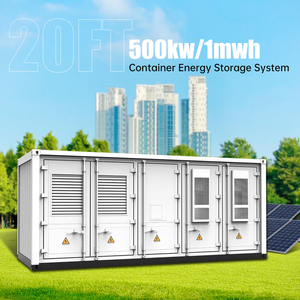
Container ESS
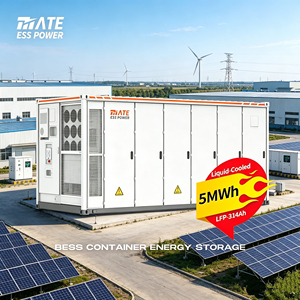
BENY 1MWh 5MWh Container Energy Storage High Voltage LiFePO4 Battery ESS
High Voltage | LiFePO4 Chemistry | Industrial Ground Station
Get Catalog
Industrial-grade Lithium Iron Phosphate (LiFePO4) & High-Voltage Containerized Ground Energy Support Systems engineered for high-altitude UAV fleets and expeditionary tactical base stations.
Deploying Unmanned Aerial Vehicles (UAVs) in high-altitude environments—typically defined as elevations exceeding 3,000 meters (9,800 feet) above sea level—presents an unrelenting triad of environmental hurdles: severe atmospheric pressure drop, sub-zero thermal extremes down to -40°C, and drastically reduced ambient air density. For defense defense procurement officers, commercial survey OEMs, and aerospace engineers, selecting a specialized high altitude drone battery solutions manufacturer is not merely an operational choice; it is a mission-critical safety factor.
Information Gain Insight: At 5,000 meters above sea level, atmospheric pressure drops to approximately 54 kPa (compared to 101.3 kPa at sea level), and air density drops by nearly 40%. This drastic atmospheric thinning reduces aerodynamic lift, forcing drone motors to draw up to 35% more continuous current (C-rate) to maintain hover stability, accelerating cell thermal degradation and premature voltage cutoff.
Standard commercial off-the-shelf (COTS) Lithium Polymer (LiPo) and Lithium-ion (Li-ion) packs experience severe capacity derating when subjected to low atmospheric pressures and low temperatures. Below 0°C, internal chemical resistance inside standard lithium cells spikes exponentially due to reduced ionic conductivity in the liquid electrolyte. This leads to massive lithium plating on the graphite anode during charge/discharge cycles, severe voltage sag under load, and high risk of thermal runaway. Top-tier high altitude battery factories solve this through solid-state electrolyte formulations, self-heating BMS circuits, silicon-anode chemistries, and vacuum-sealed lightweight enclosure designs.
To achieve optimal endurance, payload carrying capacity, and flight envelope stability, battery engineers evaluate four core chemical architectures. The table below outlines empirical performance metrics across high-altitude stress vectors:
| Battery Chemistry Standard | Gravimetric Energy Density (Wh/kg) | Discharge Capacity at -30°C | Low-Pressure Inflation Risk | Max Continuous C-Rate |
|---|---|---|---|---|
| High-Voltage LiPo (HV-LiPo 4.35V) | 260 – 290 Wh/kg | 55% (High Voltage Sag) | Moderate (Pouch Swell) | 15C – 45C |
| Semi-Solid State Lithium | 320 – 380 Wh/kg | 82% (Internal Pre-Heat) | Ultra-Low (Solid Electrolyte) | 8C – 15C |
| Silicon Anode Li-ion (NMC/Si) | 350 – 450 Wh/kg | 75% (Integrated Thermal Foil) | Low (Cylindrical Steel) | 5C – 10C |
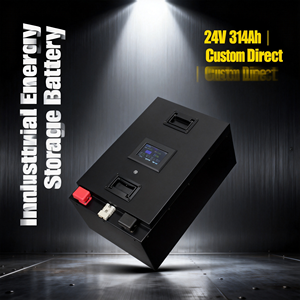
| High-Altitude LiFePO4 (LFP Base) | 160 – 190 Wh/kg | 70% (Ruggedized Heating) | Zero (Prismatic Cell) | 3C – 8C (Stationary/GESS) |
When evaluating the top 10 high altitude drone battery solutions manufacturers and factories, procurement managers must move beyond surface-level Ah ratings. Our evaluation methodology weights supplier competence based on five key metrics: 1) AS9100D & ITAR Aerospace Compliance, 2) UN 38.3.3 Low-Pressure Altitude Simulation Rigor, 3) Gravimetric Efficiency (>300 Wh/kg), 4) Sub-Zero Active Heating BMS Firmware Integration, and 5) Automated Cell Matching & Ultrasonic Tab Welding.
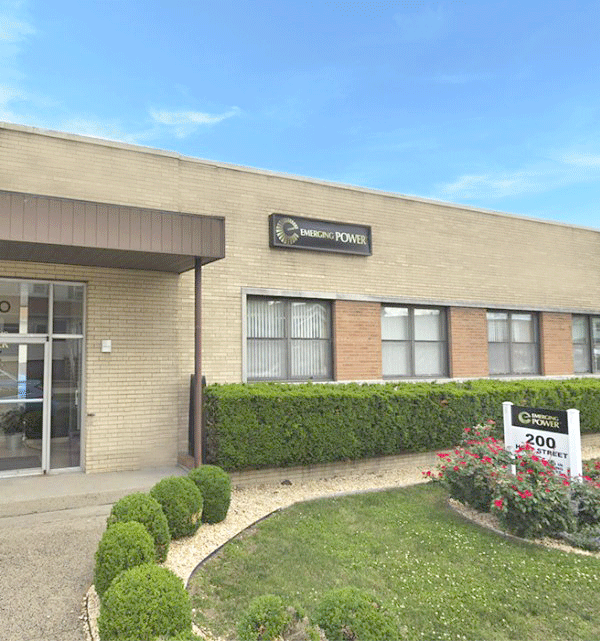
1. Emerging Power (USA): Recognized leader in military-grade, AS9100 certified custom battery pack assembly. Boasting over 120 years of collective engineering expertise, Emerging Power specializes in custom Li-Ion, Li-Polymer, and LFP packs for harsh-environment aerospace, defense, and high-altitude UAV ground support systems.
2. Amprius Technologies: Industry benchmark for ultra-high density silicon-nanowire anode cells, delivering up to 450 Wh/kg for high-altitude pseudo-satellites (HAPS) and long-endurance ISR drones.
3. Grepow / Tattu: Dominant player in high-discharge rate LiPo packs with specialized low-temperature battery cell lines designed for sub-zero UAV operations.
4. Custom Cells Group: European leader in tailored high-performance battery cells engineered for extreme thermal and altitude aerospace profiles.
5. Kokam: High-power NCM pouch cell factory supplying defense-grade heavy-lift multirotor drone manufacturers globally.
6. MaxAmps: US-based custom pack builder specializing in high-voltage custom UAV lithium packs with thermal insulation wraps.
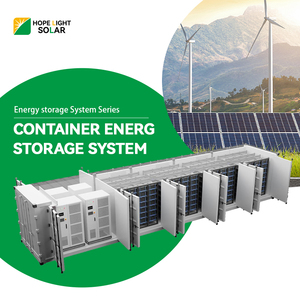
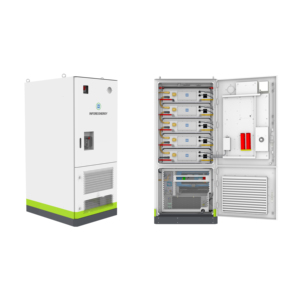
7. BENY New Energy: Premier manufacturer of high-capacity containerized ground energy storage systems (GESS) and high-voltage station chargers for continuous tethered drone operation at extreme altitudes.
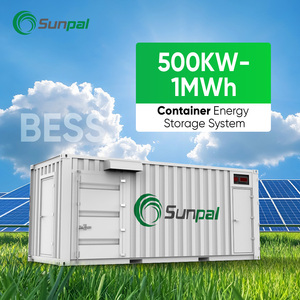
8. Sunpal Power: Specialized off-grid solar-storage hybrid container factory powering high-altitude remote UAV radar stations and autonomous landing pads.
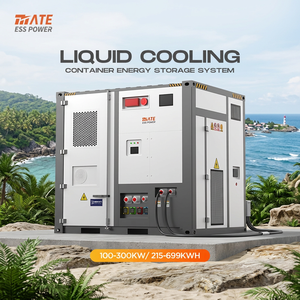
9. MATE Energy Container Systems: Innovative manufacturer of compact 10ft & 20ft liquid-cooled LiFePO4 battery containers for rapid deployment in remote search-and-rescue UAV operations.
10. Sion Power: Pioneer in metallic lithium rechargeable battery tech engineered for high-altitude long-endurance (HALE) flight applications.
Partnering with an experienced custom battery pack manufacturer ensures your high-altitude drone system avoids the perils of off-the-shelf power compromises. Built on 120+ years of collective engineering expertise, our US-based manufacturing infrastructure bridges the gap between raw electrochemical cell chemistry and mission-ready OEM deployment.
As B2B procurement teams navigate supply chain security and performance benchmarks, several technological shifts are reshaping the high-altitude drone battery market:
Legacy liquid electrolyte packs are rapidly yielding market share to semi-solid state and silicon-nanowire architectures. By eliminating volatile liquid solvents, solid-state batteries remove the risk of pouch ballooning under vacuum conditions (low atmospheric pressure) and push energy densities past the 400 Wh/kg threshold.
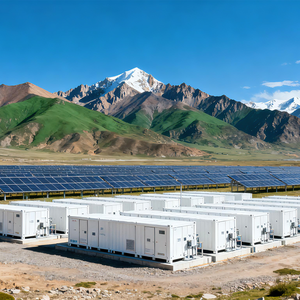
For continuous altitude surveillance (border security, telecom relay, atmospheric monitoring), tethered drones require uninterrupted high-voltage direct current (HVDC) power delivered via ultra-light ground tethers. Procurement demand has skyrocketed for mobile 10ft/20ft energy storage containers (such as 1MWh to 5MWh LiFePO4 liquid-cooled cabinets) acting as ground power stations.
High-altitude flight involves rapid descent through temperature inversion layers, causing atmospheric moisture condensation inside battery enclosures. Next-generation procurement contracts now mandate hermetically sealed IP67/IP68 enclosures equipped with internal desiccant matrices and automated BMS-driven polyimide pre-heating elements.
Common technical inquiries addressed by our battery engineering and OEM supply chain team:
At high altitudes, the external atmospheric pressure is significantly lower than sea level. Soft pouch cells expand due to internal pressure differentials, which can cause tab stress, weld fractures, or seal ruptures. Packs must undergo UN 38.3.3 altitude simulation (11.6 kPa for 6+ hours) and utilize rigid mechanical bracing or vacuum-equalized enclosures.
Standard Li-ion packs fail below -10°C. High-altitude customized packs incorporate integrated self-heating polyimide films powered by internal BMS logic, enabling full power discharge at temperatures as low as -40°C with minimal energy overhead (<3% total capacity for heating).
Because air density drops dramatically with elevation, drone propellers must spin at significantly higher RPMs to generate equivalent lift. Every extra gram of battery deadweight reduces flight time exponentially. Achieving >300 Wh/kg gravimetric energy density is critical to maintaining viable mission endurance.
Tier-1 military and defense procurement requires AS9100D aerospace quality management certification, ITAR registration (in the United States), ISO 9001:2015, UN 38.3 transport safety compliance, and compliance with IEC 62133 or UL 2054 standards.
Custom battery pack development typically spans 4 to 8 weeks for initial engineering (BMS firmware, thermal simulation, 3D CAD enclosure), followed by 2 to 4 weeks for prototype build and testing compliance, depending on regulatory testing requirements.
Yes. Mobile 10ft to 40ft energy storage containers (equipped with liquid-cooled LiFePO4 batteries) provide continuous, regulated high-voltage ground power for tethered UAVs, enabling multi-day uninterrupted air monitoring and communication relay in remote mountainous terrain.