The commercial and industrial (C&I) energy storage landscape is experiencing an unprecedented structural shift. Driven by accelerating grid volatility, soaring peak demand charges, carbon reduction mandates, and lucrative revenue-stacking opportunities (such as demand response, frequency regulation, and virtual power plant integration), modern enterprise procurement requires far more than basic electrochemical capacity. Facility managers, EPC contractors, clean energy project developers, and IPPs require robust, grid-interactive, long-duration Battery Energy Storage Systems (BESS) engineered for extreme safety, high round-trip efficiency (RTE), and long cycle life.
This comprehensive industry report evaluates the leading commercial solar storage battery manufacturers globally, detailing core manufacturing specs, battery management system (BMS) intelligence, thermal runaway prevention compliance (UL 9540A, NFPA 855), and levelized cost of storage (LCOS) dynamics. Below, we present the premier 8 commercial solar energy storage solutions engineered to deliver maximum bankability and grid resilience.
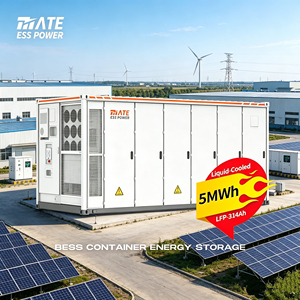
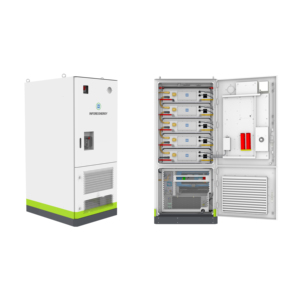
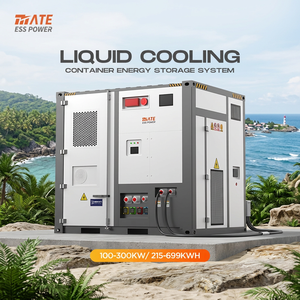
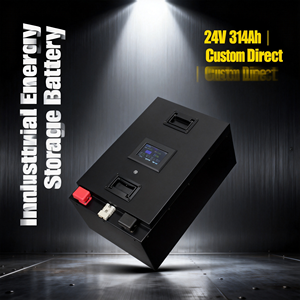
Direct factory-customized, high-voltage utility and C&I liquid-cooled and air-cooled containerized lithium battery systems.
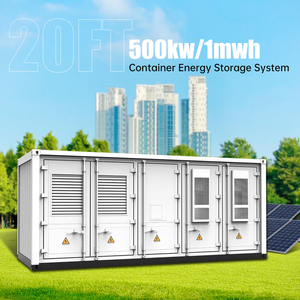
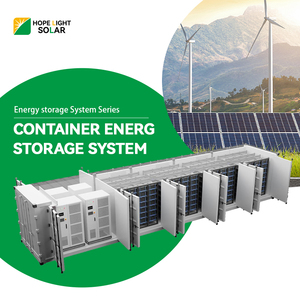
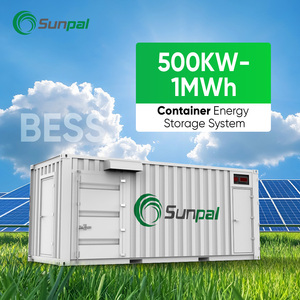
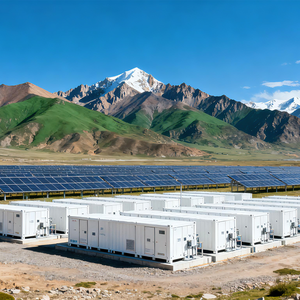
A comparative evaluation of critical technical parameters required for Tier-1 bankability and institutional solar project development.
Transitioning from standard 280Ah to high-capacity 314Ah prismatic cells increases 20ft container energy capacity from 3.72MWh to 5.0MWh+, reducing total land footprint and balance-of-plant (BOP) cost by up to 25%.
Advanced liquid-chilled cold plates maintain temperature differentials within <2.5°C across all modules. This prolongs battery system lifetime by 20% compared to legacy forced-air systems and slashes auxiliary power consumption.
Fully compliant with UL 9540, UL 9540A burn test benchmarks, and NFPA 855 standards. Features module-level gas detection, deflagration venting panels, and automatic aerosol or clean-agent fire suppression.
Selecting the appropriate OEM or Tier-1 container manufacturer depends on project scale, thermal demands, grid-connection speed, and custom engineering capabilities. Below is an engineering benchmark contrasting industry-leading manufacturing standards across key commercial indicators:
| Manufacturer / Category | Core Chemistry & Form Factor | Standard System Capacity | Thermal Management Tech | Safety & Compliance Standards | Typical Application Fit |
|---|---|---|---|---|---|
| BENY / Emerging Power OEM | Prismatic LiFePO4 (314Ah / 280Ah) | 233kWh Cabinet – 5.0MWh Container | Liquid Cooling & HVAC Precision Air | UL 9540, UL 9540A, CE, UN38.3, ITAR | Commercial Facilities, Factories, Microgrids |
| Tesla (Megapack 2 XL) | Lithium Iron Phosphate (LFP) | 3.9 MWh per Unit | Liquid Thermal Loop | UL 9540, NFPA 855, IEEE 1547 | Utility Scale & Large Commercial Solar |
| BYD (Chest & MC Cube) | Blade LFP Battery Cells | 3.3MWh – 5.3MWh Container | Direct Liquid Cooling | UL 9540A, IEC 62619, GB/T 36276 | Renewable Integration, Peak Shaving |
| CATL (EnerOne / EnerC) | High-Density LFP Prismatic | 1.5MWh – 5.04MWh | Sub-module Liquid Cooling | UL 9540A, UL 1973, CE | System Integrators, IPPs, Solar EPCs |
| Fluence (Gridstack) | Modular LFP Stack Architecture | Scalable Multi-MW Solutions | HVAC & Liquid Hybrid | UL 9540, NFPA 855, Grid-Forming Code | Transmission Upgrades, Ancillary Services |
The global energy storage industry has moved decisively away from standard 2.5MWh and 3.7MWh 20ft container configurations. By deploying ultra-dense 314Ah prismatic LFP cells combined with ultra-compact liquid-cooling manifolds, modern manufacturers package over 5.0MWh of usable energy into a standard 20-foot enclosure. This density surge drastically slashes civil engineering costs, cabling, foundation works, and site footprints for enterprise installations.
While legacy air-cooled cabinets remain viable for low C-rate backup applications, liquid cooling has become the mandatory standard for high-duty commercial systems operating daily charge-discharge cycles. Liquid cooling reduces system thermal variance to under 2.5°C, compared to 8°C–10°C in traditional air-cooled units. This eliminates hot-spot degradation, prevents cell capacity mismatch, reduces auxiliary energy losses by up to 40%, and extends operational life beyond 15 years.
Modern Commercial Battery Management Systems (BMS) are no longer simple pass-through monitoring units. Today's architectures feature edge-computing controllers equipped with machine learning algorithms capable of real-time state-of-health (SOH) projection, cell-level impedance tracking, and thermal anomaly forecasting. Furthermore, automated Modbus TCP, CANbus, and DNP3 interfaces allow seamless integration into regional Virtual Power Plant (VPP) software platforms to generate revenue from automated frequency response and arbitrage markets.
As municipal fire marshals and insurance underwriters enforce stricter safety standards worldwide, commercial BESS procurement heavily scrutinizes thermal runaway behavior. Leading containerized systems incorporate three layers of defense: cell-level ceramic insulation, module-level off-gas (venting) sensors, and localized clean-agent or water mist fire suppression combined with explosion-venting panels engineered into the enclosure roof.
With over 120 years of collective engineering expertise in battery pack design, automated assembly, smart BMS programming, and global distribution, our enterprise team bridge the gap between heavy industrial storage demands and tailored OEM specifications. Whether building high-voltage containerized solar storage or custom-tailored industrial power packs, our engineering rigor guarantees compliance, bankability, and rapid time-to-market.
Essential technical and commercial answers for solar developers, EPCs, and enterprise buyers.
In a DC-coupled system, the solar array and the battery storage connect to the same DC bus before converting power to AC through a shared hybrid inverter, offering higher round-trip efficiency (RTE) for simultaneous PV charging. AC-coupled systems feature dedicated battery inverters connected to the main AC distribution panel, making them ideal for retrofitting energy storage onto existing commercial solar installations without altering the existing solar inverter configuration.
LCOS measures the total cost of delivering a unit of stored energy over the system lifetime. It is calculated by dividing total lifetime costs (Capital Expenditure + Operational & Maintenance Expense + Charging Costs - Residual Value) by the total usable energy delivered (Total kWh discharged over cycle life, factoring in annual capacity degradation and round-trip efficiency losses).
Lithium Iron Phosphate (LiFePO4) offers superior thermal stability, a higher thermal runaway threshold (>270°C vs ~210°C for NMC), longer cycle life (>6,000 to 10,000 cycles), and complete freedom from cobalt and nickel constraints. While NMC has higher mass energy density (critical for EVs), LFP is far superior for stationary commercial applications where safety, volumetric cost, cycle stability, and LCOS drive project bankability.
In North America, key certifications include UL 1973 (for battery packs), UL 9540 (system-level safety certification), UL 9540A (large-scale fire testing report), and adherence to NFPA 855 installation codes. In Europe, CE compliance, IEC 62619, IEC 62933, and alignment with the EU Battery Regulation regarding battery carbon footprint passports are required.
Payback timelines typically range between 3 to 7 years depending on local utility peak demand rates, available government tax incentives (such as the US Inflation Reduction Act Investment Tax Credit), solar self-consumption efficiency, and secondary revenue generation through VPP participation.
Get in touch with our commercial engineering team today to receive detailed technical datasheets, full system single-line diagrams (SLDs), customized layout drawings, and competitive direct factory quote proposals.