Top 10 26650 Lithium Iron Phosphate Modules Factories & Suppliers

2026 B2B Procurement Whitepaper & Global Technical Benchmark for High-Capacity 26650 LiFePO4 Battery Cells, Smart BMS Modules, and Heavy-Duty Industrial Energy Packs.

OEM & ODM Industrial Catalog

Featured 26650 LiFePO4 Cells & Modular Packs

Engineered for extreme cycle stability, thermal safety, and high-rate discharge. Compare certified 3.2V 26650 cylindrical cells and multi-cell series/parallel power assemblies.
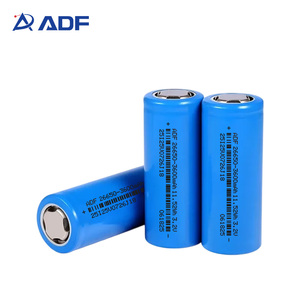
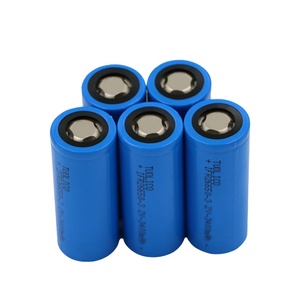
Grade A+ Cell 3.2v 3600mah 26650 Rechargeable Cylindrical Lifepo4 Battery Cells Manufacturer

3.2V 3600mAh 26650 Rechargeable Cylindrical LiFePO4 Battery Cells Manufacturer

Nominal Voltage:3.2V
Rated Capacity:3600mAh
Cycle Life:>3000 Cycles
High Capacity Rechargeable 3.2V 3400mAh LiFePo4 26650 Cylindrical Lithium Ion Battery Cell Pack

Rechargeable 3.2V 3400mAh LiFePO4 26650 Cylindrical Lithium Cell Pack (Up to 5000mAh Modular)

Nominal Voltage:3.2V
Capacity Range:3400mAh - 5000mAh
Chemistry:LFP (LiFePO4)
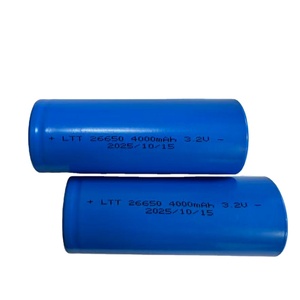
Solar & ESS LiFePO4 Liquid Cylindrical 3.2V 26650 4000mAh Rechargeable High Capacity Battery

LiFePO4 Cylindrical 3.2V 26650 4000mAh High Capacity 2000+ Cycles Solar Grade Cell

Nominal Voltage:3.2V
Capacity:4000mAh
Application:Solar Street Lighting
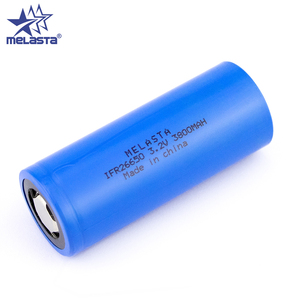
EV & Motive Power Melasta High Capacity IFR26650 3.2V 3800mAh Lithium Iron Phosphate Cells

Melasta High Capacity IFR26650 3.2V 3800mAh LiFePO4 Cells for Electric Wheelchairs & E-Bikes

Model Code:IFR26650
Capacity:3800mAh
Target OEM:EV & Mobility
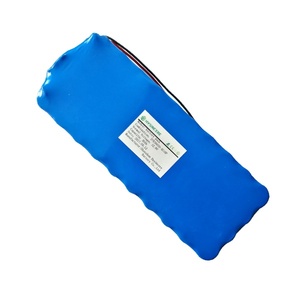
Custom Pack Module Rechargeable 12v Lifepo4 26650 Lithium Iron Phosphate Battery Pack 4s10p 12.8v 30Ah

Custom 12.8V 30Ah LiFePO4 26650 Battery Pack (4S10P Module with Smart BMS for Robotics)

Configuration:4S10P Array
Voltage / Cap:12.8V / 30Ah
Protection:Integrated Smart BMS
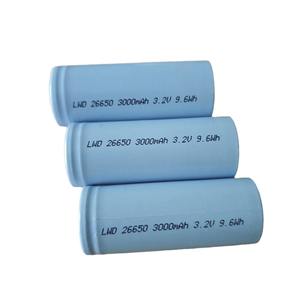
Portable Power 26650 Lithium Iron Phosphate 3.2V 3000mAh Battery 26650 Cell for Portable Power Station

26650 LiFePO4 3.2V 3000mAh High-Safety Cell for Power Tools & Outdoor Power Stations

Nominal Voltage:3.2V
Capacity:3000mAh
Discharge:High Drain Continuous
Ultra High Discharge High Power LFP26650 Cylindrical Phosphate 125A 60A LiFePO4 Cell

High Power LFP26650 Cylindrical Cell (10C/30C Rate, Up to 125A Peak Burst Discharge)

Peak Current:60A - 125A
C-Rating:10C / 25B / 30C
Internal Res:≤6mΩ
Deep Cycle Grade HAKADI Deep Cycle 26650 4Ah LiFePO4 3.2V Rechargeable Battery

HAKADI Deep Cycle 26650 4.0Ah LiFePO4 3.2V Rechargeable Industrial Grade Battery

Nominal Voltage:3.2V
Capacity:4000mAh (4Ah)
DOD Capability:100% Deep Cycle
4,000+
Deep Charge Cycles (80% DOD)
160 Wh/kg
Gravimetric Energy Density
500°C
Thermal Runaway Limit
120+ Yrs
Collective OEM Engineering

1. Executive Summary & Semantic Market Intelligence

In the rapidly expanding landscape of electrochemical energy storage, the 26650 Lithium Iron Phosphate (LiFePO4 / LFP) cylindrical module has firmly established itself as the architectural gold standard for heavy-duty commercial, medical, military, and energy storage system (ESS) applications. Measuring 26.0 mm in diameter and 65.0 mm in length, the 26650 mechanical form factor strikes an optimal balance between single-cell volumetric capacity (ranging from 3000mAh to 5000mAh) and structural thermal dissipation efficiency.

Unlike standard 18650 cells—which often require excessively high parallel cell counts to achieve multi-kilowatt power output—or massive 32700 cells, which introduce internal impedance and heat transfer bottlenecks, the 26650 LFP cell provides superior mechanical rigidity and high-rate current delivery. By utilizing an olivine crystal structure ($\text{LiFePO}_4$), these modules eliminate the risk of catastrophic oxygen release during internal shorting, ensuring absolute thermal safety up to 500°C.

Information Gain Insight for B2B Procurement Officers: When sourcing 26650 LiFePO4 battery modules, capacity alone is a misleading single-variable metric. B2B buyers must evaluate cell internal AC resistance ($\le 6\text{m}\Omega$ for high-rate drain; $\le 15\text{m}\Omega$ for capacity cells), laser-welded busbar interconnects, smart Battery Management System (BMS) balancing topology, and compliance with UN 38.3, UL 1642, and IEC 62133 safety mandates.

2. Top 10 26650 LiFePO4 Modules Manufacturers & Suppliers Evaluation Matrix

The global market for 26650 LiFePO4 battery modules comprises tier-1 cell manufacturers, authorized custom pack assemblers, and specialized engineering firms. Below is the definitive B2B procurement matrix evaluating the top 10 factories based on cell consistency, modular engineering, BMS intelligence, and global quality certifications:

Rank Manufacturer / Supplier Primary HQ Cell Capacity Range Max C-Rate (Burst) Custom BMS & Pack Assembly Key Certifications
01 Emerging Power Inc. USA (Hackensack, NJ) 3000mAh - 5000mAh Up to 30C (High Drain) Full Turnkey / Custom Smart BMS ITAR, AS9100, ISO 9001, UN38.3
02 EVE Energy Co., Ltd. China 3200mAh - 4000mAh 3C - 5C Continuous Standardized & Large Modules UL1642, IEC62133, CE
03 Gotion High-Tech China / USA 3400mAh - 4200mAh 5C Continuous / 10C Pulse Automotive EV Modules IATF 16949, ISO 14001, UL
04 Melasta Corporation China / Europe 3600mAh - 3800mAh 10C Continuous Custom Mobility & Robotics Packs CE, RoHS, UN38.3, MSDS
05 Lithium Werks (Reliance) USA / Netherlands 2500mAh - 3300mAh 30C Pulse (Nanophosphate) Industrial High-Rate Modules ISO 9001, UL, RoHS
06 HAKADI Battery Co. China 3000mAh - 4000mAh 3C Continuous Deep Cycle Solar Battery Modules CE, UN38.3
07 OptimumNano Energy China 3200mAh - 4500mAh 5C Continuous ESS & E-Bus Battery Packs TS16949, UL, CE
08 Sunwoda Electronic China 3000mAh - 3600mAh 3C Continuous Consumer & Smart Device Packs ISO 9001, ISO 14001, UL
09 A123 Systems / Envision USA / China 2500mAh - 3200mAh 30C Pulse Discharge Extreme Power & Starter Packs IATF 16949, ISO 9001
10 K2 Energy USA 2600mAh - 3800mAh 10C Continuous Military & Medical Battery Modules UN38.3, ISO 9001

3. Future Procurement & Technological Trends (2026–2030)

As global supply chains transition toward sustainable energy storage, the procurement criteria for 26650 LiFePO4 modules are undergoing fundamental shifts. Procurement directors must anticipate the following four critical technology vectors:

Ultra-Low Impedance Electrodes

Next-generation 26650 cells feature nanostructured carbon coatings on cathode surfaces, reducing internal resistance to $\le 4\text{m}\Omega$. This enables continuous 10C discharge rates with minimal ohmic heating.

🧠

Integrated Smart Active BMS

Module-level BMS integration is moving from passive resistor balancing to loss-less active balancing algorithms. Integrated SMBus, CANbus, and Modbus communication protocols allow real-time telemetry tracking.

🛡️

Cell-to-Pack (CTP) Architecture

Eliminating heavy intermediate modules, direct 26650 cylindrical Cell-to-Pack structural designs utilize flame-retardant potting compounds and laser-welded copper busbars to increase volumetric energy density by up to 22%.

Enterprise Core Competencies: The Emerging Power Advantage

With over 120 years of collective battery design and manufacturing expertise, Emerging Power stands as a premier USA-based custom battery manufacturer and authorized assembler. We specialize in transforming raw 26650 cylindrical cells into fully engineered, mission-critical battery modules for medical devices, military defense, robotics, and industrial IoT.

ITAR & AS9100 Certified

Qualified for military defense contractors and high-reliability aerospace OEM power applications.

Custom BMS Engineering

Proprietary hardware & firmware development including state-of-charge (SOC) fuel gauging and thermal safety cut-offs.

Authorized Cell Partner

Direct factory partnerships ensure access to 100% Grade-A verified cells with full lot traceability.

Get a Quote

5. Frequently Asked Questions (FAQ) for 26650 Module Procurement

Q1: What are the main dimensional and electrical advantages of 26650 cells over 18650 cells?
A single 26650 LiFePO4 cell typically provides 3.2V 3600mAh to 4000mAh, offering roughly double the volumetric energy of an 18650 cell (~1500mAh to 1800mAh in LFP chemistry). This reduces total interconnect welds by 50% in a battery pack, significantly lowering manufacturing cost, reducing internal electrical resistance points, and improving structural reliability against mechanical vibration.
Q2: Why is LiFePO4 chemistry preferred over NMC/NCA for heavy industrial 26650 modules?
LiFePO4 (Lithium Iron Phosphate) delivers superior chemical and thermal stability. While NMC cells risk thermal runaway at temperatures around 210°C, LiFePO4 remains stable up to 500°C without oxygen release. Furthermore, LFP provides 3,000 to 5,000 full depth-of-discharge (DOD) cycles compared to 500–1,000 cycles for standard NMC batteries, dramatically decreasing total cost of ownership (TCO).
Q3: How do OEM suppliers manage thermal management in large 26650 multi-cell arrays?
Professional OEM factories utilize structural cell holders with engineered air gaps (typically 1.0mm–1.5mm between cylinders), aluminum heat sink plates, phase-change materials (PCM), or specialized polyurethane potting compounds. These solutions prevent localized hot spots, ensuring uniform temperature distribution across all series/parallel strings within $\pm 3^\circ\text{C}$.
Q4: What certifications are mandatory for international shipping of 26650 battery modules?
All lithium iron phosphate modules exceeding 20Wh must pass UN 38.3 testing (covering altitude simulation, thermal test, vibration, shock, external short circuit, impact, overcharge, and forced discharge). Air shipment requires compliance with IATA Dangerous Goods Regulations, while medical and industrial end-use devices typically demand UL 1642 (cell level), UL 2054 (pack level), and IEC 62133 international certification.
Q5: Can Emerging Power customize 26650 module enclosures for extreme environments?
Yes. Emerging Power engineers custom battery enclosures utilizing CNC-machined aluminum alloy, stainless steel, high-impact polycarbonate, or 3D-printed ABS housings rated up to IP67/IP68 for ingress protection against moisture, dust, and corrosive marine or industrial atmospheres.
Q6: What is the typical lead time for custom engineered 26650 LiFePO4 battery prototypes?
Initial engineering design, 3D modeling, and BMS firmware specification usually take 1 to 2 weeks. Prototype sample assembly and functional testing are completed within 3 to 4 weeks. Full UN38.3 certification and mass production ramp-up generally span 6 to 8 weeks depending on custom tooling requirements.

Require Custom 26650 Battery Pack Engineering?

Speak directly with Emerging Power's senior engineering team for tailored B2B quotations, technical datasheets, and sample evaluations.