Turnkey Containerized BESS, Rack-Mounted Modular Cabinets, and Custom OEM/ODM Battery Storage Solutions Engineered for Global Suppliers & Integrators.
Comprehensive engineering analysis on cell chemistry, remote telemetry integration, BMS protocols, and environmental thermal management for mission-critical infrastructure.
In the era of ubiquitous 5G expansion, private LTE network deployment, and remote IoT telemetry, uninterrupted power continuity serves as the operational backbone for global telecommunications and remote monitoring infrastructure. Wireless communication battery systems are no longer treated merely as passive emergency back-ups; they are dynamic, intelligent energy storage nodes capable of peak shaving, remote telemetry report generation, microgrid integration, and rapid thermal self-regulation.
Modern telecommunication base transceiver stations (BTS), microwave backhaul sites, and remote wireless access points face harsh operational environments ranging from sub-zero Arctic deployments to desert heat exceeding 55°C. Traditional Valve-Regulated Lead-Acid (VRLA) batteries are rapidly being phased out due to their low volumetric energy density, short cycle life (typically 300–500 cycles), high sensitivity to temperature fluctuations, and heavy maintenance overheads. As a specialized OEM/ODM Wireless Communication Battery Systems Factory & Supplier, our custom manufacturing methodology utilizes advanced Lithium Iron Phosphate (LiFePO4/LFP) chemistry alongside ultra-high-density Lithium Nickel Manganese Cobalt Oxide (NMC) cells to achieve over 6,000 deep-discharge cycles and up to 15 years of operational lifespan.
A primary differentiator of tier-one OEM/ODM battery suppliers is the sophistication of the Battery Management System (BMS). Modern wireless infrastructure requires continuous real-time reporting over standard industrial communication protocols such as RS485, CANbus, Modbus TCP/RTU, and SNMP. Our custom engineered BMS platforms facilitate seamless interoperability with leading hybrid solar controllers, telecom rectifiers, and remote network operation centers (NOC).
| Engineering Attribute | Traditional Telecom VRLA | Standard OEM LiFePO4 Module | Advanced Custom ODM Smart BESS (Liquid/Air Cooled) |
|---|---|---|---|
| Energy Density (Wh/kg) | 30 – 40 Wh/kg | 140 – 160 Wh/kg | 180 – 220 Wh/kg (NMC / Solid-State Hybrid) |
| Cycle Life (80% DOD) | 300 – 600 Cycles | 3,500 – 4,500 Cycles | 6,000 – 10,000+ Cycles (@ 0.5C rate) |
| Telemetry Protocol Support | None (Dry Contact Only) | RS485 / CANbus basic | SNMP v3, Modbus TCP, MQTT, OTA BMS Firmware |
| Thermal Range | -10°C to 40°C | -20°C to 55°C | -40°C to 65°C (Active Liquid Thermal Control) |
| Maintenance Requirements | Quarterly manual inspection | Zero maintenance | Autonomous self-healing & remote predictive AI analytics |
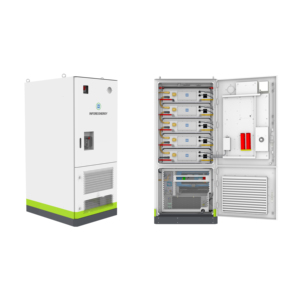
Our OEM custom engineering workflow supports granular hardware customizations including high-voltage rack systems (up to 700V-1000V DC bus for large scale BESS containers), hot-swappable 19-inch rack enclosures (48V 50Ah/100Ah/200Ah modules), and IP65 to IP67 ruggedized outdoor cabinets designed to withstand extreme moisture, salt spray, and seismic vibrations.
Integrated SNMP v3, CAN 2.0B, RS485 communication protocols with remote cloud management, real-time SOH/SOC monitoring, and predictive automated alarm signaling.
Support for continuous high-discharge C-rates (1C to 3C) and pulse peak loads designed for high-transmission wireless base stations and microgrid surges.
Aerosol/Gas-extinguishing suppression modules, active liquid cooling thermal management, and physical cell isolation meeting UL9540A anti-thermal runaway safety criteria.
Strategic Insights for Telecommunication Procurement Managers, System Integrators, and Global Hardware Distributors.
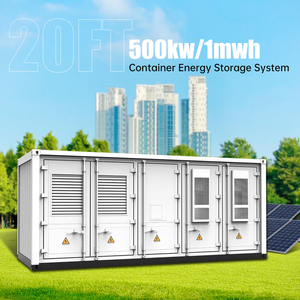
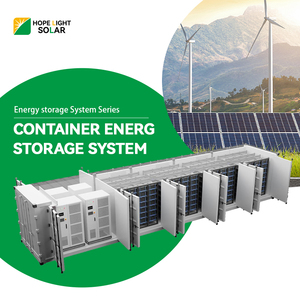
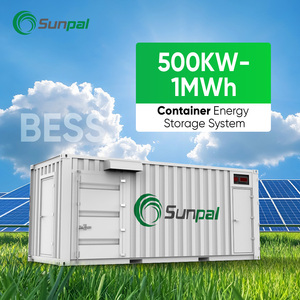
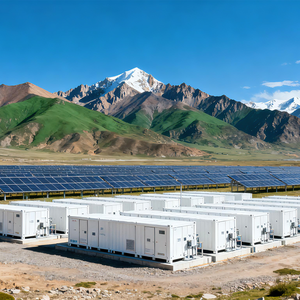
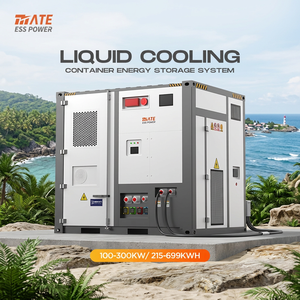
Procurement strategies across global telecom operators and industrial energy developers are aggressively shifting from isolated low-voltage (48V) battery banks toward high-voltage containerized Battery Energy Storage Systems (BESS). Ranging from 100kW/215kWh cabinet systems to mega-watt scale 1MWh–5MWh liquid-cooled containers, high-voltage architectures significantly reduce I²R transmission line losses, reduce cabling weight, and optimize inverter efficiency to over 98.5%.
By specifying containerized hybrid solutions (incorporating solar PV inputs, diesel generator auto-start controllers, and grid-tied rectifiers), procurement directors can dramatically decrease Total Cost of Ownership (TCO) while achieving decarbonization targets for remote 5G cell sites and island microgrids.
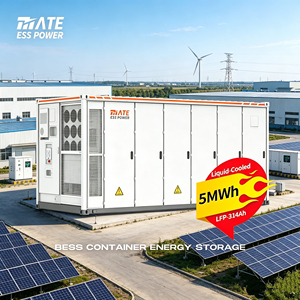
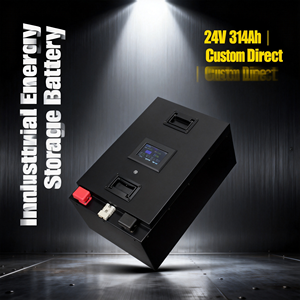
The industrial battery industry is undergoing a standard cell capacity migration from legacy 280Ah prismatic LFP cells to ultra-high-capacity 314Ah LiFePO4 cells. The 314Ah cell form factor increases energy density by approximately 12% without enlarging the physical volumetric footprint of 20ft or 40ft storage containers. This allows OEM containerized systems (such as our 5MWh Liquid-Cooled BESS) to yield higher power output per square meter, translating to significant freight cost savings and reduced civil installation work.
With strict international supply chain regulations—such as the EU Battery Regulation, US ITAR compliance, and mandatory ISO 14064 carbon footprint tracking—procurement decisions are heavily weighted toward suppliers with vertically integrated manufacturing chains. Global OEMs require factories to supply comprehensive lifecycle analysis (LCA) documentation, third-party UN38.3 transport certificates, IEC 62133 safety clearances, and UL 1973 cell certification to prevent customs delays and regulatory fines.
How Solid-State Electrodes, Liquid Cooling, and AI-Driven Predictive Maintenance are Revolutionizing Telecom and Industrial Energy Storage.
As battery energy density escalates, managing thermal gradients inside battery enclosures has become the paramount engineering challenge. Traditional air cooling often results in internal cell temperature variances exceeding 5°C to 8°C across large packs, accelerating localized cell degradation and shortening pack lifetime.
Liquid cooling technology utilizes specialized heat-conductive liquid plates routed directly between cell rows. This design restricts temperature differentials across the entire 5MWh container to under 2.5°C. Lower working temperatures reduce HVAC auxiliary power consumption by over 30% while extending total battery lifespan by more than 20%.
The roadmap for wireless communication batteries is accelerating toward semi-solid-state and silicon-anode cell architectures. By replacing liquid electrolyte solvents with solid polymer or ceramic conductive matrixes, solid-state batteries virtually eliminate thermal runaway risks and electrolyte leakage. Concurrently, silicon-nanocomposite anodes provide volumetric energy densities exceeding 350 Wh/kg to 450 Wh/kg, enabling ultra-compact back-up power packages for space-constrained urban micro-cells and drone relay stations.
Decades of Engineering Leadership, US/Global Technical Compliance, and Comprehensive Contract Manufacturing Support.
Our senior engineering roster possesses deep domain knowledge across lithium chemistry synthesis, BMS software architecture, mechanical stress modeling, and global safety certification management.
Qualified to assemble and supply military-grade, defense, medical, and aerospace custom battery systems under stringent quality control frameworks and traceability standards.
From initial 3D mechanical CAD modelling and custom enclosure sheet-metal stamping to specialized BMS firmware creation and final automated UN38.3 testing.
Clear Technical Guidance on Minimum Order Quantities, Custom BMS Protocols, Warranties, and International Regulatory Certifications.
We primarily utilize Grade-A Lithium Iron Phosphate (LiFePO4/LFP) for its superior thermal stability, non-combustible nature, and 6,000+ deep-cycle rating. For ultra-lightweight portable applications (drones, handheld telemetry), high-density Li-Ion (NMC) or Lithium Polymer cells are customized upon request.
Yes. Our custom BMS platforms natively support RS485, CANbus 2.0B, Modbus RTU/TCP, and SNMP interfaces. We customize register mapping files to ensure seamless plug-and-play integration with major global rectifier systems (e.g., Huawei, Vertiv, ZTE, Delta) and solar hybrid controllers.
All battery systems undergo rigorous compliance testing. We provide full UN38.3 transport safety clearance (including MSDS and Drop Test reports), IEC 62133, CE, and RoHS certifications. For containerized systems, we comply with UL 1973, UL 9540, and UL 9540A fire safety test standards.
Liquid cooling routes heat-exchange plates directly adjacent to cells, maintaining maximum internal container temperature variation within ≤2.5°C. Air cooling allows temperature variances of 5°C to 8°C, which leads to cell imbalance. Liquid cooling reduces auxiliary HVAC power usage by ~30% and prolongs system lifecycle by over 20%.
Standard engineering prototyping requires 3 to 5 weeks for mechanical housing design, BMS firmware adaptation, and sample assembly. Full mass production lead times generally range between 4 to 6 weeks following sample validation and safety clearance verification.
Absolutly. As a dedicated OEM/ODM factory, we provide complete private-label manufacturing including customized silk-screen logo printing, custom chassis color coating (RAL color palette matching), customized packaging cartons, and white-label BMS GUI software.
Partner with an industry-leading OEM/ODM battery factory to engineer reliable, high-density, smart-monitored wireless communication and industrial storage systems.
Send an Inquiry