Explore our flagship high-voltage commercial & industrial thermal battery enclosure systems engineered for high efficiency and maximum thermal runaway protection.
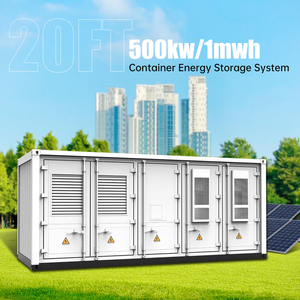
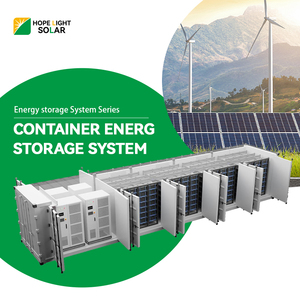
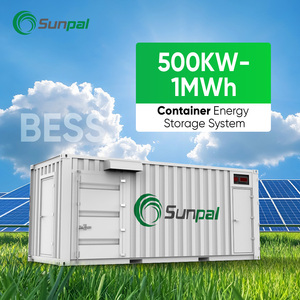
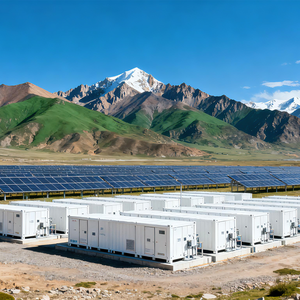
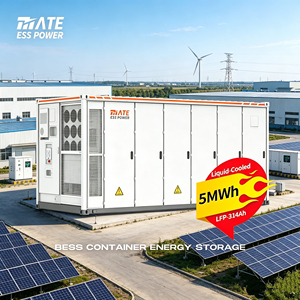
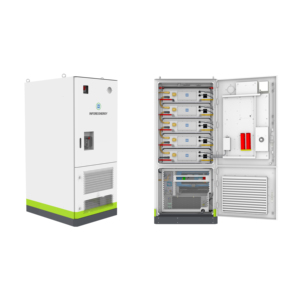
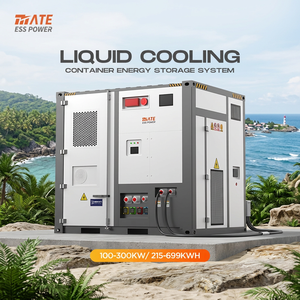
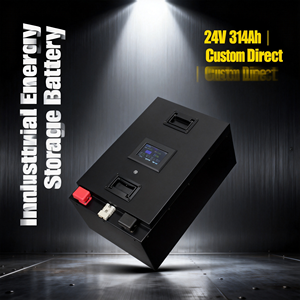
As global energy storage systems (BESS) shift from lower capacity cells to mega-capacity 314Ah+ LiFePO4 prismatics, passive dissipation is no longer sufficient. Thermal management enclosures engineered by global OEM/ODM manufacturers are the critical first line of defense against volumetric degradation and catastrophic thermal runaway.
In lithium-ion battery integration, cell operating temperatures must be maintained rigorously between 20°C and 35°C. Operating beyond 45°C accelerates Solid Electrolyte Interphase (SEI) layer growth, degrading battery capacity exponentially, while temperature differentials exceeding 5°C across a pack cause uneven internal impedance, leading to premature module failure.
Quantitative comparative analysis of thermal management enclosure strategies for 1MWh - 5MWh utility-scale battery deployments:
| Thermal Parameter | Forced Air System | Liquid Cold Plate System |
|---|---|---|
| Heat Transfer Coeff. | 25 - 100 W/(m²·K) | 1,000 - 4,000 W/(m²·K) |
| Cell-to-Cell Delta (ΔT) | ≤ 5.0°C | ≤ 2.5°C |
| Auxiliary Energy Draw | Baseline (100%) | 30-40% Lower Consumption |
| Enclosure Vol. Efficiency | Standard Air Channels | 40% Space Saving |
| Noise Emissions | > 75 dBA (High CFM Fans) | < 60 dBA (Chiller Pump) |
*Data derived from ISO-certified factory thermal chamber tests under 1C continuous charge/discharge cycles at 40°C ambient environment.
Designing industrial battery enclosures demands rigorous mechanical engineering to withstand hostile outdoor environments, seismic activity, and severe fire risks.
Custom enclosures are manufactured using heavy-gauge galvannealed steel or 6000-series aluminum alloys. CNC laser-cut frames are robotically welded to ensure IP65/IP66 tightness against high-pressure water jets and blowing sand.
Compliant with NFPA 855 and UL 9540A safety codes, enclosures feature multi-tier gas suppression (FK-5-1-12 / Novec 1230) combined with targeted water mist piping directly to pack racks.
Each enclosure integrates modular 3-tier Battery Management Systems (BMS) with RS485, CAN 2.0B, and Modbus TCP communications for real-time thermal telemetry.
Strategic supply chain analysis for utility developers, EPC contractors, and OEM product directors navigating global battery containment procurement.
The global BESS procurement market is rapidly moving away from standard 20ft 2.5MWh containers towards high-density 20ft 5MWh liquid-cooled solutions. This double-density migration is enabled exclusively by upgrading from 280Ah to 314Ah/320Ah cells paired with ultra-thin liquid cooling plates, reducing overall balance-of-plant (BOP) land footprint by up to 45%.
Tier-1 financial institutions and insurance underwriters now require proof of UL 9540A unit-level fire testing without external propagation. OEM buyers must verify that enclosure manufacturers possess localized thermal lab testing, salt-spray chamber validation (2000 hours), and thermal stress finite element analysis (FEA) reports before contract awards.
Commercial and Industrial (C&I) buyers favor modular, pre-assembled outdoor cabinets (100kWh to 300kWh) over site-erected battery rooms. Factory pre-integration—where thermal HVAC, inverter interface, BMS, and fire suppression are pre-commissioned inside the enclosure—reduces site installation costs by up to 60%.
With EU Battery Regulation compliance taking force globally, thermal enclosure materials must feature a minimum 90% recyclable content score. Modern aluminum-alloy liquid plates and non-toxic glycol mixtures are fast becoming mandatory requirements across European and North American procurement tenders.
Combining over 120 years of collective engineering excellence with advanced robotic manufacturing to supply premier battery packs and thermal enclosures globally.
In-house 3D CAD modeling, FEA mechanical analysis, CFD fluid dynamics, and custom PCB/BMS design teams under one roof.
Operating under AS9100 aerospace, ITAR military registration, and ISO 9001/14001 certified manufacturing protocols.
Authorized assembler for world-class tier-1 battery cell manufacturers ensuring guaranteed chemical quality and supply chain stability.
Comprehensive export compliance, UN 38.3 transport certification, and localized technical field support across 50+ countries.
Essential technical and commercial answers for purchasing managers, engineering consultants, and OEM buyers evaluating thermal battery enclosures.
Air-cooled enclosures use heavy-duty HVAC compressors and blowers to circulate chilled air around battery racks. Liquid-cooled enclosures circulate a coolant fluid (such as Ethylene Glycol-Water) directly through cold plates sandwiched between cells. Liquid cooling offers 4x higher thermal conductivity, holds temperature variations across cells under 2.5°C, and reduces auxiliary electrical power draw by up to 40%.
Yes. As a specialized OEM/ODM manufacturer, we offer full custom engineering. We can fabricate enclosures from compact indoor wall-mount brackets up to 40ft high-cube ISO shipping container footprints with ingress protection ratings ranging from IP55 (standard outdoor) to IP66 (heavy marine/washdown).
Our multi-layered protection architecture combines cell-level aerogel thermal barriers, phase-change materials (PCM) to absorb heat spikes, continuous gas-sensing telemetry (CO/H2), and automated Novec 1230 gas or water mist fire suppression. The system design satisfies UL 9540A testing without cell-to-cell thermal propagation.
For marine, coastal, or high-humidity deployments, our enclosures undergo a multi-step surface treatment process: sandblasting to SA 2.5 standard, zinc-rich epoxy primer application, and C5-M grade polyurethane topcoating certified under ISO 12944 to withstand over 2,000 hours of continuous salt spray testing.
Our manufacturing processes and enclosures adhere strictly to global energy standards, including UL 9540, UL 9540A, NFPA 855, IEC 62619, UN 38.3, CE, and IEEE 1547. Quality management operates under AS9100 and ISO 9001 frameworks.
Initial 3D engineering approval and CFD simulation take 1 to 2 weeks. Custom prototype fabrication typically requires 4 to 6 weeks. Following prototype validation and testing approval, full mass production lead times range from 6 to 8 weeks depending on system scale and component sourcing.
Partner with an industry-leading OEM/ODM manufacturer. Consult directly with our senior thermal design engineers to receive detailed CAD schematics, CFD thermal simulations, and competitive project quotations.