OEM/ODM Custom Golf Cart & Industrial Battery Solutions

Explore our high-density LiFePO4 battery modules and industrial containerized power storage platforms tailored for fleet golf carts, utility transport, and enterprise microgrids.
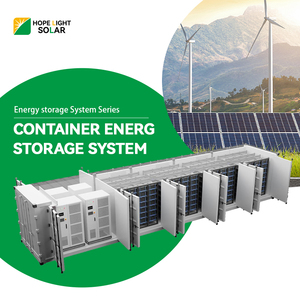
BENY 1Mwh 5mwh Container Energy Storage LiFePO4 High Voltage Battery System

BENY 1Mwh 5mwh Container Energy Storage High Voltage LIFEPo4 Lithium Ion Batteries ESS Industrial And Commercial Battery

  • Capacity: 1MWh - 5MWh Utility Scale
  • Chemistry: Grade-A LiFePO4 Prismatic
  • High Voltage BMS with CAN/RS485
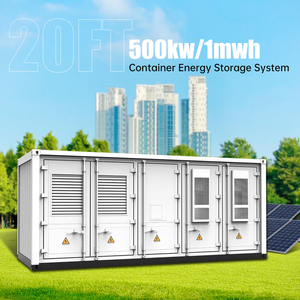
Custom 20ft 40ft High Voltage ESS Container Battery Storage System

Custom 20ft & 40ft High Voltage ESS Battery Energy Storage System Commercial & Industrial Lithium Ion Battery Container Solution

  • Standard 20ft / 40ft ISO Container
  • HV Air/Liquid Cooling System
  • Custom Fleet Fast-Charging Integration
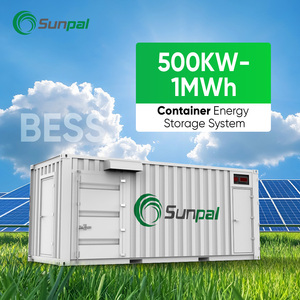
Sunpal ESS Solar Cabinet Battery 1MWh 500KW LiFePO4 BESS

Sunpal ESS Solar Battery Cabinet Container 1MWh 500 KW Industrial Lifepo4 BESS Solar Energy System

  • 500kW / 1MWh Modular Design
  • IP54 Outdoor Rated Cabinet
  • Built-in Aerosol Fire Suppression
Customizable Container Energy Storage Hybrid Integrated System 1000KW

Customizable Container Energy Storage Hybrid Integrated Lithium Ion Battery System 1000KW Air Industrial Commercial Photovoltaic

  • 1000kW Hybrid Inverter Support
  • Smart Solar PV Synchronization
  • Extreme Temperature Management
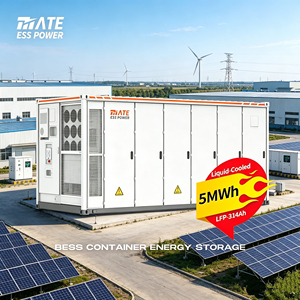
5MWh Liquid Cooling Container Battery Storage System LiFePO4 314Ah

Lithium Batteries 5MWh Liquid Cooling Container Battery Storage System LiFePO4 Battery ESS All In One BESS 314Ah For Factory

  • High-Density 314Ah LFP Cells
  • Advanced Liquid Cooling Loop
  • Cycle Life: >6,000 Cycles @ 80% DoD
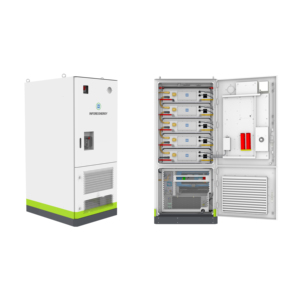
Industrial Commercial 233kWh High Power Output BESS

Industrial Commercial Lithium Ion Energy Storage System 233kWh High Power Output BESS Customized Manufacturer High Quality

  • 233kWh All-in-One Cabinet
  • High Continuous C-Rate Output
  • Seamless Fleet Hub Integration
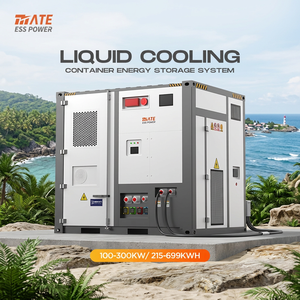
MATE LFP Lifepo4 Battery Container 100kW 215kWh Smart Lithium Battery

MATE LFP Lifepo4 Battery Container 100kW 215kWh 300kW 699kWh BESS Smart Lithium Battery Energy Storage System 10ft For Island

  • Compact 10ft Modular Container
  • Island Off-Grid Remote Monitoring
  • Automated Balancing Smart BMS
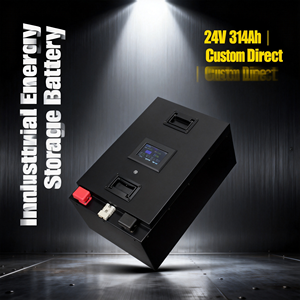
Direct Factory Custom 24V 48V 314Ah Lithium Battery Pack

Direct Factory Custom 24V 48V 314Ah for Industrial Off-Grid Energy Storage Power Electric Lithium Battery Pack

  • Modular Drop-in Pack Framework
  • High-Torque Current Delivery
  • Heavy Duty Vibration Proof Case
120+
Years Combined Engineering Expertise
3,500+
LiFePO4 Deep Charge Cycles
98.5%
Round-Trip Energy Efficiency
100%
Automated BMS Safety Protection

Executive Whitepaper: The Strategic Transition to LiFePO4 Golf Cart Battery Packs

The commercial turf and light electric vehicle (LEV) sectors are undergoing a permanent paradigm shift. Global fleet managers, golf course operators, and Low-Speed Vehicle (LSV) OEMs are aggressively retiring legacy flooded lead-acid and AGM batteries in favor of customized Lithium Iron Phosphate (LiFePO4) battery packs. Driven by the imperative for Total Cost of Ownership (TCO) optimization, rapid fleet throughput, and zero-maintenance operations, custom LiFePO4 architecture has emerged as the definitive benchmark for modern fleet mobility.

As a premier OEM/ODM Golf Cart Lithium Battery Packs Factory & Exporter, our engineering division bridges the gap between raw cell chemistry and heavy-duty automotive reliability. By integrating Grade-A prismatic cells, intelligent CANbus/RS485 Smart Battery Management Systems (BMS), and rugged vibration-damped aluminum enclosures, our custom packs deliver unprecedented operational longevity and energy density across 36V, 48V, and 72V drivetrain architectures.

Information Gain Insight: Modern golf cart drivetrains demand peak discharge rates up to 3C-5C during high-torque incline climbing. Legacy lead-acid batteries suffer severe voltage sag under high current loads due to Peukert's Law, depleting usable energy by up to 40%. Premium LiFePO4 battery packs maintain a flat discharge curve above 48V/72V throughout 95% of their discharge cycle, maintaining consistent vehicle speed and acceleration regardless of state-of-charge (SoC).

Chemical Dynamics: Why LiFePO4 Outperforms Lead-Acid and NMC in Fleet Mobility

When specifying battery chemistry for OEM golf carts and commercial utility vehicles, safety and thermal endurance are paramount. While Nickel Manganese Cobalt (NMC) offer high energy density, their lower thermal runaway threshold (approx. 210°C) presents elevated fire risks in high-temperature environments. In contrast, Lithium Iron Phosphate (LiFePO4) features extremely stable P-O covalent bonds, pushing the thermal decomposition threshold beyond 270°C and eliminating oxygen release during overcharge or mechanical puncture.

Performance Metric Flooded Lead-Acid Standard NMC Lithium OEM LiFePO4 Golf Cart Pack
Cycle Life (80% DoD) 400 – 600 Cycles 1,200 – 1,500 Cycles 3,500 – 6,000+ Cycles
Usable Capacity Depth 50% DoD Max 80% – 90% DoD 100% DoD Usable
Weight (48V 100Ah Equivalent) ~320 lbs (145 kg) ~75 lbs (34 kg) ~95 lbs (43 kg)
Recharge Time 8 – 10 Hours 2 – 3 Hours 1 – 2 Hours (1C Fast Charge)
Maintenance Required Monthly Water Refill None Zero Maintenance
Round-Trip Efficiency 65% – 75% 92% – 95% >98.5% Efficiency

Automotive Grade-A Prismatic Cells

We exclusively utilize premium Grade-A prismatic LFP cells featuring internal explosion-proof valves and laser-welded busbars, guaranteeing mechanical robustness against off-road turf vibration.

Custom Smart BMS Protection

Integrated microcontrollers offer multi-layer hardware & software protection against over-current, over-voltage, cell imbalance, thermal excursion, and short-circuit conditions.

Real-Time CANbus / Telemetry

Seamless communication protocol integration (CAN 2.0B, RS485, Bluetooth LE) enabling fleet management dashboard connectivity, real-time SoC monitoring, and remote diagnostics.

Future Procurement Trends in Golf Cart & Light EV Energy Systems

As OEM manufacturers expand their product lines from traditional 2-seater golf carts to 4-to-8 passenger resort shuttles, high-performance hunting buggies, and heavy utility vehicles, the demand for tailored electrical systems has exploded. B2B procurement officers and engineering directors must account for several major technology shifts when choosing an OEM/ODM manufacturing partner:

1. Transition to 72V High-Voltage Drivetrains

While 48V systems remain the industry standard for standard golf carts, 72V lithium pack architectures are rapidly gaining market share for commercial utility vehicles. Higher system voltage dramatically reduces current (Amperage) drawn for equivalent power output ($P = V \times I$). Lower amperage mitigates $I^2R$ resistive heating within wire harnesses, motor controllers, and battery connectors, enabling continuous high-speed cruising and steep incline navigation without thermal throttling.

2. Smart IoT Telemetry & Fleet Cloud Integration

Modern golf course fleets and commercial rental operators demand predictive maintenance capabilities. Next-generation lithium battery packs feature embedded IoT modules transmitting real-time State-of-Health (SoH), State-of-Charge (SoC), cell temperature, and GPS coordinates to cloud management platforms. Fleet managers can identify weak battery cells, track unauthorized cart usage, and schedule automated off-peak charging routines to lower utility power costs.

3. Modular Drop-in Replacement Engineering

Retrofitting existing lead-acid golf cart fleets (EZ-GO, Club Car, Yamaha) requires custom mechanical housing design. OEM manufacturers now provide precision-engineered steel/aluminum enclosures that directly match standard battery tray footprints. These drop-in solutions include integrated state-of-charge meters, onboard charger interlock connections, and custom mounting brackets—reducing installation time from hours to under 30 minutes per vehicle.

Compliance & Quality Assurance Standard: International shipping and commercial OEM deployment mandate rigorous safety compliance. Our manufacturing facility adheres to strict ISO 9001 and AS9100 quality management standards. All custom golf cart battery packs undergo UN 38.3 (transportation safety), IEC 62133 (portable lithium safety), UL 2580 (batteries for electric vehicles), and CE certification protocols prior to export.

Why Partner with Our OEM/ODM Manufacturing Facility?

Backing your commercial products with robust battery engineering requires more than standardized assembly. Drawing from over 120 years of collective industry experience across custom battery design, aerospace-grade manufacturing, and global supply chain optimization, our engineering team provides end-to-end support for custom golf cart and light EV projects:

Full R&D & Prototyping Stack

From CAD structural modeling and thermal simulation to custom BMS PCB layout and firmware development, we provide rapid turn-around prototyping tailored to your exact mechanical dimensions and electrical parameters.

Automated High-Volume Production

Our state-of-the-art manufacturing lines feature automated cell grading, automatic laser spot welding, thermal imaging, and 100% End-of-Line (EOL) computerized charge-discharge burn-in testing.

Global DDP Logistics & Support

We navigate complex hazardous goods export regulations (Class 9 Lithium Cargo). We offer complete DDP ocean and air freight logistics solutions, alongside comprehensive warranty coverage and global technical support.

Frequently Asked Questions (FAQ)

Expert engineering answers to common technical, manufacturing, and logistics inquiries regarding custom golf cart lithium battery packs.

1. Why is LiFePO4 chemistry preferred over NMC for golf cart battery packs?

LiFePO4 (Lithium Iron Phosphate) offers superior thermal and chemical stability compared to NMC (Nickel Manganese Cobalt). Golf carts operate in demanding outdoor environments with frequent shock and vibration. LiFePO4 cells have a thermal runaway limit of over 270°C, zero risk of oxygen emission during overload, and deliver up to 3,500–6,000+ deep charge cycles—more than double the cycle lifespan of NMC packs.

2. Can your custom lithium battery packs serve as drop-in replacements for lead-acid fleets?

Yes. We engineer customized aluminum or heavy-duty steel battery enclosures designed to fit directly into standard 36V, 48V, and 72V battery trays found in EZ-GO, Club Car, Yamaha, and custom LSV platforms. Our drop-in kits come complete with custom wiring harnesses, state-of-charge digital displays, and optional onboard charger mounting plates.

3. What functions does your integrated Smart Battery Management System (BMS) perform?

Our proprietary Smart BMS acts as the central brain of the battery pack. It provides real-time protection against high/low temperature charging and discharging, over-voltage, under-voltage, continuous over-current, and short-circuit conditions. Additionally, it performs dynamic passive or active cell balancing to ensure equal voltage across all series cells, maximizing overall capacity retention and service life.

4. How do temperature extremes affect golf cart lithium battery performance?

Standard lithium batteries suffer performance degradation in freezing temperatures. Our OEM custom battery packs can be equipped with integrated thermal management heating films controlled by the BMS. When connected to a charger in sub-zero conditions (-20°C), the BMS automatically warms the cells to safe charging temperatures before initiating charge current, protecting the anode from lithium plating.

5. What communication protocols do your battery packs support for OEM vehicle integration?

We support standard industrial communication protocols including CANbus (CAN 2.0B / OpenCAN), RS485, RS232, and Bluetooth LE. This enables complete integration with vehicle motor controllers (Curtis, Navitas, Sevcon), dashboard displays, and external fleet tracking telematics.

6. What international safety and transport certifications do your battery packs carry?

Our products undergo full international safety verification. All exported battery models comply with UN 38.3 (Lithium Transport Testing), IEC 62133 (Safety requirements for portable sealed cells), UL 2580 (Batteries for Electric Vehicles), CE, and RoHS directives. Complete test reports and MSDS documentation are provided with every OEM shipment.

7. What is the typical lead time for custom OEM/ODM battery pack development?

For initial engineering design and 3D modeling, prototype samples are generally delivered within 3 to 4 weeks. Following prototype approval and tooling validation, mass production lead time is typically 4 to 6 weeks, depending on order volume and custom enclosure specifications.

8. What is the expected Total Cost of Ownership (TCO) savings when converting a fleet to lithium?

While lithium battery packs carry a higher initial purchase price than lead-acid batteries, they reduce total operating costs by 50% to 70% over a 5-year period. Factors driving TCO savings include: 5x longer cycle life (no battery replacements every 2 years), zero maintenance labor/water cost, 30% reduction in electricity consumption due to higher charging efficiency, and reduced wear on cart suspensions from a 70% weight reduction.

Ready to Power Your Golf Cart Fleet or OEM Vehicle Line?

Partner with an industry-leading OEM/ODM battery manufacturer. Contact our engineering team today to request custom CAD drawings, electrical schematics, or factory-direct B2B quotations.

Contact Us