Engineered with multi-tier thermal barrier isolation, flame-retardant structural alloys, and advanced liquid/air cooling channels for mission-critical commercial and industrial ESS deployment.
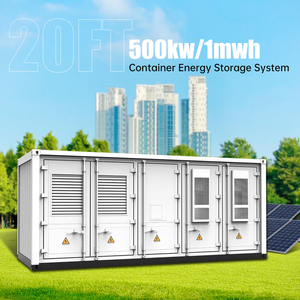
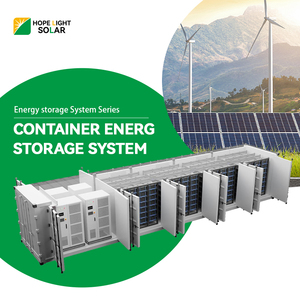
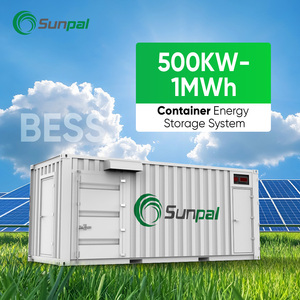
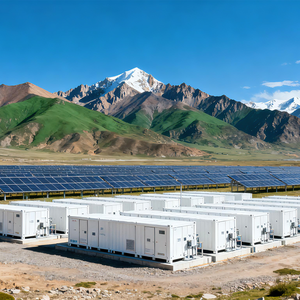
A deep dive into polymer thermodynamics, structural deflection, UL 94 fire classifications, and containment architectures for lithium-ion and solid-state battery assemblies.
In modern high-energy-density battery system design, the battery pack enclosure is no longer merely a passive outer shell. It functions as a primary safety boundary engineered to survive extreme thermal events, suppress flame ignition, prevent cascade propagation between cell matrices, and maintain structural integrity during intense shock, pressure buildup, or external puncture. As battery chemistries evolve toward higher C-rates and nickel-rich cathode formulations (NMC 811, NMC 9.5.5) as well as dense lithium iron phosphate (LiFePO4 314Ah+ cells), specifying the exact flame retardant polymer compounds and metal alloys becomes a crucial engineering parameter for global Original Equipment Manufacturers (OEMs) and Contract Manufacturers (CMs).
Core Safety Metric: According to UL 9540A test standards for evaluating thermal runaway fire propagation, an enclosure must demonstrate complete containment of fire flare-ups and prevent explosive gas accumulations without structural breach under internal thermal cell failure temperatures exceeding 800°C.
Selecting the optimal substrate material involves balancing dielectric insulation, mechanical tensile strength, weight budgets, flame resistance, and total manufacturing tooling costs. Below is a comparative breakdown of engineered materials utilized by our OEM/ODM custom engineering team:
| Material Substrate | UL 94 Flame Class | Dielectric Strength (kV/mm) | Thermal Conductivity | Primary Application Area |
|---|---|---|---|---|
| FR Polycarbonate / ABS Alloy | UL 94 V-0 / 5VA | 18 - 24 kV/mm | 0.22 - 0.28 W/m·K | Medical Devices, Handheld IoT, Smart Meters |
| SMC (Sheet Molding Compound) Glass Fiber | UL 94 V-0 / 5VB | 15 - 20 kV/mm | 0.30 - 0.45 W/m·K | Commercial EV Packs, Heavy Equipment, UAVs |
| Deep-Drawn Aluminum Alloy (5052-H32 / 6061-T6) | Non-Combustible (A1) | Requires Dielectric Barrier | 138 - 167 W/m·K | High-Voltage ESS Containers, Grid Storage |
| Continuous Fiber Reinforced Thermoplastics (CFRTP) | UL 94 V-0 | 20 - 28 kV/mm | Tailored (Anisotropic) | Defense Flight Battery Shells, Aerospace |
Preventing single-cell thermal runaway from cascading across an entire module requires a integrated, multi-layered passive fire containment architecture built right into the enclosure chassis:
Engineered rubber and silicone formulations that expand up to 400% when exposed to flame temperatures exceeding 190°C, sealing all joint seams against toxic gas leakage and oxygen ingress.
Ultra-thin silica aerogel layers (<1.5mm) integrated between cell matrix walls, offering extreme thermal resistance (up to 1200°C flash limit) to stop cell-to-cell thermal bridging.
Calibrated stainless-steel bursting discs or Spring-Loaded Venting Valves designed to relieve overpressure (10–30 kPa) instantly during cell off-gassing, averting structural enclosure explosions.
Underpinned by over 120 years of collective engineering experience, our USA-based and global manufacturing infrastructure delivers certified, robust battery enclosures for critical applications.
From co-designing intelligent BMS boards to custom molding fire-resistant housings and executing rapid prototype iterations, we streamline your power product time-to-market.
Unlike standalone enclosure molders, our engineers simultaneously co-design the Battery Management System (BMS), thermal busbars, and exterior housing. This eliminates dimensional clashes, minimizes wire harness clutter, and optimizes interior air flow or cold-plate surface contact.
Emerging Power operates strictly under defense-grade quality management standards. With ITAR registration and AS9100/ISO 9001 compliance, every custom pack enclosure undergoes traceable raw material verification, ultrasonic weld inspection, and certified flame retardancy audit trails.
We support low-volume NPI (New Product Introduction) runs via 3D-printed flame-retardant polymers and rapid CNC aluminum machining, moving into multi-cavity precision injection molds for high-volume OEM mass production with ultra-tight tolerance control (±0.05mm).
As an authorized assembler for world-leading battery manufacturers (including Energizer, Amprius, NanoGraf, and RRC), our custom enclosures are tailored to precisely clamp and isolate premium high-density cylindrical, pouch, and prismatic lithium cells.
Key technology shifts, evolving regulatory mandates, and material innovations shaping global B2B procurement strategies for energy storage and electric mobility OEMs.
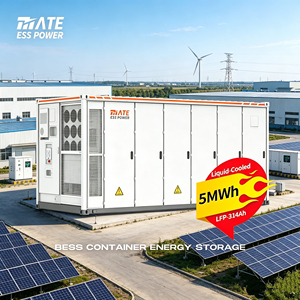
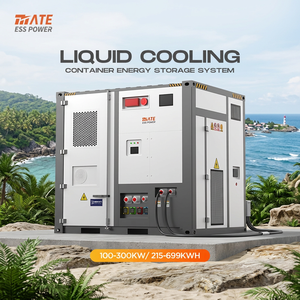
While traditional air-cooled and cold-plate designs currently dominate commercial storage, procurement is rapidly shifting toward direct-to-cell liquid immersion cooling enclosures. By filling sealed flame-retardant enclosures with non-conductive dielectric synthetic fluids (such as fluorinated liquids or specialized synthetic esters), heat transfer efficiency increases up to 800% over forced air. This completely suffocates early thermal flare-ups while maintaining cell temperature uniformity within ±1.5°C across large 5MWh ESS containers.
Global fire safety codes for commercial and residential energy storage systems have tightened significantly. Future procurement specifications require battery enclosure designs to incorporate built-in gas sampling ports, automated Novec 1230 / STAT-X aerosol fire suppression nozzles, and mechanical explosion relief panels certified under ASTM E84 and UL 9540A. Buyers are requiring certified pre-tested shell assemblies to minimize overall field insurance liabilities.
Next-generation polymer enclosures are shifting from passive structures to intelligent sensing matrices. By embedding fiber-optic Bragg grating sensors directly into composite sandwich panels during the resin-transfer molding (RTM) process, the battery casing itself monitors continuous internal stress, deflection, moisture ingress, and localized micro-hotspots in real-time, communicating directly with the central cloud-based BMS.
Environmental regulations such as the EU Battery Regulation mandate high recyclability rates and halogen-free fire retardants. OEMs are phasing out halogenated additives (such as brominated flame retardants) in favor of eco-friendly phosphorus-nitrogen and mineral-based intumescent agents. Recyclable polyamides (PA66 FR) and polybutylene terephthalate (PBT FR) are replacing non-recyclable thermoset resins to facilitate end-of-life circular dismantling.
Clear technical insights on regulatory compliance, custom prototyping timelines, sealing standards, and tooling cost factors for custom battery enclosures.
UL 94 is the global benchmark standard for flammability of plastic materials. UL 94 V-0 requires that burning stops within 10 seconds on a vertical specimen, allowing for non-inflaming drops of molten plastic. UL 94 5VA is a significantly more stringent test: the material is subjected to a flame source five times intense as V-0 (500W flame vs 50W flame) and must not burn through or develop any structural holes. 5VA is the gold standard for heavy commercial and industrial battery pack enclosures.
Yes. We utilize precision injection molding and CNC machining combined with custom liquid-dispensed polyurethane (FIPG) or intumescent silicone gasket channels. Our complete assemblies pass IP67 (immersion up to 1 meter for 30 minutes) and IP68 (continuous submersion under pressure) tests, while maintaining complete flame-retardant self-extinguishing capabilities under UL 94 V-0 standards.
For early-stage verification and functional prototypes (NPI), we deliver 3D-printed flame-retardant polymers or CNC-machined aluminum enclosures within 10 to 14 business days. Custom plastic injection tooling typically requires 4 to 6 weeks for T1 mold samples, followed by rapid full-scale production turnaround.
For high-voltage energy storage systems (up to 1500V DC), metal enclosures (aluminum or steel) are internally lined with high-dielectric flame-retardant insulation sheets (such as Formex or Nomex FR, rated to >20 kV/mm). Additionally, structural interior module trays are molded from UL 94 V-0 engineering polymers to provide physical creeps and clearance gaps that exceed IEC 60664-1 isolation requirements.
Absolutely. Metallic battery enclosures intended for marine, offshore, or outdoor BESS applications receive C5-M rated heavy-duty powder coating, anodization, or electrocoating (E-coat) processes. These coatings endure over 1,500 hours of continuous salt-spray testing according to ASTM B117 standards without blistering, peeling, or loss of corrosion protection.
We provide full turnkey DFM (Design for Manufacturability) and regulatory pre-testing support. We subject prototype enclosures to internal overpressure burst tests, thermal shock chamber profiling, drop tests, and vibration simulation (MIL-STD-810H). We then provide full engineering documentation packages required by certified testing labs for official UN 38.3, UL 1973, UL 2580, and UL 9540A approvals.
Yes. Emerging Power is a full-service custom battery pack manufacturer and authorized assembler. We supply the complete integrated product: battery cells, custom spot-welded nickel nickel busbars, intelligent BMS circuitry, internal thermal barriers, wiring harnesses, and final potted/sealed flame-retardant outer enclosures, fully tested and certified for immediate deployment.
We accommodate flexible order quantities depending on application size. For large industrial ESS containerized modules or defense projects, we support specialized low-volume production (10–100 units). For commercial handheld, medical, or IoT battery packs, our high-volume automated molding lines handle production runs from 1,000 to over 100,000 units per month.
Speak directly with our mechanical and electrochemical engineering specialists. Get complete product specifications, 3D CAD modeling assistance, thermal simulations, and volume pricing quotes today.