
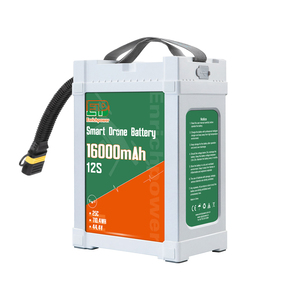
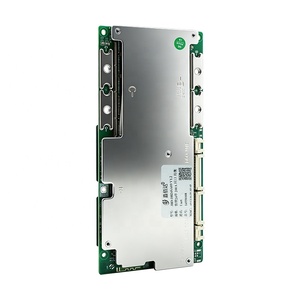
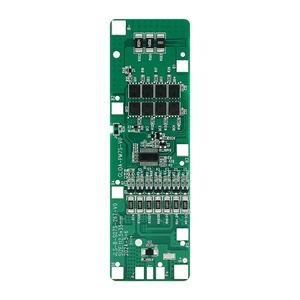
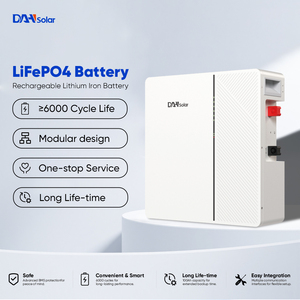
The Paradigm Shift to Smart Bluetooth-Enabled BMS in B2B Battery Procurement
In modern industrial, commercial, and mobility applications, battery packs are no longer passive chemical energy vessels. The rapid proliferation of IoT connectivity, field telematics, and heavy-duty electrification demands intelligent energy monitoring at the cell level. **OEM/ODM Bluetooth-enabled Battery Management System (BMS) battery packs** represent the benchmark in modern portable and stationary power architecture.
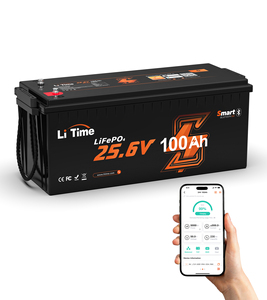
By embedding Bluetooth Low Energy (BLE 5.0/5.4) protocols directly into the main MCU chip set of the custom BMS board, original equipment manufacturers (OEMs) and contract manufacturers (CMs) eliminate the friction of traditional wired telemetry diagnostics. System operators can perform non-intrusive runtime audits, wireless State of Charge (SOC) tracking, State of Health (SOH) evaluations, and real-time fault logging through custom white-labeled mobile applications or integrated master industrial displays.
Information Gain Insight: Advanced Bluetooth 5.0 BMS architecture reduces equipment downtime by up to 40% through preemptive fault isolation, active thermal monitoring, and predictive cell degradation algorithms compared to legacy unmanaged battery packs.
Architectural Blueprint of High-Reliability Bluetooth BMS Battery Packs
A industrial-grade Bluetooth BMS engineered by an established manufacturing factory integrates multi-tiered protection circuitry, high-precision coulomb counting hardware, and robust RF transceiver modules designed to operate reliably amidst severe electromagnetic interference (EMI) environments.
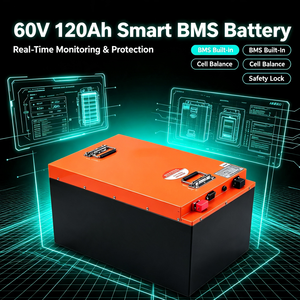
Active & Passive Cell Balancing
Integrated 0.5A to 2A active balancing circuits migrate charge from high-voltage cells to low-voltage cells during operation, maintaining thermal equilibrium and extending total pack cycle life by over 25%.
Dual-Tier Hardware Protection
Features ultra-low internal resistance MOSFET arrays and mechanical relay controls for over-charge, over-discharge, short-circuit, and short-burst surge currents up to 400A peak capacity.
Encrypted BLE Telemetry
128-bit AES encrypted Bluetooth transmissions deliver wireless data up to 50 meters, communicating pack temperature, MOSFET health, individual cell voltages, and cycle history to authorized mobile SDKs.
Cell Chemistry Selection: LiFePO4 vs. High-Energy NCM for OEM Applications
Selecting the optimal lithium cell chemistry is the foundational step in engineering a custom OEM battery pack. Manufacturers must balance gravimetric energy density against thermal stability, lifecycle requirements, and operating temperature envelopes.
| Technical Parameter | Lithium Iron Phosphate (LiFePO4) | Nickel Cobalt Manganese (NCM) | Lithium Polymer (LiPo) |
|---|---|---|---|
| Nominal Cell Voltage | 3.2 V per cell | 3.6 V – 3.7 V per cell | 3.7 V – 3.8 V per cell |
| Energy Density | 140 – 180 Wh/kg | 220 – 300 Wh/kg | 180 – 240 Wh/kg |
| Cycle Life (80% DoD) | 4,000 – 8,000+ Cycles | 1,200 – 2,500 Cycles | 500 – 1,000 Cycles |
| Thermal Runaway Threshold | Ultra-Safe (~270°C) | Moderate (~210°C) | Sensitive (~150°C) |
| Target OEM Applications | Golf Carts, RVs, Marine, ESS, Sightseeing Vehicles | Medical Equipment, Robotics, Heavy EV | Agriculture Drones, UAVs, High-C Rate Portable Devices |
Global Procurement Trends & Technology Forecast for Smart Batteries (2025–2030)
As global supply chains shift toward decentralized renewable power, industrial mobile robotics, and stringent safety standards, procurement directors are altering their sourcing specifications for battery packs. Emerging market requirements focus heavily on three major technological vectors:
1. Multi-Protocol Hybrid Connectivity (BLE + CANbus + RS485)
Future-proof smart battery packs no longer rely solely on singular communication interfaces. Modern procurement guidelines demand hybrid communication modules. The local system controller communicates with industrial machinery via high-speed **CANbus (CANopen/SAE J1939)** or **RS485 Modbus**, while simultaneously transmitting diagnostic metrics wirelessly via **Bluetooth 5.0 BLE** to maintenance technicians' mobile devices.
2. Edge AI & On-Board Predictive SOH Analytics
Next-generation smart BMS boards integrate microcontrollers capable of running edge neural algorithms. Instead of estimating State of Health (SOH) purely based on historical cycle counts, edge algorithm BMS models analyze internal electrochemical impedance spectrum (EIS) shifts, transient voltage drop behavior under load spikes, and microscopic temperature gradients to predict battery failure weeks before occurrence.
3. Self-Heating Systems for Extreme Sub-Zero Operations
For outdoor ESS installations, heavy machinery, maritime commercial vessels, and cold-chain transport, charging lithium batteries at temperatures below 0°C risks dendrite formation and catastrophic internal short circuits. Advanced OEM Bluetooth BMS designs incorporate automated internal heating pads. When a charger is attached under freezing conditions, the BMS directs incoming current exclusively to internal silicone heating elements until cell temperatures safely reach +5°C before initiating cell charging.
Enterprise OEM/ODM Manufacturing Capabilities & Quality Assurance
Selecting a verified, qualified battery assembly factory requires thorough scrutiny of manufacturing processes, engineering qualifications, and quality management systems. Emerging Power brings over **120 years of collective engineering expertise** to custom battery pack assembly, smart BMS hardware development, and system enclosure design.
From initial proof-of-concept prototyping to full automated mass production, our ISO9001 and AS9100 certified facility ensures strict adherence to international quality standards:
- Cell Sorting & Resistance Matching: 100% automated cell grading ensuring voltage variance <2mV and internal resistance variance <0.5mΩ prior to pack assembly.
- Precision Micro-Spot Welding & Laser Joinery: Pure nickel strip busbars joined using high-frequency inverter spot welders or automated fiber laser welding systems to ensure low resistance and high shock/vibration tolerance.
- Integrated Thermal Barriers: Flame-retardant epoxy phase-change insulation sheets (UL94-V0 rated) placed between parallel cell strings to prevent cascading thermal runaway.
- End-of-Line Automated Testing (ATE): Comprehensive computerized test cycles verifying BMS over-current cutoff thresholds, communication protocol integrity, Bluetooth RF signal power, thermal sensor accuracy, and high-voltage dielectric isolation.
- International Certification Compliance: Complete engineering support to obtain UN38.3 (transportation safety), UL1973, UL2580, IEC62619, and CE certifications for seamless export compliance.