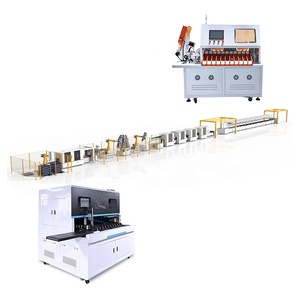
Explore state-of-the-art semi-automatic and fully automated turn-key lithium-ion, LiFePO4, and prismatic cell pack assembly machinery engineered for high-precision OEM production.
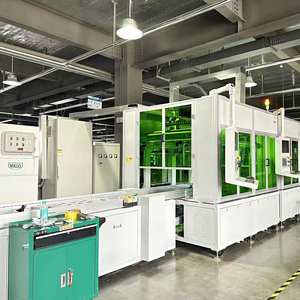
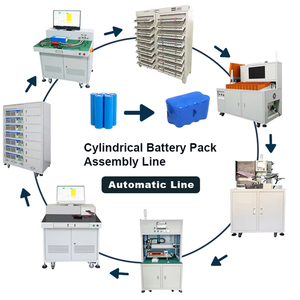
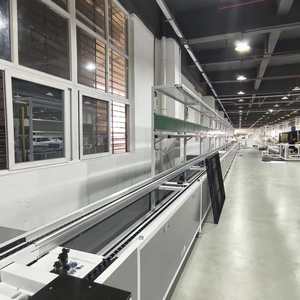
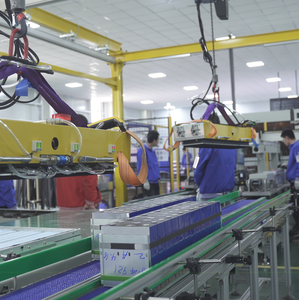
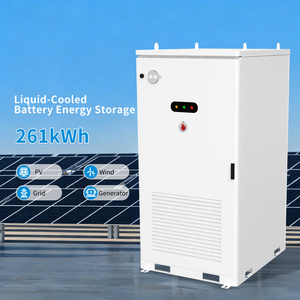
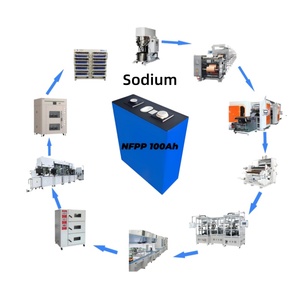
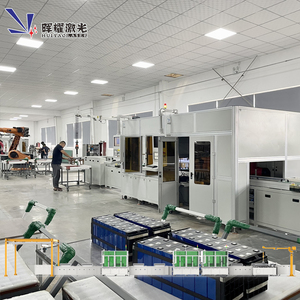
In contemporary industrial manufacturing, procurement directors and engineering executives face unprecedented demands for rapid scalar transition, ultra-high safety parameters, and multi-chemistry flexibility. The modern paradigm shift from manual pack spot-welding to fully integrated, turnkey automated assembly lines represents a critical milestone in achieving operational excellence for Electric Vehicles (EV), Industrial Energy Storage Systems (ESS), Defense Electronics, and Medical Device ecosystems.
Custom OEM turnkey lithium battery pack assembly encompasses a cohesive, closed-loop engineering framework. This workflow spans cell sorting, mechanical structural stacking, laser busbar welding, Smart Battery Management System (BMS) electronic integration, continuous thermal management application, active End-of-Line (EOL) diagnostic testing, and regulatory UN 38.3 certification compliance.
The structural integrity and lifespan of a multi-cell battery module depend strictly on individual cell balance. Our turnkey production solutions incorporate high-throughput automated grading systems capable of evaluating Open Circuit Voltage (OCV) and AC Internal Resistance (ACIR) at speeds exceeding 120 PPM (Packs/Cells Per Minute).
By isolating micro-variations in chemical impedance prior to module architecture insertion, turnkey automation eliminates premature capacity fade and localized overheating across multi-series, multi-parallel configurations (such as 14S8P, 16S100P, or high-voltage 102S1P strings).
High-precision galvanometer laser welding systems with real-time visual tracking ensure zero-defect busbar interconnects on copper and aluminum terminals without high thermal transfer to sensitive jelly-rolls.
Turnkey programming supporting SMBus, CANBus (SAE J1939), Modbus RS485, and Bluetooth mesh protocols. Features active balancing circuitry to maximize state-of-health (SOH) cycles.
Integration of Phase Change Materials (PCM), aerogel barriers, and direct-to-cell liquid cooling plates engineered to prevent cascade thermal runaway across dense pouch, cylindrical, and prismatic assemblies.
A critical consideration during initial OEM design phase lies in terminal connection methodology. While traditional spot-welding suffers from inconsistent contact resistance and electrode oxidation, modern turnkey assembly automation utilizes dual-beam fiber laser optics.
For cylindrical form factors (e.g., 18650, 21700, 32700, 4680), ultrasonic aluminum wire bonding provides intrinsic fuse protection per cell, preventing global pack collapse during an internal short-circuit. Conversely, for large-format prismatic LiFePO4 modules (such as 100Ah, 280Ah, 314Ah cells), high-power fiber lasers achieve penetration depths up to 2.5mm on nickel-clad copper busbars, achieving connection resistances under 15 micro-ohms.
Comprehensive technical comparison detailing energy density, lifecycle metrics, thermal safety thresholds, and optimal industrial deployment vectors.
| Battery Chemistry | Gravimetric Density | Volumetric Density | Nominal Cell Voltage | Cycle Life (80% DOD) | Thermal Runaway Temp | Primary OEM Target Market |
|---|---|---|---|---|---|---|
| Lithium Iron Phosphate (LFP) | 160 - 190 Wh/kg | 350 - 420 Wh/L | 3.2 V | 3,500 - 8,000 Cycles | > 270°C | Commercial ESS, Telecom, Heavy EV, AGVs |
| Nickel Manganese Cobalt (NMC 811) | 250 - 300 Wh/kg | 650 - 750 Wh/L | 3.6 V - 3.7 V | 1,200 - 2,500 Cycles | ~ 210°C | High-Range EV, Drones / UAVs, Defense Devices |
| Lithium Polymer (LiPo / Pouch) | 200 - 260 Wh/kg | 500 - 600 Wh/L | 3.7 V | 500 - 1,200 Cycles | ~ 170°C | Medical Wearables, Compact IoT, Military Gear |
| Sodium-Ion (Na-Ion Next-Gen) | 120 - 160 Wh/kg | 280 - 350 Wh/L | 3.0 V | 2,000 - 4,000 Cycles | > 300°C (Highly Stable) | Extreme Cold ESS, Micro-Mobility, Low-Cost Power |
| Solid-State (Silicon Anode) | 350 - 450 Wh/kg | 800 - 1000 Wh/L | 3.8 V | 1,000 - 2,000 Cycles | > 350°C | Aerospace, High-End Defense, Medical Implantables |
As global energy transformation accelerates, original equipment manufacturers (OEMs) and contract manufacturers (CMs) must pivot from fragmented component sourcing to holistic turnkey partnerships. Below are the key technological and macroeconomic shifts governing battery pack assembly procurement:
Geopolitical friction and regional clean energy mandates (such as the US Inflation Reduction Act and EU Battery Directive) are requiring OEMs to transition from overseas pack sourcing to localized, nearshore turnkey production lines. Full line traceability, from raw cell provenance to final packaging, ensures zero exposure to border delays and tariff escalations.
Legacy modular assemblies—relying on cell-to-module-to-pack hierarchy—are being rapidly surpassed by Cell-to-Pack (CTP) architectures. By stripping away intermediate module housings and wiring harnesses, CTP designs elevate pack volume utilization from 40% to over 65%, reducing mechanical failure points while decreasing manufacturing cost per kWh.
Forward-thinking assembly lines are engineered with multi-chemistry adaptive tooling. As Sodium-Ion batteries gain market share in low-cost energy storage and extreme low-temperature applications, turnkey production systems feature programmable laser parameters, adaptive insulation dispensers, and multi-voltage EOL testing systems capable of switching between LiFePO4, Na-Ion, and high-nickel NMC within minutes.
Modern automated manufacturing suites incorporate Manufacturing Execution Systems (MES) synchronized with cloud data pipelines. Every spot weld, torque angle, glue volume, and insulation test reading is captured under a unique barcoded digital serial number, guaranteeing 100% historical accountability for medical device audits (ISO 13485) and aerospace standards (AS9100).
Backing every turnkey battery assembly project with deep domain authority, rigorous testing protocols, and over a century of collective power management heritage.
Fully certified to meet rigorous U.S. military specifications (MIL-STD-810G, MIL-PRF-32325), providing safe, ruggedized power modules for tactically deployed assets, UAVs, and communication gear.
Strict cleanroom assembly options and risk mitigation processes compliant with Class II and Class III medical electrical equipment requirements (IEC 60601-1 / UL 2054).
Direct factory partnerships with premier tier-1 cell manufacturers (including Energizer, Amprius, NanoGraf, and leading LFP foundries) ensure genuine chemical grade stability and priority allocation.
Expert answers to common engineering, regulatory, and manufacturing scaling queries encountered during turnkey lithium battery development.
A standard custom OEM turn-key development cycle spans 8 to 16 weeks depending on design complexity. Phase 1 (Proof of Concept & BMS Architecture) takes 2-3 weeks. Phase 2 (Rapid Prototyping & 3D Housing Molding) requires 3-4 weeks. Phase 3 (Tooling, Automated Laser Welding Setup & Testing) spans 4-6 weeks. Phase 4 (UN 38.3, IEC 62133, and UL 1973 Compliance Testing) finishes the cycle in 3-4 weeks before serial mass production ramp-up.
Turnkey automated lines mitigate thermal propagation through multi-tier engineering: 1) Automated precision dispensing of flame-retardant structural epoxy (UL 94 V-0 rated); 2) Automated placement of high-purity mica shields or ceramic aerogel blankets between adjacent cell walls; 3) Integration of active Smart BMS hardware designed to isolate micro-short circuits within 10 milliseconds via solid-state MOSFET circuit breakers.
For global transport, **UN 38.3** (covering altitude, thermal shock, vibration, impact, external short-circuit, and forced discharge) is legally mandatory. For medical applications, **IEC 62133-2** and **UL 2054** are necessary. Stationary ESS deployments demand **UL 1973** and **UL 9540A** thermal runaway fire testing, while European industrial markets require CE, RoHS, and EU Battery Regulation compliance.
Semi-automated lines are optimal for low-to-medium volumes (1,000 to 20,000 packs/year), balancing manual cell loading with automated spot-welding and EOL diagnostic stations to lower initial capital expenditures (CapEx). Fully automated lines integrate robotic pick-and-place, vision-guided fiber laser welding, and automated packing systems. This configuration reduces labor costs by up to 85% and elevates yield quality to 99.8%+, paying back initial investment at production volumes over 50,000 units/year.
Yes. Modern turnkey production lines feature modular, quick-change fixture tooling. While cylindrical packs (18650, 21700, 32700) utilize automated sorting trays and wire bonding heads, prismatic lines (LFP 100Ah-314Ah) employ pneumatic compression clamping frames, dual-beam laser welding gantries, and automated busbar torque wrenches. Tooling swap-outs between form factors can be accomplished in less than 4 hours.
Integrated Smart BMS systems constantly monitor micro-voltage deviations, real-time current draw, and multi-point thermistor temperatures. Utilizing predictive algorithms and Coulomb-counting fuel gauges, active cell balancing re-allocates excess charge from high-voltage cells to lower-voltage cells during charge/discharge cycles. This prevents localized degradation, extending total usable pack life by 25% to 40%.
Partner with industry-leading battery engineers and turnkey manufacturing experts. From initial BMS schematic development to full-scale automated mass production lines—we power your innovation.