Next-Gen Energy Storage Systems

Custom OEM Sodium-Ion Battery Pack Design Supplier & Exporters

Engineering industrial-grade Sodium-Ion (Na-Ion) & LiFePO4 battery architectures, high-voltage BESS containers, and custom BMS solutions for global OEMs, utility storage, and harsh-environment applications.

OEM / ODM Fleet Solutions

Featured Industrial Battery & Container BESS Systems

Explore our customizable high-density container energy storage systems (BESS), cabinet battery racks, and custom OEM pack modules designed for grid integration, peak shaving, and industrial microgrids.
BENY 1Mwh 5mwh Container Energy Storage High Voltage LiFePO4 Lithium Ion Batteries ESS

BENY 1MWh - 5MWh Containerized Energy Storage System (High Voltage)

  • Capacity Range: 1MWh - 5MWh
  • Thermal Mgmt: HV Liquid Cooling
  • Application: Grid / Industrial ESS
Contact Us
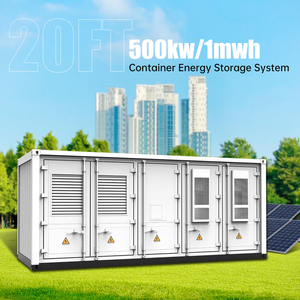
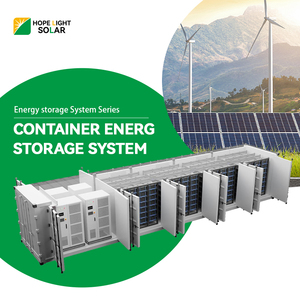
Custom 20ft & 40ft High Voltage ESS Battery Energy Storage System

Custom 20ft & 40ft High Voltage ESS Battery Storage Container

  • Container Size: 20ft / 40ft Modular
  • Voltage Rating: 700V - 1500V DC
  • Customization: Na-Ion / LFP Compatible
Contact Us
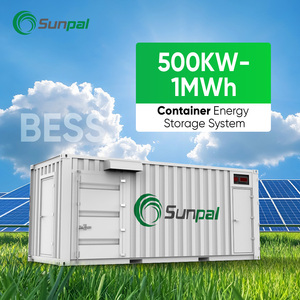
Sunpal ESS Solar Battery Cabinet Container 1MWh 500 KW Industrial

Sunpal ESS Cabinet Container 1MWh / 500kW Industrial BESS

  • Power Output: 500kW / 1MWh
  • Integration: Hybrid Solar PV + Storage
  • Protection: IP55 / NEMA 3R
Contact Us
Customizable Container Energy Storage Hybrid Integrated Lithium Ion Battery System 1000KW

Customizable Integrated Hybrid BESS 1000kW Air/Liquid Cooling System

  • Rated Power: 1000kW Continuous
  • Cooling Type: HVAC Smart Air Cooling
  • Grid Connection: 3-Phase Medium Voltage
Contact Us
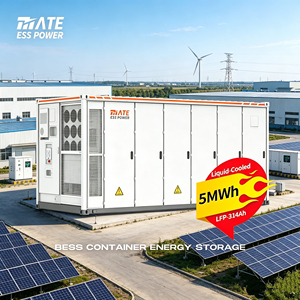
Lithium Batteries 5MWh Liquid Cooling Container Battery Storage System 314Ah

5MWh Liquid Cooling Container BESS All-In-One (314Ah / Na+ Ready)

  • Cell Chemistry: 314Ah High Density
  • Efficiency: >95% Round-Trip
  • Safety System: Aerosol & Gas Fire Suppression
Contact Us
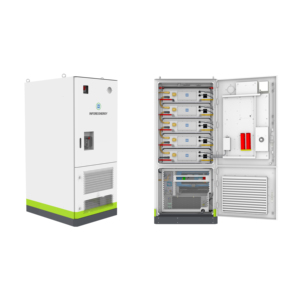
Industrial Commercial Lithium Ion Energy Storage System 233kWh

233kWh Commercial High-Power Output Cabinet BESS

  • Energy Rating: 233kWh Pack Module
  • BMS Feature: Dual-Active Balancing
  • Target Market: Factory Peak Shaving
Contact Us
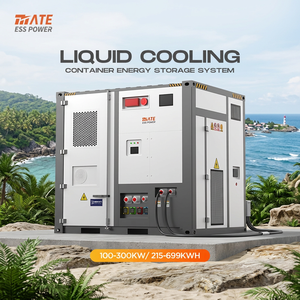
MATE LFP Lifepo4 Battery Container 100kW 215kWh 300kW 699kWh BESS

10ft Smart Microgrid Battery Container (100kW to 699kWh Modular)

  • Footprint: Compact 10ft Shipping Container
  • Ideal Use: Island & Remote Microgrids
  • Temp Range: -30°C to +55°C Ambient
Contact Us
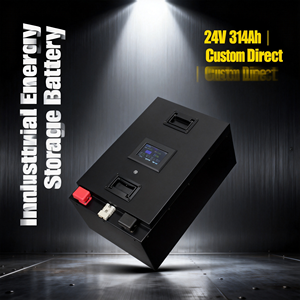
Direct Factory Custom 24V 314Ah Industrial Off-Grid Power Electric Battery

Direct Factory Custom 24V / 48V 314Ah Industrial OEM Battery Module

  • Nominal Voltage: 25.6V / 51.2V Configurable
  • Cycle Life: 6000+ Cycles @ 80% DOD
  • Customization: Form Factor & Protocol
Contact Us
120+
Years Combined OEM Engineering
160 Wh/kg
Sodium-Ion Energy Density
-40°C
Sub-Zero Operating Discharge
0 Volts
Absolute Zero Voltage Transport
Industry Whitepaper & Strategic Insights

The Sodium-Ion Revolution: Reshaping Industrial & OEM Energy Storage Architecture

As global clean energy mandates drive unprecedented demand for stationary energy storage systems (BESS), electric mobility, and telecommunications backup power, the electrochemical energy storage sector faces critical supply chain bottlenecks, raw material volatility, and thermal safety concerns linked to traditional Lithium-ion chemistries (NMC/LFP).

Enter Sodium-Ion (Na-Ion / SIB) battery pack design—a transformative technology leveraging earth-abundant sodium chemistry. With 120+ years of collective engineering expertise across OEM battery manufacturing, military-grade assembly, smart BMS integration, and aerospace quality management (AS9100 / ITAR registration), our engineering consortium provides global tier-1 original equipment manufacturers with turnkey, custom-designed Sodium-Ion and hybrid battery packs tailored for high-reliability applications.

Sodium-Ion technology offers unprecedented thermal stability, exceptional sub-zero discharge rates down to -40°C, zero-volt transport safety, and immune resistance to raw material inflation—making it the definitive procurement hedge for next-generation BESS and industrial power platforms.

Key OEM Strategic Value Drivers

  • Raw Material Security: Sodium (Na) is 1,000x more abundant in Earth's crust than Lithium (Li), completely insulating supply chains from geopolitical swings.
  • Zero-Volt Transport Compliance: Unlike Li-ion which decomposes under 2.0V, Na-Ion cells can be discharged to 0.0V without copper dissolution, ensuring 100% safe air/sea transport.
  • Superior Cold-Climate Performance: Maintains up to 85% capacity retention at -20°C and reliable discharge at -40°C without complex internal heater circuits.
  • Drop-in Manufacturing Line Capability: Compatible with standard Li-ion automated winding, pouch stacking, and pack assembly processes.
Deep Technical Architecture

Engineering Custom Sodium-Ion Battery Packs: Cathodes, Anodes & BMS Optimization

Delivering tailored electrochemical configurations for demanding thermal, operational, and physical envelopes.

Cathode Material Selection

We tailor cathode chemistries depending on energy density vs. cycle life requirements: Layered Transition Metal Oxides ($Na_xMO_2$) offer energy densities up to 160 Wh/kg for compact packs; Prussian Blue Analogues (PBA) ($Na_{2-x}Fe[Fe(CN)_6]$) provide lower raw material costs and excellent rate capability; while Polyanionic Compounds ($Na_3V_2(PO_4)_3$) deliver ultra-long cycle lives exceeding 6,000 cycles for stationary energy storage cabinets.

Hard Carbon Anode Dynamics

Unlike lithium which intercalates smoothly into graphite, sodium ions ($Na^+$) have a larger ionic radius (1.02 Å vs 0.76 Å for $Li^+$). Our custom pack design incorporates engineered Hard Carbon (Non-graphitizable carbon) anodes with optimized micro-pore structure, mitigating volume expansion during high C-rate charging and preventing sodium dendrite formation even at sub-zero temperatures.

Custom Smart BMS Algorithms

Sodium-Ion batteries exhibit a more sloped voltage curve (4.0V down to 1.5V) compared to the flat plateau of LFP. Our custom OEM Battery Management Systems (BMS) utilize proprietary Coulomb-counting state-of-charge (SOC) algorithms, CANbus / RS485 / Modbus communication protocols, and active balancing circuitry designed specifically for the electrochemical behavior of Na+ cells.

Data Visualization & Benchmark

Chemistries Comparison: Sodium-Ion vs. LiFePO4 vs. NMC Lithium-Ion

Direct technical comparison showing why Sodium-Ion is rapidly becoming the strategic choice for stationary BESS, telecom backup, and industrial motive platforms.

Performance Parameter Sodium-Ion (Na-Ion / SIB) Lithium Iron Phosphate (LFP) NMC Lithium-Ion
Cell Energy Density 130 – 160 Wh/kg 160 – 190 Wh/kg 230 – 300 Wh/kg
Raw Material Abundance Ultra-High (Sodium Salt everywhere) Low (Lithium reserves limited) Very Low (Lithium, Cobalt, Nickel constraints)
Operating Temperature Range -40°C to +65°C -20°C to +60°C -20°C to +55°C
Discharge at -20°C (% Retention) 85% – 90% Capacity 55% – 65% Capacity 70% – 75% Capacity
Thermal Runaway Onset Temp > 260°C (Extremely Safe) ~210°C ~150°C (Risk of Exothermic Fire)
Zero-Volt (0.0V) Transport Yes (100% Safe Discharge) No (Permanent Copper Damage <2.0V) No (Risk of Short Circuit <2.5V)
Current Collector Foil Aluminum on Both Sides Copper (Anode) + Aluminum (Cathode) Copper (Anode) + Aluminum (Cathode)
Estimated Raw Material Cost/kWh 30% – 40% Lower than LFP Baseline Reference 2.5x – 3x Higher than Na-Ion
Global Market Forecast

Procurement Trends & Market Dynamics for OEM Battery Buyers

1. Multi-Chemistry Hybrid BESS Containers

Engineering teams are increasingly deploying hybrid BESS containers combining Sodium-Ion modules with LiFePO4 packs inside a single 20ft or 40ft enclosure. The Sodium-Ion fraction handles cold-weather quick discharge and peak-shaving bursts, while LFP provides sustained energy capacity. As an experienced OEM supplier, we manufacture custom DC-bus management systems that dynamically switch power flows between Na-Ion and Li-Ion strings.

2. ESG & Low-Carbon Supply Chain Compliance

European and North American OEMs are subject to strict battery passport regulations and carbon footprint tracking (e.g., EU Battery Regulation 2023/1542). Because Sodium-Ion battery production eliminates copper current collectors on the anode (replacing them with lightweight aluminum) and removes conflict minerals like cobalt and nickel, SIB packs carry up to a 45% lower lifecycle carbon intensity score compared to high-nickel lithium batteries.

3. Growth in Telecom Base Stations & Cold Storage

Global telecom tower operators in Nordic regions, Canada, and high-altitude locations are shifting rapidly from lead-acid and heated LFP cabinets to unheated Sodium-Ion backup battery modules. Eliminating parasitic cabinet heating loops drastically improves overall round-trip system efficiency and reduces operating expenses (OPEX) by up to 25%.

4. Cost Trajectory Parity Below $50/kWh

Industry analysis projects that as GWh-scale Sodium-Ion cell production scales globally, cell-level manufacturing costs will drop below $50/kWh at scale. This structural cost advantage unlocks economical long-duration energy storage (LDES) and off-grid solar-storage microgrids that were previously economically unviable with lithium-based chemistries.

Why Partner With Us

Full-Stack Custom OEM Battery Pack Design Capabilities

Combining over 120 years of collective engineering excellence with defense-grade manufacturing standards to turn complex requirements into market-ready energy products.

01

Requirements & Modeling

Cell chemistry selection, 3D CAD mechanical enclosure modeling, finite element thermal simulation (CFD), and electrical load profiling.

02

BMS & PCB Design

Custom PCB design with active balancing, isolated CANbus/Modbus integration, firmware custom coding, and multi-tier protection logic.

03

Rapid Prototyping

In-house CNC machining, automated spot/laser welding of aluminum/copper busbars, wire-bonding, and liquid-cooling cold plate integration.

04

Compliance Testing

UN 38.3 transport certification, UL 1973, UL 9540A thermal runaway propagation testing, IEC 62619, and ITAR defense compliance.

05

Mass Manufacturing

Automated high-volume assembly lines, 100% End-of-Line (EOL) computerized testing, global supply chain fulfillment, and warranty support.

Need a Custom OEM Sodium-Ion Battery Pack Engineering Consultation?

Our senior battery design team will review your system specifications, mechanical constraints, and voltage requirements to deliver a comprehensive engineering quote within 48 hours.

Frequently Asked Questions

Custom OEM Sodium-Ion Battery Procurement & Design FAQ

Get authoritative technical answers regarding Sodium-Ion chemistry, custom pack manufacturing, regulatory certifications, and lead times.

What is the expected cycle life of a custom Sodium-Ion battery pack? +

Depending on cathode material selection and operational C-rates, modern industrial-grade Sodium-Ion (Na-Ion) cells deliver between 3,000 to 6,000+ deep charge-discharge cycles at 80% Depth of Discharge (DOD). Polyanionic-based Na-Ion cells utilized in our stationary container BESS systems achieve cycle lives comparable to standard LFP cells while maintaining superior capacity retention under broad temperature swings.

Can Sodium-Ion battery packs be transported safely at 0.0 Volts? +

Yes. One of the greatest operational and safety advantages of Sodium-Ion technology over Lithium-Ion is its zero-volt stability. Because Sodium does not alloy with aluminum, aluminum foil is used as the current collector on both the positive (cathode) and negative (anode) electrodes. Unlike Lithium batteries—which use copper anodes that dissolve and form internal short circuits if discharged below 2.0V—Na-Ion packs can be fully discharged to 0.0V without chemical degradation, eliminating dangerous fire risks during air, ocean, or overland transport.

How does Sodium-Ion compare to LiFePO4 in extreme cold environments? +

Sodium-Ion significantly outperforms standard LiFePO4 (LFP) in cold weather. At -20°C, a custom Na-Ion battery pack retains up to 85% to 90% of its usable nominal capacity and can still accept fast charging without lithium-plating hazards. Even at extreme ambient temperatures of -40°C, Na-Ion cells deliver up to 70% capacity output. This renders internal resistance heating circuits unnecessary in most outdoor BESS installations, telecom backup units, and cold-chain equipment.

What custom BMS features are included in your OEM battery packs? +

Our custom Battery Management Systems (BMS) are engineered with high-precision voltage sensing adapted specifically for the sloped 4.0V–1.5V discharge profile of Sodium-Ion chemistry. Features include multi-point NTC temperature monitoring, active cell balancing, short-circuit, over-current, and over-voltage protection, state-of-health (SOH) telemetry, isolated CANbus 2.0B / RS485 / Modbus RTU communication protocols, and optional IoT cloud remote monitoring firmware.

What international safety certifications do your battery systems comply with? +

We design all OEM battery packs, rack modules, and containerized BESS units to meet rigorous global standards, including UN 38.3 (Transport Testing), UL 1973 (Industrial Battery Safety), UL 9540 & UL 9540A (Thermal Runaway Fire Propagation Testing), IEC 62619, CE, and RoHS/REACH compliance. Our manufacturing plants operate under strict ISO 9001, ISO 14001, and AS9100 quality control systems.

What is the typical engineering NPI lead-time for custom OEM projects? +

For standard customized battery pack designs using existing qualified Na-Ion or LFP cell stock, initial 3D design files and BMS architecture can be delivered within 1 to 2 weeks. Prototype sample builds generally take 4 to 6 weeks following design freeze. Full production tooling, compliance testing, and mass production ramp-up usually require 8 to 12 weeks depending on enclosure complexity and certification requirements.

Can your containerized BESS solutions integrate both Solar PV and Grid input? +

Yes. Our 20ft and 40ft containerized battery storage solutions (from 1MWh to 5MWh capacity) are fully integrated hybrid systems. They incorporate multi-mppt solar charge controllers, bidirectional Power Conversion Systems (PCS), automated HVAC/liquid cooling systems, aerosol fire suppression, and smart Energy Management Software (EMS) capable of seamless microgrid operation, peak shaving, frequency regulation, and emergency UPS auto-switchover.

What minimum order quantities (MOQ) apply to custom OEM/ODM orders? +

We accommodate scalable production runs tailored to your commercial stage. For custom industrial OEM packs, low-rate initial production (LRIP) orders start as low as 50 to 100 units following prototype sign-off. For utility-scale container BESS systems or standardized cabinet storage modules, we support single container orders (1 MWh+) up to multi-GWh annualized OEM supply contracts.

Partner with a Proven Custom OEM Battery Manufacturer

Leverage our 120+ years of combined engineering expertise, state-of-the-art testing facilities, and global supply chain network to design, build, and certify your next-generation Sodium-Ion or LiFePO4 battery system.