Custom OEM Fast Charging Lithium Battery Modules Factories & Suppliers

Architectural Whitepaper & Strategic Engineering Guide for High-Rate C-FET Battery Management Systems, Liquid-Cooled Energy Storage, and Industrial Lithium Modules

Industrial Product Portfolio

Turnkey Commercial & Heavy Industrial Energy Storage Systems

Explore our custom OEM factory-direct lithium battery modules engineered for high C-rate fast charging, grid-level longevity, thermal safety, and modular scalability.
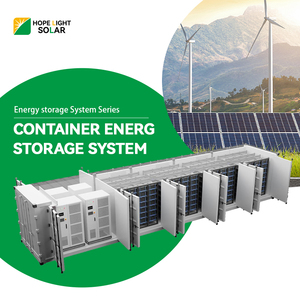
BENY 1Mwh 5mwh Container Energy Storage High Voltage LIFEPo4 Lithium Ion Batteries ESS Industrial And Commercial Battery

BENY 1MWh - 5MWh High Voltage LiFePO4 Container Energy Storage System (ESS)

High Voltage BESS LiFePO4 Chemistry Containerized
Contact Us
Custom 20ft & 40ft High Voltage ESS Battery Energy Storage System Commercial & Industrial Lithium Ion Battery Container Solution

Custom 20ft & 40ft High Voltage Commercial & Industrial ESS Container Solution

20ft / 40ft ISO OEM Custom Rack HV Master BMS
Contact Us
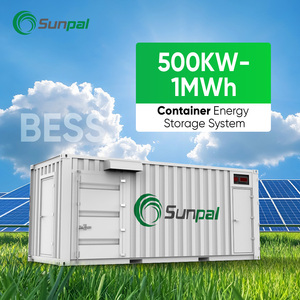
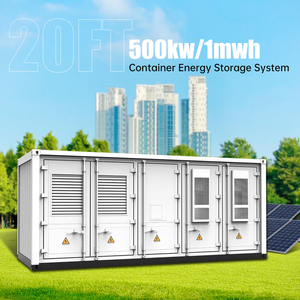
Sunpal ESS Solar Battery Cabinet Container 1MWh 500 KW Industrial Lifepo4 BESS Solar Energy System

Sunpal ESS Solar Battery Cabinet 1MWh 500kW Industrial BESS System

500kW PCS Integrated Solar Coupling IP54 Cabinet
Contact Us
Customizable Container Energy Storage Hybrid Integrated Lithium Ion Battery System 1000KW Air Industrial Commercial Photovoltaic

Customizable Hybrid Integrated Lithium-Ion Energy Storage System 1000kW

1000kW Hybrid Inverter Air Cooling Grid Support
Contact Us
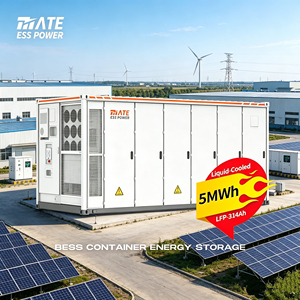
Lithium Batteries 5MWh Liquid Cooling Container Battery Storage System LiFePO4 Battery ESS All In One BESS 314Ah For Factory

5MWh Liquid Cooling Containerized BESS LiFePO4 314Ah High-Density Module

Liquid Thermal Management 314Ah LFP Cell Non-Propagation
Contact Us
Industrial Commercial Lithium Ion Energy Storage System 233kWh High Power Output BESS Customized Manufacturer High Quality

Industrial Commercial 233kWh High Power Output All-in-One Outdoor BESS Cabinet

233kWh Capacity C&I Peak Shaving Rapid OEM Turnaround
Contact Us
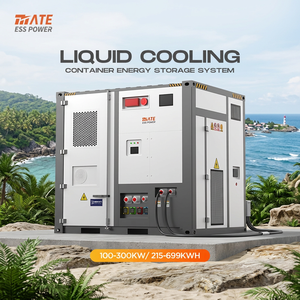
MATE LFP Lifepo4 Battery Container 100kW 215kWh 300kW 699kWh BESS Smart Lithium Battery Energy Storage System 10ft For Island

MATE Smart Modular BESS Container 100kW-300kW (215kWh-699kWh) for Island Grids

Island Microgrid 10ft Compact Footprint Black Start Ready
Contact Us
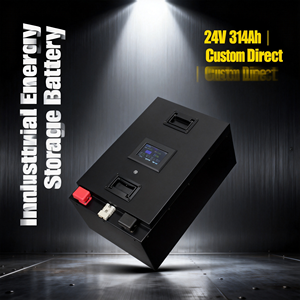
Direct Factory Custom 24V 314Ah for Industrial Off-Grid Energy Storage Power Electric Lithium Battery

Factory Direct Custom 24V/48V 314Ah Industrial Off-Grid Energy Storage Module

24V / 48V OEM Rack 314Ah High Capacity RS485/CANbus BMS
Contact Us
120+
Years Collective Engineering Expertise
4C - 6C
Ultra-Fast Charging C-Rate Capability
8,000+
Deep Discharge Cycles (80% EOL)
Zero
Thermal Runaway Propagation Design
Technical Deep Dive

High-Rate Fast Charging Lithium Modules: Physics, BMS Mechanics, and OEM Customization

In modern industrial electromobility, heavy machinery, and grid-tied energy storage system (ESS) architectures, traditional 0.5C to 1C charging rates no longer suffice. B2B procurement managers and system integrators actively demand custom OEM fast-charging lithium battery modules capable of accepting 2C, 3C, and up to 6C charging currents without inducing dendrite formation, thermal runaway, or accelerated state-of-health (SoH) degradation.

Information Gain Insight: Lithium-ion battery fast charging is fundamentally limited by the solid-state diffusion rate of lithium ions into the graphitic or silicon-composite anode structure. Operating under high current densities without precise thermal management induces localized anode overpotentials, driving dangerous lithium metal plating that degrades cycle life and compromises cell safety.

Anode Kinetics & Anti-Plating Topology

Our factory-customized lithium battery modules utilize advanced Tier-1 cells featuring surface-modified graphite anodes bonded with carbon nanotube (CNT) conductive networks. This ultra-porous architecture reduces solid electrolyte interphase (SEI) resistance, allowing rapid Li+ insertion during 3C+ charging cycles without metallic lithium precipitation.

Liquid Cooling vs. Air Thermal Systems

Fast charging generates internal Joule heating ($I^2R$). Traditional air-cooled modules suffer from core-to-surface thermal gradients up to 12°C, causing uneven cell aging. Our OEM custom liquid-cooled battery packs integrate micro-channel aluminum cold plates directly beneath cell packs, maintaining thermal variance across the entire module under ±2°C.

Adaptive C-FET BMS Control Protocols

A critical component of custom OEM fast charging modules is the intelligent Battery Management System (BMS). Utilizing real-time electrochemical impedance spectroscopy (EIS) estimation and high-side solid-state MOSFET switches, our custom BMS dynamically adjusts maximum charge current based on instantaneous cell temperature, State of Charge (SoC), and internal resistance profiles.

Engineering Standards

Custom OEM Lithium Battery Module Architecture Comparison

Evaluating key technical metrics across cell chemistries, thermal management designs, and voltage architectures for enterprise procurement.

Specification Parameter High-Rate LFP (314Ah Prismatic) High-Energy NMC (21700 / 4680) Solid-State Hybrid (OEM Custom)
Nominal Cell Voltage 3.2V (Pack modules up to 1500V DC) 3.6V - 3.7V (High Volumetric Density) 3.8V (Solid/Gel Polymer Interphase)
Continuous Fast Charge C-Rate 1.5C to 3C (100% SoC in <30 mins) 2C to 4C (Dynamic Thermal Control) 4C to 6C (Dendrite-Suppressed Anode)
Thermal Runaway Initiation Temp > 270°C (Extremely Stable Chemistry) > 210°C (Requires Aero-Gel Isolation) > 320°C (Non-Flammable Solid Matrix)
Cycle Life (80% EOL @ 1C/1C) 6,000 to 10,000 Cycles 2,500 to 4,000 Cycles 5,000+ Cycles (Next-Gen Industrial)
Optimal Cooling Topology Liquid Cold-Plate (Bottom/Side Flow) Direct Immersion / Cold Plate Pipe Convection / Dual-Surface Cold Plate
Target OEM Applications Utility ESS, Commercial Containers, AGVs Drones, Medical Robotics, Defense UAVs Aerospace, High-Power Electric Mining
Industry Insights & Sourcing Trends

Global Sourcing Trends & Technology Roadmap for Custom Lithium Battery Modules (2025–2030)

As global energy transitions accelerate and industrial electrification reaches unprecedented momentum, B2B battery procurement is undergoing a systemic structural evolution. Enterprise buyers, OEMs, and engineering consultants must align their procurement strategies with four key technical transformations currently taking place across the lithium battery factory ecosystem.

1. The Transition from 280Ah to 314Ah & 560Ah Cell Modules

The standard unit cell capacity for commercial and industrial energy storage systems (C&I ESS) has rapidly shifted from traditional 280Ah prismatic cells to high-density 314Ah LFP form factors without increasing the outer dimensions of the standard 20ft container footprint. This shift delivers a 12% to 15% increase in total volumetric energy density, enabling standard 20ft BESS containers to achieve 5MWh+ total storage capacities while reducing installation CAPEX per kWh by up to 18%.

2. Mandatory Liquid Cooling Integration in C&I Infrastructure

Air-cooled energy storage cabinets are rapidly being replaced by integrated liquid-cooling modules across high-capacity industrial applications. Liquid cooling reduces internal auxiliary power consumption by up to 40% compared to traditional HVAC air conditioning, while ensuring precise thermal control. Custom OEM suppliers that integrate liquid-cooling plates directly into module-level chassis are dominating large-scale factory procurement pipelines.

3. Cloud-Connected Digital Twin BMS & Predictive Maintenance

Modern B2B buyers no longer evaluate battery hardware in isolation. Advanced OEM contracts demand embedded IoT edge gateways within the Battery Management System. By transmitting high-frequency voltage, temperature, current, and impedance data via CANbus, Modbus TCP, or cellular protocols to cloud-based Digital Twin AI algorithms, system operators can predict thermal events days in advance and optimize operational C-rates in real time.

Why Partner With Us

120+ Years Collective Expertise in Custom Battery Pack Engineering

Referencing world-class USA and global OEM custom battery assembly standards, our manufacturing facilities deliver full-stack design, engineering, compliance testing, and mass production for critical application markets.

Full-Stack Custom BMS & PCB Design

From single-cell protection circuit modules (PCM) to complex multi-layer high-voltage Master-Slave BMS architectures, our engineering team designs firmware, hardware schematics, and custom enclosures tailored to your specific voltage, communication (CAN-Open, SMBus, RS485), and space constraints.

Defense, Military & Medical Compliance

Leveraging ITAR registration, AS9100 aerospace certification, and ISO 13485 medical device quality standards, our factory facilities manufacture ultra-reliable battery packs capable of withstanding extreme shock, vibration, thermal cycling, and hostile electromagnetic environments.

Turnkey Certification Support (UN38.3 & UL)

Navigating international transportation regulations and safety standards can delay product launches. We provide comprehensive in-house testing and third-party lab certification management for UN/DOT 38.3, UL 1642, UL 1973, UL 9540A thermal runaway propagation testing, and IEC 62619 safety compliance.

Buyer Guidelines & FAQ

Frequently Asked Questions for Custom OEM Battery Module Sourcing

Critical engineering answers to common procurement questions when selecting custom fast-charging lithium battery manufacturers and suppliers.

What defines a "fast charging" lithium battery module in commercial OEM applications?
In industrial and commercial OEM applications, a fast-charging module is defined as a battery pack capable of safely accepting continuous charging rates of 1.5C to 4C (reaching 80% State of Charge in 15 to 30 minutes) without exceeding maximum cell operating temperatures or causing localized anode lithium plating. This requires specialized Tier-1 cell chemistry, low-impedance nickel/copper busbars, active cell balancing, and optimized liquid thermal management plates.
Why is LiFePO4 (LFP) preferred over NMC for large-scale containerized energy storage systems?
Lithium Iron Phosphate (LiFePO4 / LFP) offers superior thermal and chemical stability compared to Nickel Manganese Cobalt (NMC). LFP cells exhibit a higher thermal runaway threshold (>270°C vs ~210°C for NMC) and produce zero oxygen gas during decomposition, preventing explosive thermal runaway events. Furthermore, LFP delivers exceptional cycle life (6,000 to 10,000 cycles at 80% Depth of Discharge), making it the most cost-effective chemistry over a 15-to-20-year project lifetime.
How does liquid cooling impact the operational lifespan of 314Ah fast-charging battery packs?
Liquid cooling maintains extremely uniform internal temperatures across all cells within a rack or container module. By limiting maximum cell temperature variances to under ±2°C (compared to ±8°C to ±12°C in forced air cooling systems), liquid cooling prevents localized cell hot spots, mitigates differential cell aging, extends overall module cycle life by 20% to 30%, and reduces auxiliary cooling power consumption by up to 40%.
What custom OEM choices are available for BMS communication protocols and system integration?
Our custom factory OEM BMS solutions support full hardware and software integration. We provide configurable communication interfaces including CANbus 2.0B, CANopen, RS485, Modbus RTU/TCP, SMBus, and Ethernet. Custom telemetry firmware can be flashed during manufacturing to seamlessly pair with solar inverters (PCS), microgrid controllers, medical machinery, or vehicle ECU protocols.
What quality certifications are mandatory for exporting lithium battery containers to US and European markets?
For international deployment, battery modules and container systems must comply with UN/DOT 38.3 for safe transport, IEC 62619 for industrial safety, UL 1973 for stationary storage packs, and UL 9540A for unit-level thermal runaway fire propagation testing. European installations typically mandate CE compliance, IEC 61000 EMC testing, and EU Battery Regulation digital passport compliance.
What is the typical lead time for custom battery module prototyping and mass factory production?
Initial engineering design and 3D CAD modeling generally require 1 to 2 weeks. Custom BMS PCB fabrication, enclosure tooling, and functional prototype assembly typically take 4 to 6 weeks. Following client prototype validation and UN38.3 certification, factory mass production lead time is approximately 6 to 8 weeks depending on raw cell availability and order volume.

Accelerate Your Product Pipeline with Custom OEM Fast Charging Lithium Modules

Partner directly with an experienced battery engineering team. Whether you require liquid-cooled 5MWh container BESS modules, high-discharge medical power packs, or custom ITAR-compliant military lithium modules — we engineer power solutions tailored to your exact technical specifications.