Custom OEM 32700 LiFePO4 Cell Pack Integration Factories & Supplier

Next-Generation Industrial Energy Storage, Smart BMS Engineering & High-Capacity Battery Pack Systems

Featured Commercial & Industrial Battery Pack Solutions

Explore our flagship OEM/ODM integrated 32700 LiFePO4 and large-scale containerized energy storage solutions designed for extreme durability, long cycle life, and maximum efficiency.
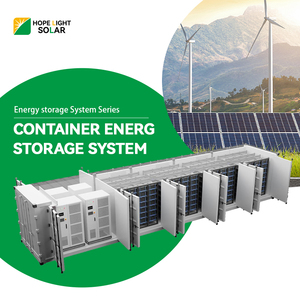
BENY 1Mwh 5mwh Container Energy Storage High Voltage LIFEPo4 Lithium Ion Batteries ESS Industrial And Commercial Battery
Contact Us
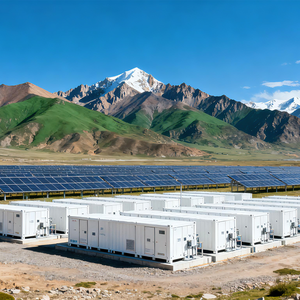
Custom 20ft & 40ft High Voltage ESS Battery Energy Storage System Commercial & Industrial Lithium Ion Battery Container Solution
Contact Us
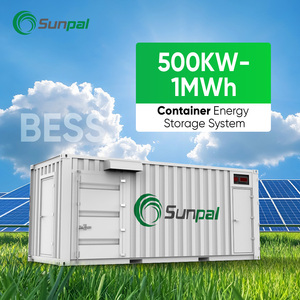
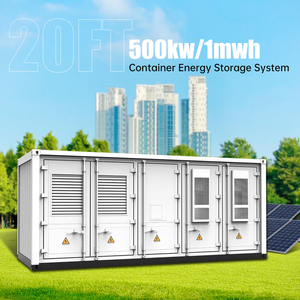
Sunpal ESS Solar Battery Cabinet Container 1MWh 500 KW Industrial Lifepo4 BESS Solar Energy System
Contact Us
Customizable Container Energy Storage Hybrid Integrated Lithium Ion Battery System 1000KW Air Industrial Commercial Photovoltaic
Contact Us
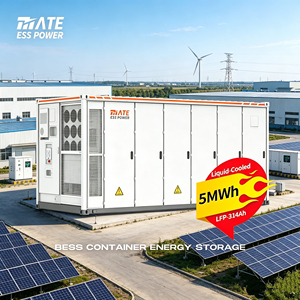
Lithium Batteries 5MWh Liquid Cooling Container Battery Storage System LiFePO4 Battery ESS All In One BESS 314Ah For Factory
Contact Us
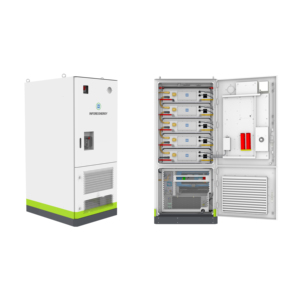
Industrial Commercial Lithium Ion Energy Storage System 233kWh High Power Output BESS Customized Manufacturer High Quality
Contact Us
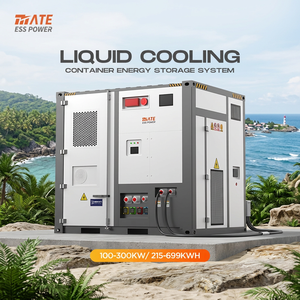
MATE LFP Lifepo4 Battery Container 100kW 215kWh 300kW 699kWh BESS Smart Lithium Battery Energy Storage System 10ft For Island
Contact Us
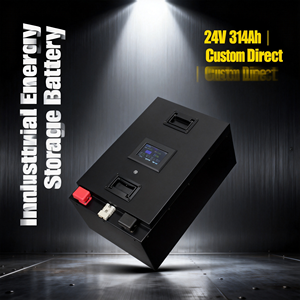
Direct Factory Custom 24V 314Ah for Industrial Off-Grid Energy Storage Power Electric Lithium Battery
Contact Us
120+
Years Collective Expertise
4000+
Deep Cycles @ 80% DOD
99.8%
BMS Balancing Yield
ISO/ITAR
Aerospace & Defense Certified

1. Executive Summary: The Rise of 32700 LiFePO4 Cylindrical Cells in OEM Applications

In the rapidly changing landscape of energy transition, 32700 Lithium Iron Phosphate (LiFePO4) cylindrical cells have established themselves as a dominant hardware architecture for custom battery integration. Delivering an optimal equilibrium between volumetric energy density, thermal robustness, mechanical durability, and long-term cost efficiencies, the 32700 form factor (32mm diameter by 70mm height) provides original equipment manufacturers (OEMs) and contract manufacturers (CMs) with an adaptable building block for scalable power systems.

Unlike standard 18650 or 21700 lithium-ion cells—which rely heavily on nickel-manganese-cobalt (NMC) chemistries prone to thermal runaways under mechanical abuse—32700 cells utilize an olivine crystalline structure (LiFePO4). This robust molecular lattice ensures intrinsically safe operation even under severe overcharging, short-circuiting, puncture, or extreme temperature excursions. Modern Tier-1 custom battery assembly factories leverage sophisticated automated sorting systems, laser busbar welding techniques, and micro-BMS architectures to construct robust packs tailored for solar energy storage systems (ESS), commercial telecommunications, medical equipment, unmanned aerial vehicles (UAVs), and heavy duty off-grid power stations.

Core Technical Advantage of 32700 Cell Form Factor

Compared to large prismatic cells (e.g., 280Ah or 314Ah), 32700 cylindrical cells offer superior heat dissipation due to their higher surface-area-to-volume ratio and radial thermal paths. Furthermore, in high-vibration applications such as military mobility, marine vessels, and industrial AGVs, cylindrical steel casings absorb mechanical stress far more effectively than aluminum prismatic shells or soft pouch cells, eliminating risk of micro-swelling and internal short circuits.

2. Engineering Architecture of Custom 32700 LiFePO4 Pack Integration

Building a high-reliability OEM battery pack using 32700 cells requires sophisticated systems engineering spanning electrical design, structural modeling, thermal management, and safety algorithm integration. Below is an engineering overview of how leading integration facilities transform individual 32700 cells into robust, multi-kilowatt-hour battery modules:

Precision Cell Sorting & Grading
Cells undergo 100% automated screening for internal resistance (AC IR ≤ 6mΩ), open-circuit voltage (OCV delta ≤ 2mV), and capacity matching to eliminate mismatch-induced capacity fade during series-parallel grouping.
Automated Fiber Laser Welding
High-speed nickel-copper composite busbar laser welding minimizes thermal impact on cell caps, preventing seal degradation while ensuring micro-ohm connection resistance capable of handling high continuous discharge rates up to 3C-5C.
Smart Active-Balancing BMS
Custom-engineered Smart BMS incorporating CANbus, RS485, and Bluetooth telemetries. High-efficiency active balancing circuitry redistributes charge between cell groups, extending pack cycle life by up to 25%.

When engineering customized 32700 LiFePO4 solutions, structural isolation is paramount. High-spec packs incorporate flame-retardant ABS/PC internal cell holders (UL94-V0 rated) that maintain uniform air gaps between adjacent cells. This physical isolation prevents thermal cascading in the rare event of localized cell damage while allowing natural convection or forced liquid cooling loops to maintain thermal equilibrium within ±3°C across the whole battery module.

Technical Benchmarking: 32700 Cylindrical vs. Prismatic vs. Pouch Cells

To help procurement teams make informed architecture selections, the table below contrasts 32700 LiFePO4 packs against alternative lithium-ion form factors:

Performance Metric 32700 Cylindrical Packs Prismatic LFP Cells Soft Pouch LFP Cells
Nominal Voltage / Capacity 3.2V / 6000mAh - 7000mAh 3.2V / 100Ah - 314Ah 3.2V / 20Ah - 50Ah
Thermal Dissipation Efficiency Very High (360° Radial Heat Path) Moderate (Core Heat Trap) Low-Moderate (Surface Dependent)
Vibration & Shock Resistance Superior (Steel Casing & Holders) Moderate (Large Mass Stress) Sensitive to Mechanical Friction
Cycle Life (80% DOD) 4,000 – 6,000 Cycles 3,500 – 6,000 Cycles 2,500 – 4,000 Cycles
Safety / Thermal Runaway Risk Extremely Safe (Pressure Vent Lid) Safe (Requires Compression Racks) Puncture Sensitive / Swelling Risk
Scalability & Custom Shape Highly Flexible Space Fit Rigid Rectangular Blocks Only Flexible Form Factor

3. Global Procurement Trends for OEM 32700 Battery Pack Systems (2025–2030)

As industrial automation, commercial energy storage systems (ESS), telecom backup, and micro-mobility markets expand globally, B2B procurement strategies for battery packs are undergoing fundamental shifts. Purchasing directors and engineering executives must navigate several emerging trends:

1. Shift Towards Fully Integrated "Cell-to-Pack" (CTP) & Smart BMS Solutions

Procurement teams are moving away from sourcing standalone battery components from multiple vendors. The modern procurement trend prioritizes turnkey integration factories capable of delivering fully certified, enclosed, smart battery systems complete with custom BMS firmware, pre-configured communication protocols (Modbus, SMBus, HDQ), and certified protective enclosures (IP65/IP67 rated).

2. Stringent Regulatory & Traceability Requirements

International compliance mandates are becoming increasingly complex. Global buyers now require complete material traceability, carbon footprint documentation, and mandatory safety certifications including UN38.3, UL1973, UL9540A, IEC 62619, and CE mark. Factories with in-house testing laboratories and military-grade accreditation (such as ITAR registration and AS9100 quality compliance) offer significant lead-time advantages by expediting global customs clearance and reducing compliance bottlenecks.

3. Localization & Supply Chain Resiliency

Geopolitical shifts and freight volatility have forced OEMs to build resilient supply chains. Leading battery pack manufacturers now establish dual-sourcing cell alliances with Tier-1 lithium producers while maintaining regional custom engineering hubs in North America and Europe. This hybrid model allows for rapid prototyping, local warranty support, and short-run customized pilot production before committing to volume manufacturing in automated overseas facilities.

4. Future Technological Roadmap: Innovations in 32700 LiFePO4 Systems

The technological development of 32700 LiFePO4 battery pack integration is accelerating along several key innovation vectors:

  • Silicon-Doped Anodes & High-Density Cathodes: Next-generation 32700 cells are incorporating micro-silicon anode additives, raising cell capacities from the traditional 6000mAh benchmark toward 7000mAh–7500mAh without compromising cycle stability or safety.
  • AI-Driven Predictive BMS & Cloud Telemetry: Integration of IoT-connected edge processors into the Battery Management System allows real-time state-of-health (SOH) tracking, predictive thermal runaway algorithms, and over-the-air (OTA) firmware updates for large industrial battery fleets.
  • Advanced Hybrid Cooling Architectures: For high-C-rate industrial applications (such as electric forklifts, tugboats, and peak-shaving microgrids), custom factories are integrating micro-channel cold plate liquid cooling direct-to-busbar systems, enabling continuous high-power output while maintaining optimal cell core temperatures.
  • Direct Recyclability & Sustainable Module Assembly: Environmental standards are driving module design toward solderless mechanical interconnects and modular disassembly architecture, enabling cost-effective second-life applications and direct recycling of steel casings and copper busbars.

5. Enterprise Advantages & OEM Integration Capabilities

With over 120 years of collective engineering expertise, our custom battery pack integration manufacturing ecosystem provides an end-to-end bridge from preliminary concept to mass production. We deliver tailored power solutions for the world's most demanding applications across medical devices, defense systems, smart utility meters, drones/UAVs, and commercial ESS containers.

ITAR Registered & AS9100 Certified
Full compliance with military and aerospace quality standards. Our manufacturing lines implement strict statistical process control (SPC), traceability, and rigorous FMEA protocols.
Custom BMS Electronics Engineering
In-house hardware and software engineers design specialized PCB layouts, embedded firmware, fuel gauging algorithms, and custom bus interfaces tailored to your host system's hardware architecture.
Authorized OEM Battery Assembler
Official design and assembly partnership with tier-1 cell manufacturers (including Energizer, NanoGraf, Amprius, and top LFP foundries), providing early access to cutting-edge chemistries and factory-direct pricing.
Turnkey Scalable Container ESS Solutions
From 10ft/20ft/40ft modular BESS storage containers to custom rack cabinet integration, our facilities handle structural fabrication, HVAC thermal insulation, fire suppression, and grid-tie inverter matching.

Whether you require a compact 12V 24Ah 32700 medical cart pack, a high-drain 48V 100Ah AGV pack, or a megawatt-hour high-voltage utility container (1MWh - 5MWh), our engineering division provides comprehensive thermal simulations, 3D CAD modeling, rapid prototype sampling, and complete UN38.3 certification support.

6. Frequently Asked Questions (FAQ) for B2B Buyers & Engineers

Q: What is the typical MOQ for custom OEM 32700 LiFePO4 battery pack integration?
A: Minimum Order Quantities (MOQs) depend on pack complexity and customization level. For custom engineered industrial modules, our typical production batches start at 100 to 500 units. For NPI (New Product Introduction) and prototype development phases, we support low-volume sample runs (5 to 20 packs) to facilitate customer qualification and testing.
Q: Why choose 32700 LiFePO4 cylindrical cells over large prismatic cells for industrial packs?
A: 32700 cylindrical cells excel in applications requiring physical durability, high discharge C-rates, and flexible volumetric footprint options. Steel-cased 32700 cells withstand high vibration environments far better than large prismatic blocks. Additionally, distributed multi-cell parallel topologies prevent single-point cell failure from disabling an entire high-voltage battery string.
Q: How does your factory handle thermal management in large 32700 pack designs?
A: We use flame-retardant cell spacing holders to ensure physical isolation between individual 32700 cells. Thermal engineering includes CFD modeling to optimize airflow channels or integrated aluminum cold plate cooling systems, keeping intra-pack temperature variance within ≤3°C during 1C continuous discharge.
Q: Can you integrate custom communication protocols into the Smart BMS?
A: Yes. Our BMS engineering team routinely develops custom firmware supporting CANopen, J1939, RS485, Modbus RTU/TCP, SMBus, and Bluetooth low energy (BLE). This allows seamless handshake telemetry with host industrial equipment, solar inverters, or telemetry cloud gateways.
Q: What international safety certifications do your battery packs comply with?
A: Our factory custom designs and builds battery systems to satisfy UN38.3 (transport safety), UL1642, UL1973, UL9540A, IEC 62619, CE, and RoHS standards. We provide full documentation packages and assist customers through regulatory laboratory approvals.
Q: What is the expected cycle life of a professionally integrated 32700 LiFePO4 pack?
A: Under standard operating conditions (0.5C charge/discharge at 25°C with 80% Depth of Discharge), our 32700 LiFePO4 packs achieve over 4,000 to 6,000 deep charge cycles before capacity degrades to 80% of nominal rating.
Partner with a Lead OEM 32700 Battery Integration Factory
Whether you need engineering consultation, prototype development, or high-volume automated battery pack manufacturing, our technical sales engineers are ready to assist your project.