
Executive Overview: The Strategic Imperative of Wholesale Off-Grid Energy Storage
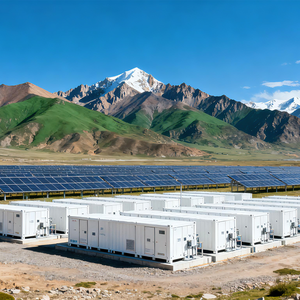
The global transition toward decentralized power generation has positioned wholesale off-grid solar power battery packs as the cornerstone of energy resilience, peak shaving, and microgrid stabilization. Commercial and industrial (C&I) enterprises, island communities, remote mining operations, and utility operators are rapidly abandoning legacy lead-acid and diesel generator configurations in favor of high-voltage Lithium Iron Phosphate (LiFePO4) Battery Energy Storage Systems (BESS).
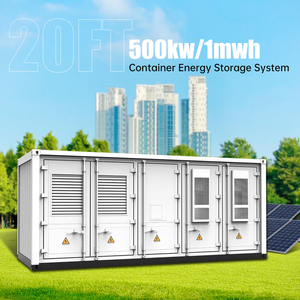
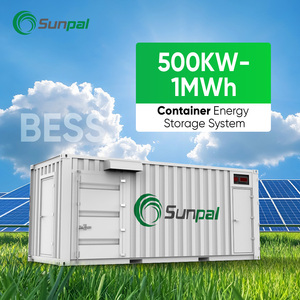
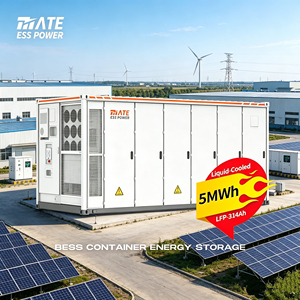
Navigating the Chinese manufacturing ecosystem requires a granular understanding of electrochemical dynamics, Battery Management System (BMS) topology, thermal management engineering, and international compliance standardizations (including UL 9540, UL 1973, IEC 62619, and UN 38.3). As direct OEM/ODM manufacturers, Chinese suppliers offer significant cost efficiencies, structural customization (from 10ft micro-containers to 40ft high-density 5MWh systems), and state-of-the-art 314Ah prismatic cell integration.
LiFePO4 chemistry features an ignition threshold of 270°C+, completely preventing thermal runaway events inherent in NMC alternatives.
Engineered for 6,000 to 10,000 deep discharge cycles (80% DoD), granting an operational lifespan exceeding 15 to 20 years.
Active balancing architecture managing voltage, current, temperature, and State of Health (SoH) via Modbus & CANbus telemetry.
Technology & Architectural Innovations in Off-Grid Solar Battery Manufacturing
Modern off-grid applications demand far more than basic energy storage; they require smart, responsive electrical infrastructure capable of handling non-linear surges, extreme environmental conditions, and continuous high C-rate charging/discharging cycles. Chinese top-tier manufacturers have pioneered three core architectural breakthroughs:
1. Shift to High-Density 314Ah Prismatic Cell Chemistries
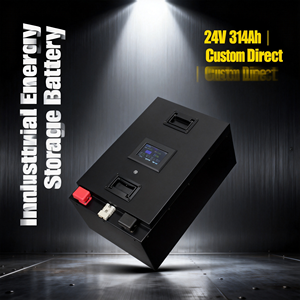
The industrial energy storage sector has rapidly evolved from legacy 50Ah and 100Ah pouch cells to 280Ah, and now standardized 314Ah prismatic LFP cells. The 314Ah cell format increases energy density per cubic meter by up to 12% without enlarging physical footprint, dramatically reducing container enclosure costs and system assembly complexity.
2. Liquid Cooling vs. Forced Air Thermal Management
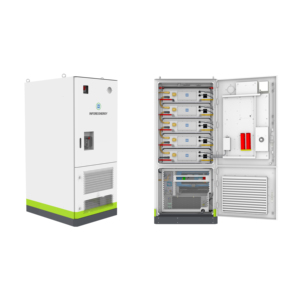
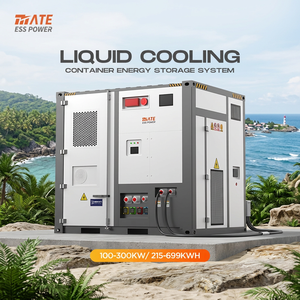
Thermal management directly dictates battery degradation rates and system safety. While forced air cooling remains cost-effective for small-scale 100kW/215kWh cabinets, liquid-cooling technology has become the global standard for 1MWh to 5MWh containerized solutions. Liquid cooling maintains cell-to-cell temperature differentials within ≤ 2.5°C, reducing cooling energy consumption by 30% and extending system operational life by over 20%.
| System Specification | Standard Cabinet (Air-Cooled) | 20ft BESS Container | 40ft Liquid-Cooled Container |
|---|---|---|---|
| Typical Storage Capacity | 100kWh – 233kWh | 1MWh – 2.5MWh | 3.44MWh – 5.0MWh |
| Cell Chemistry & Capacity | LiFePO4 280Ah / 314Ah | LiFePO4 314Ah Prismatic | Ultra-High Density 314Ah / 560Ah |
| Thermal Differential (ΔT) | ≤ 5.0°C | ≤ 3.0°C | ≤ 2.0°C (Precision Liquid Loop) |
| System Voltage Range | 512V – 768V DC | 768V – 1152V DC | 1000V – 1500V High Voltage DC |
| Target Applications | Commercial Facilities, Small Off-Grid | Industrial Parks, Microgrids | Utility-Scale Solar, Island Power Plants |
| Protection & Fire Suppression | IP54 / Aerosol System | IP55 / Heptafluoropropane (FM200) | IP67 Pack / Multi-Stage Pack-Level Gas+Water |
Future Procurement Trends: What Global Buyers Must Benchmark
Procuring off-grid battery packs from Chinese manufacturers requires long-term technical foresight. Procurement directors and EPC contractors should structure RFQs (Request for Quotations) around four emerging market trends:
Transitioning from 1000V to 1500V DC systems reduces auxiliary power consumption by 20%, lowers balance-of-system (BOS) cabling costs by 15%, and improves round-trip energy efficiency (RTE) to over 90%. Ensure your prospective manufacturer possesses certified high-voltage isolation designs.
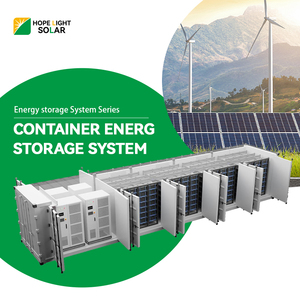
- Hybrid Power Conversion System (PCS) Integration: Modern BESS containers are no longer pure DC batteries; they are delivered as "All-In-One" systems incorporating hybrid inverters, MPPT solar chargers, and automatic grid/generator transfer switches.
- AI-Driven Cloud Energy Management Systems (EMS): Leading wholesale suppliers offer integrated IoT gateways with real-time predictive maintenance, electricity tariff arbitrage software, and remote OTA firmware updates.
- Modular Plug-and-Play Containers: 10ft, 20ft, and 40ft ISO standardized shipping enclosures significantly reduce site civil work and installation timelines by up to 60%.
Enterprise Advantage: Why Partner With Certified Manufacturing Facilities
Building high-capacity off-grid battery packs requires rigorous engineering heritage, strict quality control (QC), and customized design capability. Drawing from over 120 years of collective engineering expertise across custom battery pack design, smart BMS development, and military/industrial assembly, our partner network stands at the forefront of power innovation.
Custom PCB design, protocol customization (RS485, CAN, Modbus TCP), and custom hardware protection layers engineered in-house for complete system reliability.
Products are built to satisfy global standards: UN 38.3 transport safety, UL 1973 cell/pack safety, UL 9540 system safety, CE, and IEC 62619 guidelines.
Engineered IP65/IP67 weather-proof enclosures, anti-seismic internal bracing, and custom thermal insulation suited for desert or arctic deployments.
Frequently Asked Questions (FAQ) for B2B Procurement
Partner with Leading Off-Grid Energy Storage Manufacturers
Looking for custom OEM/ODM battery pack design, high-voltage BESS containers, or wholesale pricing directly from factory suppliers? Connect with our engineering specialists today.