
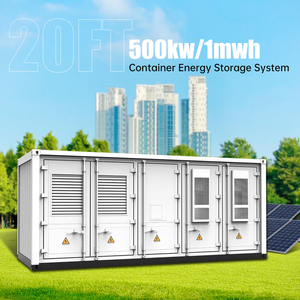
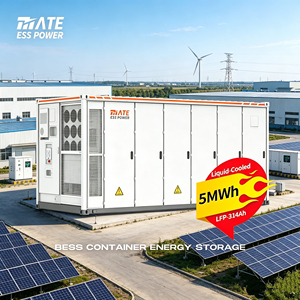
BENY 1MWh 5MWh Container Energy Storage High Voltage LiFePO4 Battery ESS
- Capacity: 1MWh to 5MWh Modular
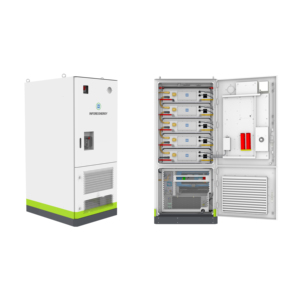
- High-Voltage BMS Architecture
- IP54/IP67 Marine Standard Enclosure
High-density LFP containerized systems, smart liquid-cooled cabinets, and customized marine battery packs engineered for extreme ocean environments and commercial vessel electrification.
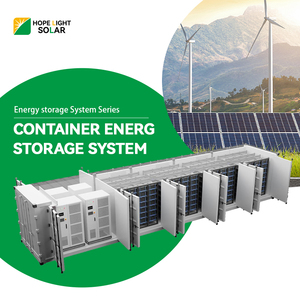
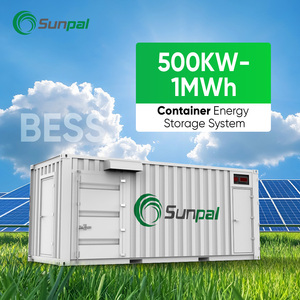
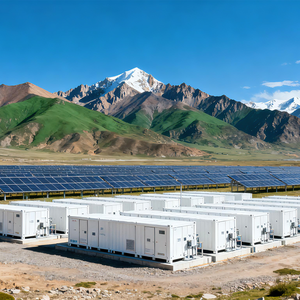
As the International Maritime Organization (IMO) tightens carbon intensity regulations (CII and EEXI), global shipowners, port operators, and marine engineers are rapidly adopting factory-direct Chinese Lithium Iron Phosphate (LiFePO4) energy storage solutions.
The global maritime industry is experiencing a monumental transformation. Commercial workboats, offshore support vessels (OSVs), tugboats, inland barges, and ocean-crossing cargo ships are shifting from traditional fossil-fuel auxiliary generators to high-capacity, containerized Marine Lithium Energy Storage Systems (BESS). China has emerged as the premier manufacturing hub for these advanced systems, supplying over 70% of the world's LiFePO4 cells and integrated BESS containers.
Procuring marine-grade lithium energy storage systems directly from top China suppliers and exporters provides global OEMs and shipyards with unparalleled Information Gain and strategic supply chain control. However, marine environments present harsh operational parameters—including saline atmosphere, continuous pitch-and-roll vibrations, thermal isolation challenges, and strict maritime classification societies requirements (such as DNV, ABS, ClassNK, and CCS). Buyers must evaluate suppliers beyond mere initial CAPEX, focusing heavily on electro-thermal stability, battery management system (BMS) telemetry, cell-level thermal runaway containment, and lifecycle Total Cost of Ownership (TCO).
Combining over 120 years of collective engineering expertise, proprietary BMS software design, automated precision pack assembly, and rigorous global compliance testing.
Multi-tier master-slave architecture providing real-time cell voltage telemetry, active SOC/SOH balancing, ambient temperature profiling, and automated Modbus/CANbus maritime network integration.
Tailor-made structural footprints ranging from 10ft/20ft/40ft ISO containers to modular sub-deck battery racks optimized for weight distribution and narrow engine room entry hatchways.
Integrated aerosol/Novec 1230 fire suppression, gas venting channels, explosion-proof pressure relief valves, and microsecond insulation monitoring to prevent thermal runaway propagation.
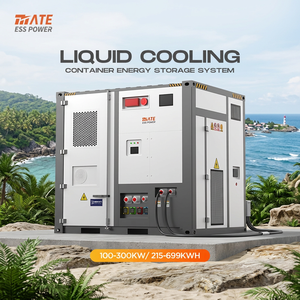
Advanced liquid cold-plate technology maintains uniform thermal gradients (<2.5°C) across all series-connected cells, extending overall battery operational lifespan by over 30% compared to air cooling.
Enclosures engineered with ISO 12944 C5-M high-durability marine anti-corrosion paint coatings, IP67 ingress sealing, and anti-vibration rubber isolation dampers designed for 4G shock loads.
Complete regulatory documentation package including UN38.3 transport safety, IEC 62619 industrial standard tests, UL 9540A fire testing data, and class approvals for seamless vessel commissioning.
"Chinese marine battery manufacturers lead the world in high-capacity 314Ah LFP cell integration. By eliminating thermal propagation risks at the module level and adopting smart cloud diagnostic EMS systems, wholesale buyers achieve unprecedented reliability and payback cycles under 4 years."
The marine energy storage ecosystem is rapidly shifting from early-stage low-voltage lead-acid/standard Li-ion replacement to ultra-high-voltage (1000V–1500V DC) containerized architectures. Sourcing teams must understand the core technical trends driving next-generation vessel electrification:
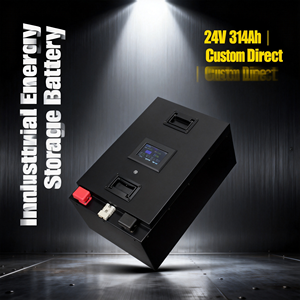
The industry is aggressively migrating from standard 280Ah cells to 314Ah LiFePO4 cells within identical physical form factors (7117320 dimensions). This upgrade increases containerized energy storage capacity by 12% to 14%, allowing a standard 20ft container BESS to reach up to 5MWh energy capacity. For marine buyers, this means more kWh stored in restricted onboard machinery spaces without increasing vessel deadweight or stability constraints.
In humid ocean environments, ambient air cooling brings salt spray, moisture, and high thermal gradients. Next-generation marine BESS utilizes closed-loop liquid cooling cold-plates sandwiched directly between battery cells. Liquid cooling reduces parasitic energy consumption by 40%, maintains strict temperature variance below 2.5°C across the system, and eliminates condensation risks inside sealed IP67 enclosures.
Passive cell balancing is no longer sufficient for megawatt-scale marine installations. Modern Chinese exporters integrate active BMS systems capable of transferring 2A to 5A balancing currents during both charge and discharge cycles. Furthermore, cloud-integrated Energy Management Systems (EMS) deploy machine learning models trained on electrochemical impedance spectroscopy (EIS) data to predict battery State of Health (SOH) degradation and detect cell micro-short circuits weeks before a failure occurs.
| Technical Parameter | Traditional Forced Air Cooling | Advanced Closed-Loop Liquid Cooling | Marine Procurement Impact |
|---|---|---|---|
| System Energy Density | Low (~180 kWh / m³) | High (~280 kWh / m³) | +35% Space Saving Onboard |
| Cell Temp Variance (ΔT) | ≤ 6.0°C | ≤ 2.5°C | Extends Cycle Life by 30% |
| Parasitic Power Consumption | High (Continuous Fan Load) | Low (Smart Variable Pump) | Higher Round-Trip Efficiency (RTE > 92%) |
| Ingress & Environmental Sealing | IP54 (Air Intake Filters Required) | IP67 Sealed Loop | Zero Salt-Spray Corrosion inside Packs |
| Maintenance Cycle | Every 3 Months (Filter Change) | Every 24 Months (Fluid Check) | Significant OPEX Reduction |
Maritime safety standards demand absolute containment. Modern Chinese containerized BESS suppliers implement a 4-tier defense architecture: Cell-level ceramic insulation pads → Module-level gas venting dampers → Rack-level aerosol fire suppression → Container-level Novec 1230 gas flooding coupled with active water-mist sprinklers. Systems compliant with UL 9540A test protocols guarantee that even under forced thermal runaway of a single cell, zero thermal propagation occurs to adjacent cells.
How procurement managers, marine system integrators, and OEM distributors can mitigate risks, negotiate tier-1 component transparency, and optimize Total Cost of Ownership.
Global buyers are demanding complete transparency regarding cell origin. Leading Chinese exporters partner directly with top cell tier manufacturers (such as CATL, EVE, REPT, and Hithium). When negotiating bulk wholesale purchases, procurement directors should insist on original manufacturer cell testing reports, matching batch serial numbers, and full raw material ESG traceability from lithium mining to final pack assembly.
Custom non-standard enclosures drive up integration and freight costs. The prevailing procurement trend favors standardized 10ft, 20ft, and 40ft ISO high-cube container BESS solutions. Standardized footprints allow seamless transport on commercial container ships, simplified port crane handling, and modular plug-and-play installation on vessel decks or industrial microgrid foundations.
To secure project financing for marine electrification projects, buyers are requiring 10-year to 15-year performance warranties guaranteeing at least 70% remaining SOH capacity. Top China suppliers now offer third-party warranty insurance (backed by global underwriters such as Munich Re or Aon), mitigating supplier risk and ensuring long-term bankability.
While wholesale purchase price (CAPEX) remains important, marine operators focus on lifetime cost per kWh throughput ($/kWh/cycle). Systems with active liquid cooling, high round-trip efficiency (RTE > 92.5%), and deep discharge capabilities (90% DOD) yield significantly lower lifetime operational costs despite a modest initial premium.
In-depth technical and commercial answers addressing common evaluation, shipping, safety, and customization queries from international B2B buyers.
LiFePO4 (LFP) chemistry offers superior thermal stability, a higher thermal runaway threshold (~270°C compared to ~210°C for NMC), and complete structural resistance to oxygen release during thermal stress. Additionally, LFP delivers over 6000+ deep discharge cycles at 80% DOD, significantly outperforming NMC in long-term marine operational lifespan, safety, and overall cost per kWh throughput.
Key global certifications include UN 38.3 (Transport Safety for Lithium Batteries), IEC 62619 (Safety Requirements for Industrial Lithium Batteries), UL 1973 (Stationary Batteries), UL 9540A (Thermal Runaway Fire Test), and maritime classification society type approvals such as DNV-GL, American Bureau of Shipping (ABS), Bureau Veritas (BV), or China Classification Society (CCS).
Premium suppliers utilize heavy-gauge anti-corrosive steel (such as Corten steel) treated with ISO 12944 C5-M compliant epoxy marine paints. All air intake dampers feature multi-stage hydrophobic salt-mist filters, and internal battery modules are completely sealed to IP67 ingress standards, preventing saline moisture from contacting electronic busbars or BMS circuit boards.
Yes. Chinese BESS suppliers engineer system-level Energy Management Systems (EMS) supporting hybrid microgrid architectures. The system seamlessly synchronizes with shipboard diesel gensets, shaft generators, and solar PV via high-speed Modbus TCP/CANbus protocols, enabling peak shaving, spinning reserve mitigation, and zero-emission harbor operations.
Liquid cooling is strongly recommended for marine containers exceeding 1MWh energy capacity. Closed-loop liquid cooling maintains internal cell temperature variances below 2.5°C, consumes up to 40% less parasitic HVAC power, eliminates dust and salt-air ingress into battery packs, and reduces overall container footprint by up to 35%.
Standard custom containerized BESS lead times range from 45 to 65 days from engineering sign-off. Dangerous Goods (DG) Class 9 shipping procedures apply. Systems are shipped fully certified under UN 3536 (Lithium batteries installed in cargo transport units) with pre-installed safety suppression systems and factory acceptance testing (FAT) reports included.
Contact our senior battery application engineers today for factory-direct wholesale pricing, custom BMS telemetry integration, detailed CAD/3D structural layouts, and complete DNV/CCS technical compliance documentation.