Discover our standardized and customizable high-drain 18650 packs, high-voltage energy storage system (ESS) containers, and modular industrial battery platforms built for extreme load cycles.
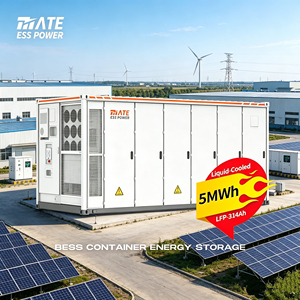
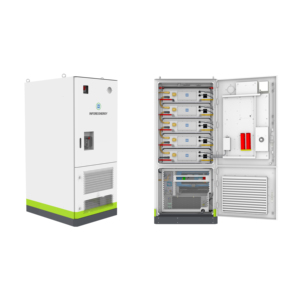
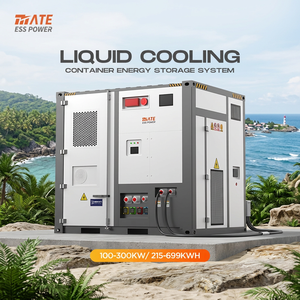
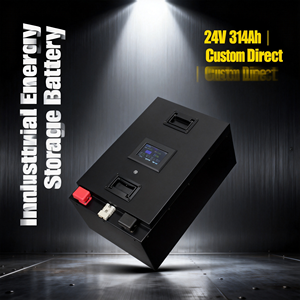
In modern industrial automation, robotics, medical devices, unmanned aerial vehicles (UAVs), and heavy-duty energy storage systems (BESS), the requirement for electrical energy has shifted dramatically from static capacity to dynamic power density. Standard cylindrical cells designed for low-drain consumer electronics exhibit severe voltage sag, excessive Joule heating ($I^2R$ losses), and accelerated capacity degradation when subjected to continuous discharge currents exceeding 2C–3C.
As a leading China Wholesale High Discharge Rate 18650 Packs Manufacturer & Supplier, our engineering paradigm synthesizes advanced electrode chemistry, precision mechanical tab design, and active-balancing thermal management to construct custom lithium-ion battery packs capable of sustaining 10C, 15C, 20C, and up to 30C pulse discharge rates without triggering thermal runaway.
Utilizing nano-structured Nickel-Manganese-Cobalt (NMC) and Lithium Iron Phosphate (LiFePO4) chemistries with multi-tab (W-tab) internal cell structures. This reduces internal impedance (IR) below 12mΩ per cell, minimizing internal ohmic heating during 25A+ continuous current draws.
Eliminating standard nickel-plated steel strips in high-drain pack assembly. We utilize micro-laser welded pure copper strips bonded with nickel layers to achieve superior conductivity, carrying up to 150A continuous pack current without resistive heat buildup.
Integrated Smart Battery Management Systems featuring short-circuit isolation (<100μs reaction), dual NTC temperature sensing per parallel group, dynamic over-current cutoffs, and active balancing to guarantee voltage homogeneity across 18650 series strings.
The following comparative matrix outlines key performance parameters essential for B2B engineering teams evaluating cell selection for high-drain applications:
| Battery Cell Architecture | Nominal Voltage (V) | Continuous Discharge (C-Rate) | Pulse Discharge (Peak 10s) | AC Internal Resistance (mΩ) | Thermal Runaway Threshold | Primary Industrial Use-Case |
|---|---|---|---|---|---|---|
| High-Rate 18650 (NMC High-Drain) | 3.6V – 3.7V | 10C – 15C (20A – 30A) | 25C – 30C (50A) | ≤ 11.5 mΩ | > 210°C | Power Tools, Drones, Robotics, AGVs |
| Standard Energy 18650 (NMC) | 3.6V – 3.7V | 1C – 2C (3A – 6A) | 3C (10A) | ≥ 35.0 mΩ | ~ 160°C | Laptops, Portable Flashlights, E-Bikes |
| High-Rate 21700 (High-Power) | 3.6V | 8C – 12C (35A – 45A) | 20C (60A) | ≤ 9.0 mΩ | > 215°C | EV Powertrains, Heavy Cordless Tools |
| Prismatic LiFePO4 (BESS Grade) | 3.2V | 1C – 3C Continuous | 5C Peak | ≤ 0.5 mΩ | > 270°C | Containerized ESS, Industrial Grid Backup |
As global OEM buyers navigate supply chain complexities, technological advancements, and evolving safety mandates, procurement strategies for high discharge rate 18650 battery packs are undergoing four pivotal structural shifts:
Next-generation high-drain 18650 cells incorporate 5%–10% silicon-graphite composite anodes. This technological evolution increases volumetric energy density by up to 20% while maintaining low internal resistance for rapid discharge applications, enabling lighter battery packs for aerospace and portable robotics.
Wholesale buyers are shifting from passive protection circuit modules (PCM) to IoT-enabled Smart BMS architectures featuring CANbus 2.0B, RS485, and Bluetooth mesh protocols. Real-time SOC/SOH monitoring, cell-level voltage profiling, and predictive thermal degradation algorithms have become standard requirements for industrial OEMs.
Rather than designing fully custom enclosures for every SKU, enterprise buyers are adopting modular building blocks (e.g., 4S4P or 7S5P sub-assemblies). These standardized high-rate modules can be connected in series-parallel configurations to scale system voltages from 24V up to 800V with minimal tooling costs.
Global regulatory frameworks (such as the EU Battery Regulation and US UN38.3 certification updates) require full material traceability from cobalt/lithium extraction down to pack assembly. Direct China factory sourcing partners must provide batch-level testing logs, material safety data sheets (MSDS), and ISO/IATF quality audits.
Building high-drain 18650 battery packs requires solving the fundamental thermodynamic paradox: how to extract high electrical currents without localized thermal degradation. Our engineering R&D team focuses on four core technological vectors:
Replacing conventional resistance spot welding with automated CNC fiber laser welding. Fiber laser joints create metallurgically pristine bonds between pure copper busbars and nickel tabs, reducing join resistance to virtually zero (<0.05mΩ per weld spot) and completely preventing weld blow-through.
Integrating paraffin-wax phase-change composites between 18650 cell matrices. During 20C peak bursts, the PCM absorbs latent heat through phase transition, capping peak cell enclosure temperatures below 55°C and suppressing thermal propagation between neighboring cells.
Transitioning from heat-dissipating passive balancing (which bleeds energy through resistors) to high-efficiency capacitive/inductive active balancing BMS circuits. Active balancing transfers energy from higher-voltage cells to lower-voltage cells at up to 2A balancing current during charge and discharge cycles.
Engineering heavy-duty aluminum alloy and flame-retardant ABS/PC enclosures with integrated pressure relief valves (gore valves). Waterproof sealing protects against severe environmental exposure in marine, outdoor BESS, and industrial mining equipment.
As a leading custom battery pack manufacturer and authorized battery assembler, our facility bridges high-volume manufacturing efficiency with rigorous North American and European quality standards. We serve original equipment manufacturers (OEMs) and contract manufacturers (CMs) across medical, military, aerospace, IoT, and industrial energy storage sectors.
Every 18650 cell undergoes automated 4-parameter testing: capacity matching within ±5mAh, voltage matching within ±2mV, internal resistance matching within ±0.5mΩ, and self-discharge rate verification over a 14-day aging period.
Operating under stringent quality management frameworks compliant with AS9100 aerospace standards, ISO 9001:2015, and ITAR compliance for specialized defense, UAV, and mission-critical military auxiliary power systems.
Direct factory-floor pricing combined with international logistics mastery. We manage UN38.3 transport certification, Hazardous Goods (DG) maritime shipping, door-to-door DDP logistics, and custom inventory buffering for enterprise clients.
Direct technical answers to common questions raised by procurement managers, electrical engineers, and OEM decision-makers during high-drain battery pack evaluation:
Voltage sag is fundamentally governed by total circuit resistance ($V_{sag} = I \times R_{total}$). We mitigate sag through three engineering controls: (1) Selecting high-rate 18650 cells with ultra-low internal resistance (≤11.5mΩ); (2) Utilizing heavy-gauge pure copper interconnect busbars laser-welded directly to cell terminals to minimize conductive resistance; and (3) Optimizing parallel string topology to split total current evenly across multiple cell branches.
Our standard prototype development turnaround is 7 to 14 working days for 3D-rendered thermal samples and functional BMS prototypes. Minimum Order Quantities (MOQ) for custom high-discharge 18650 packs start at 500 units for specialized industrial modules, while mass wholesale production orders typically deliver within 25–35 days following UN38.3 and MSDS approval.
All custom lithium-ion packs shipped globally must pass UN38.3 testing (covering altitude simulation, thermal test, vibration, shock, external short circuit, impact, overcharge, and forced discharge). For end-product market compliance, we assist OEMs in obtaining IEC 62133-2, UL 1973 (for energy storage), UL 2580 (for electric transport), CE, FCC, and RoHS certifications.
In high-discharge applications, slight variances in internal resistance cause rapid cell voltage divergence during high-current draws. Passive balancing (dissipating extra voltage as heat) generates unwanted thermal stress in sealed packs. Active BMS circuits continuously redistribute energy between cells at high efficiency during operation, extending overall pack cycle life by 25% to 40% compared to passive PCM circuits.
While 21700 cells offer higher energy per cell, high-discharge 18650 packs provide superior thermal dissipation surface-area-to-volume ratios, standardized mechanical form factors, and mature, cost-effective automated assembly lines. For applications with strict spatial restrictions or established tooling, 18650 remains the most reliable high-C-rate solution.
Yes. Our engineering team designs custom smart BMS hardware supporting CANbus 2.0B, RS485, SMBus, and UART protocols. This enables seamless bidirectional telemetry, allowing host equipment (such as AGV controllers, solar inverters, or medical consoles) to monitor state-of-charge (SOC), state-of-health (SOH), cell voltages, and real-time current parameters.
Whether you require high-drain 10C–30C battery packs for industrial robotics, high-voltage containerized BESS solutions, or full-turnkey OEM/ODM custom battery engineering, our technical team is ready to accelerate your engineering timeline.