Explore our tier-1 commercial energy storage systems (BESS), liquid-cooled battery containers, and customizable high-voltage LiFePO4 packs designed for extreme power demand.
Understanding the physical limits of fast ion transport, thermal dissipation, and internal current distribution in high-discharge wholesale battery manufacturing.
In modern industrial applications—ranging from frequency regulation microgrids and heavy electric motive power to continuous high-surge military backup and peak-shaving industrial ESS—the demand for high performance high C-rate lithium battery packs has reshaped chemical engineering standards. A battery’s "C-rate" quantifies the speed at which it can be fully charged or discharged relative to its maximum capacity. While standard energy-density-optimized lithium-ion systems operate within 0.5C to 1C discharge profiles, true high C-rate packs are specifically built to withstand continuous rates of 3C to 10C and peak surge currents exceeding 30C to 50C without incurring irreversible thermal degradation or metallic lithium plating.
As a premier China wholesale high C-rate lithium battery pack factory, our custom manufacturing process addresses the core physical constraint of fast discharge: internal Joule heating ($P = I^2 R$). Minimizing internal impedance (DCIR) is the paramount objective when engineering high-discharge packs. This requires specialized battery cell selection, ultra-thin high-purity current collectors, nanostructure cathode coatings, and robust internal laser-welded busbar interconnects.
| Architectural Parameter | Standard Storage Battery (0.5C - 1C) | High C-Rate Industrial Battery (3C - 15C+) |
|---|---|---|
| Cathode Chemistry & Structure | Thick micro-grain LiFePO4 / NMC for maximum volume energy density | Nano-structured coating with conductive carbon nanotube (CNT) networks |
| Anode SEI & Foil Thickness | Standard copper foil (8–10µm), uniform thick graphite coating | Perforated/Ultra-thin Cu foil (6–8µm), artificial graphite with fast-ion channels |
| Internal Impedance (DCIR) | High to Moderate (15mΩ – 35mΩ per cell) | Ultra-Low (< 0.5mΩ – 2mΩ per cell via multi-tab laser welding) |
| Thermal Management Tech | Passive air convection or basic forced air cooling | Direct liquid cooling plates / phase-change dielectric submersion |
| BMS Sampling Speed & Balancing | 100ms – 500ms cycle rate; 50mA passive balancing | <10ms hardware short-circuit interrupt; 2A – 5A active balancing |
| Busbar & Terminal Interconnects | Stamped aluminum/copper plates, bolted terminals | Ultrasonic nickel-plated copper tab welding with multi-point monitoring |
By utilizing nano-engineered LiFePO4 cathodes combined with multi-tab or tabless cylindrical/prismatic cell geometries, our factory minimizes lithium-ion diffusion distance within the electrode matrix. This allows rapid de-intercalation during high C-rate bursts without electrolyte decomposition.
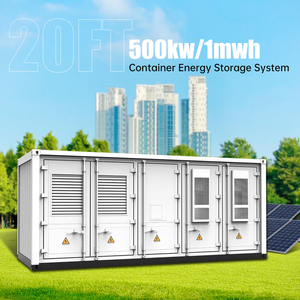
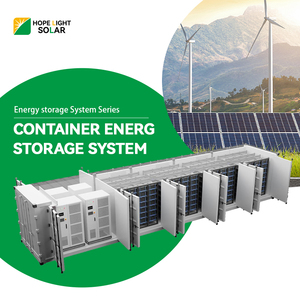
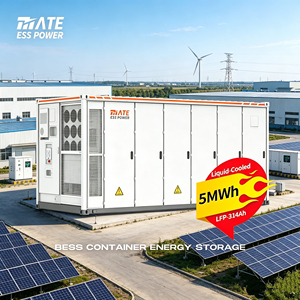
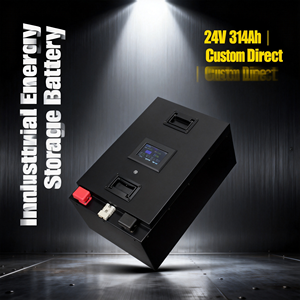
Continuous 3C+ discharge generates rapid heat. Our 5MWh container systems feature liquid-cooling cold plates running integrated glycol-water channels directly underneath the 314Ah prismatic cell bases, maintaining cell-to-cell thermal deviation within ≤2°C.
High C-rate currents amplify minor voltage imbalances. Our custom smart Battery Management Systems (BMS) integrate automotive-grade CAN 2.0B / RS485 communication, real-time cell impedance measurement, and dynamic thermal throttling algorithms.
Strategic analysis of global supply chain shifts, technology adoption, and procurement criteria for wholesale buyers, EPC contractors, and OEM device manufacturers.
Global energy procurement is rapidly transitioning from legacy 280Ah prismatic cells toward next-generation 314Ah to 500Ah high-capacity LiFePO4 cells. These large-format cells significantly decrease system connection points, reduce busbar resistance by up to 30%, and provide superior high-rate continuous discharge capabilities for utility grid frequency control. Chinese factories are currently leading the global ramp-up of 314Ah high-rate production lines.
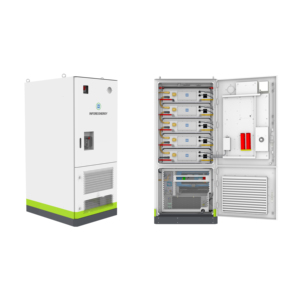
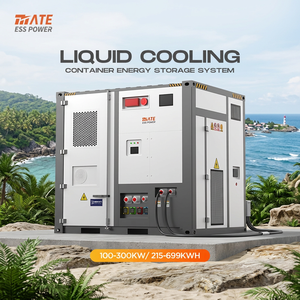
Legacy forced-air HVAC cooling is no longer adequate for modern 233kWh+ commercial cabinets and 5MWh container systems operating under multi-cycle high C-rate power profiles. Liquid cooling reduces internal auxiliary power consumption by 30-40% while extending total cycle life by up to 20%. Wholesale buyers now prioritize suppliers offering factory-integrated liquid chillers with smart variable-frequency pumps.
Modern high C-rate applications require proactive health diagnostics rather than reactive fuse protection. Sourcing managers are increasingly mandating BMS platforms equipped with IoT cloud connectivity, edge-computed State of Health (SOH) tracking, and real-time internal resistance modeling to detect thermal anomalies hours before potential runaway events occur.
Navigating international export markets demands strict regulatory compliance. Future wholesale contracts mandate factory-level UL 1973, UL 9540A fire propagation safety testing, IEC 62619, and UN 38.3 transport authorization. Choosing a Chinese factory with pre-certified cell modules drastically shortens project commissioning timelines and reduces compliance testing costs for OEMs.
Leveraging over 120 years of collective battery engineering expertise, military-grade quality assurance, and end-to-end custom production capabilities.
Our core technical team brings together over a century of combined expertise in lithium electrochemistry, BMS firmware development, dynamic structural simulation, and automated pack assembly. We transform complex engineering requirements into high-efficiency mass production.
Every cell entering our facility undergoes automated 100% capacity grading, voltage matching within ±2mV, and internal resistance sorting within ±0.5mΩ. Our automated laser welding stations ensure vibration-proof, low-resistance connection points engineered for rugged environments.
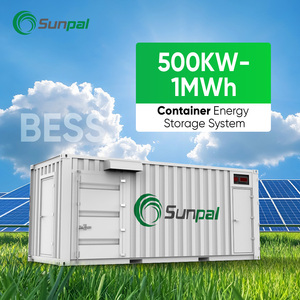
We offer total OEM/ODM flexibility—from custom dimensional enclosure design (IP65, IP67, containerized 10ft/20ft/40ft), proprietary CANbus protocol customization, custom branding, and drop-ship supply chain coordination for global partners.
Detailed technical answers to common questions asked by B2B buyers, electrical engineers, and wholesale procurement directors.
Discharging a battery at high C-rates (e.g., 3C–5C continuous) increases Joule heating and mechanical stress on electrode structures. However, when engineered with specialized nano-structured LiFePO4 chemistry, ultra-low internal resistance copper foil, and active liquid cooling thermal management, cycle life degradation is dramatically mitigated. Our high-rate cells maintain over 80% original capacity after 4,000 to 6,000 full high-discharge cycles.
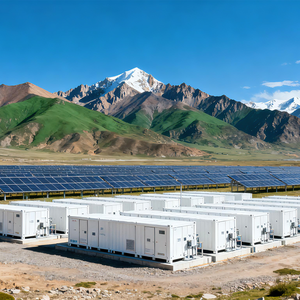
For continuous discharge applications above 1C, liquid cooling is vastly superior to traditional air HVAC cooling. Liquid cooling plates maintain cell temperature uniformity within ≤2°C across large 1MWh to 5MWh container blocks, eliminating localized hot spots, preventing thermal propagation, and consuming 30% less parasitic electricity than forced-air fans.
Continuous C-rate specifies the maximum current a battery can supply constantly from 100% down to 0% State of Charge (SOC) without exceeding safe thermal limits. Peak burst C-rate (often 10C to 30C) represents the short-duration current (typically 10 to 30 seconds) the pack can deliver for heavy motor startup surges or quick frequency pulse regulation without tripping BMS protections.
Yes. We specialize in end-to-end OEM/ODM manufacturing. Our team custom-designs sheet metal or aluminum enclosures, customizes internal busbar layouts, programs custom BMS firmware parameters (CANbus, Modbus TCP, RS485), and performs full environmental, shock, vibration, and safety testing to meet your exact specifications.
Our manufacturing processes and battery storage modules comply with major international standards, including UN 38.3 (transport safety), IEC 62619 (industrial lithium testing), CE-EMC, UL 1973 (battery energy storage), and UL 9540A thermal runaway propagation safety standards.
At high discharge currents, even a minute impedance variance (e.g., 0.5mΩ) between cells causes severe voltage divergence and unequal heat accumulation. Weak cells quickly hit low-voltage cutoffs, reducing usable capacity. Our factory utilizes 100% automated cell sorting to match voltage (±2mV) and internal resistance (±0.5mΩ) prior to ultrasonic pack assembly.
Custom engineering sample prototypes generally take 3 to 4 weeks depending on BMS firmware and enclosure complexity. Standard wholesale container production orders (such as 20ft/40ft 2.5MWh to 5MWh BESS systems) have a typical manufacturing lead time of 6 to 8 weeks following technical drawing sign-off.
Passive balancing burns off excess energy as heat through resistors at small current rates (50mA–100mA), which is ineffective during high-speed charge/discharge cycles. Active balancing transfers energy from higher-voltage cells to lower-voltage cells using inductive or capacitive energy transfer at currents up to 2A to 5A, preserving cell alignment during heavy utilization.
Wholesale lithium-ion and LiFePO4 batteries are classified under dangerous goods regulations as Class 9 (UN3480 for standalone batteries or UN3481 when installed in equipment). We provide complete UN38.3 test reports, MSDS, and drop-test certification to ensure seamless sea freight logistics worldwide.
We offer built-in aerosol fire suppression systems, dual-redundant BMS microcontrollers, heating mats for ultra-low-temperature charging (-30°C), IP67 outdoor ruggedized heavy-duty cases, and integrated hybrid MPPT solar inverter communication bridges.
Consult directly with our senior battery engineers to customize your voltage, C-rate, capacity, and enclosure specifications. Get competitive factory wholesale quotes and complete technical documentation.
Get a Quote