China Wholesale Cylindrical Battery Pack Enclosures Manufacturers & Exporter

Engineering High-Precision Aluminum & Composite Enclosures for 18650, 21700, 32700, and 4680 Cell Configurations with Turnkey BESS Integration.

120+
Years Collective Expertise
IP67/68
Ingress Protection Rating
UL94-V0
Flame Retardant Standard
50+
Global Export Markets

Flagship Cylindrical Pack & ESS Container Solutions

High-density lithium-ion, LiFePO4, and hybrid energy storage system (BESS) enclosures engineered for extreme mechanical reliability and thermal performance.
BENY 1Mwh 5mwh Container Energy Storage High Voltage LIFEPo4 Lithium Ion Batteries
High Voltage LiFePO4 ESS

BENY 1Mwh 5mwh Container Energy Storage High Voltage LIFEPo4 Lithium Ion Batteries ESS

Contact Us
Custom 20ft 40ft High Voltage ESS Battery Energy Storage System Container Solution
20ft / 40ft Modular Container

Custom 20ft & 40ft High Voltage ESS Battery Energy Storage System Container Solution

Contact Us
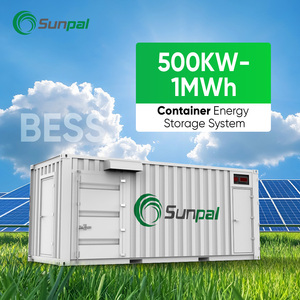
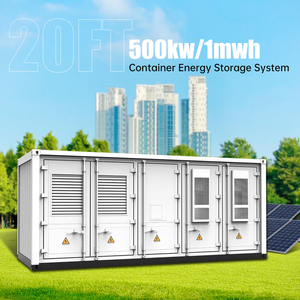
Sunpal ESS Solar Battery Cabinet Container 1MWh 500 KW
Cabinet & Container BESS

Sunpal ESS Solar Battery Cabinet Container 1MWh 500 KW Industrial Lifepo4 BESS System

Contact Us
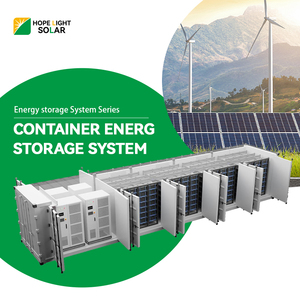
Customizable Container Energy Storage Hybrid Integrated Battery System 1000KW
1000KW Hybrid Integrated

Customizable Container Energy Storage Hybrid Integrated Lithium Ion Battery System 1000KW

Contact Us
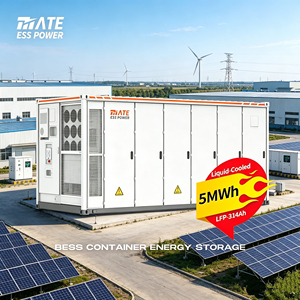
Lithium Batteries 5MWh Liquid Cooling Container Battery Storage System
Liquid Cooling 314Ah Technology

Lithium Batteries 5MWh Liquid Cooling Container Storage System LiFePO4 ESS 314Ah

Contact Us
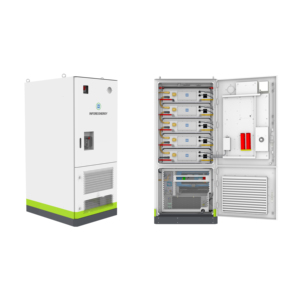
Industrial Commercial Lithium Ion Energy Storage System 233kWh
233kWh Commercial Output

Industrial Commercial Lithium Ion Energy Storage System 233kWh High Power BESS

Contact Us
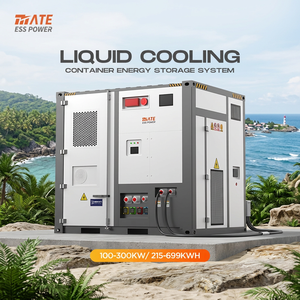
MATE LFP Lifepo4 Battery Container 100kW 215kWh 300kW 699kWh BESS
Smart Island Grid 10ft BESS

MATE LFP Lifepo4 Battery Container 100kW 215kWh 300kW 699kWh Smart System

Contact Us
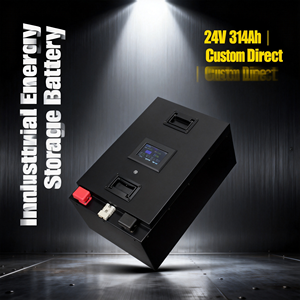
Direct Factory Custom 24V 314Ah for Industrial Off-Grid Energy Storage
24V 314Ah Industrial Module

Direct Factory Custom 24V 314Ah Industrial Off-Grid Lithium Battery Module

Contact Us

Industrial-Grade Cylindrical Battery Pack Enclosure Engineering Architecture

As a premier China Wholesale Cylindrical Battery Pack Enclosures Manufacturer & Exporter, we provide complex structural solutions tailored to the stringent demands of global original equipment manufacturers (OEMs), defense contractors, medical device innovators, and industrial BESS (Battery Energy Storage System) integrators. The structural housing of a cylindrical battery array—whether utilizing standard 18650, high-density 21700, large-format 32700, or modern 4680 form factors—serves as the critical barrier against mechanical impact, environmental degradation, thermal propagation, and electromagnetic interference (EMI).

Cylindrical cells offer exceptional structural rigidity, predictable thermal dissipation paths, and high volumetric production consistency. However, housing thousands of individual cells requires advanced thermal management, flame-retardant cell spacing, vibration isolation (MIL-STD-810H rated), and precise electrical insulation. Our structural casing designs utilize 6063-T6 extruded aluminum alloys, deep-drawn stainless steel, precision CNC-machined die-cast enclosures, and UL94-V0 rated flame-retardant thermoplastics (ABS+PC, PBT) to deliver unmatched life cycle support and absolute operational safety.

Cylindrical Form Factor Enclosure Specifications

Detailed material matrix and structural parameter guidelines for high-capacity cylindrical battery module integration.

Cell Form Factor Standard Material Matrix Thermal Management Mode Ingress Rating Key OEM Application
18650 Array AL 6063-T6 / ABS+PC UL94-V0 Passive / PCM Matrix / Air Flow IP65 – IP67 Smart Meters, IoT, Portable Medical
21700 High Energy Extruded Aluminum Alloys / Die-Cast Shell Liquid Cold Plate / Phase Change Gel IP67 – IP68 Drones/UAV, Robotics, Defense Wearables
32700 LiFePO4 Powder-Coated Steel / Sheet Metal Housing Forced Air Cooling / Thermal Pads IP65 – IP66 Industrial ESS, AGVs, Solar Cabinets
4680 Large Cell Structural Cell-to-Pack (CTP) Aluminum Chassis Integrated Direct Liquid Cooling Ribs IP68 / IP69K Electric Vehicles, Megawatt Containerized ESS

Enterprise Manufacturing Strengths & E-E-A-T Competency Framework

Backed by over 120 years of collective engineering experience across our core technical team, our manufacturing facilities in China deliver end-to-end custom battery enclosure design, fast prototyping, automated stamping, laser welding, and automated assembly line integration. We operate under strict AS9100, ISO9001, and ITAR compliance standards to support critical defense, aerospace, and medical OEM projects.

Precision CNC & Extrusion

Micron-level tolerances for seamless cell holder alignment, preventing cell friction and mechanical wear during intense thermal cycling.

Advanced Thermal Simulation

ANSYS Fluent CFD thermal modeling to eliminate hot spots and optimize coolant channels within high-voltage industrial battery racks.

Rigorous UN38.3 & UL Certification

Complete turn-key compliance testing for explosion relief valves, flame arrestors, drop tests, and thermal runaway propagation suppression.

Future Procurement & Global Sourcing Trends (2025–2030 Whitepaper Insight)

Global supply chain strategies for battery pack enclosures are rapidly shifting toward integrated structural efficiency, localized sustainability compliance, and intelligent monitoring capabilities. Procurement officers and engineering leads must align their sourcing models with three core technical trends over the next decade:

1. Transition to Cell-to-Pack (CTP) & Structural Enclosures

Traditional battery packs rely on multi-tier modular frames. Next-generation procurement heavily favors structural enclosures where the cylindrical cell casing itself acts as a load-bearing chassis member. This increases volumetric efficiency by up to 25% while drastically reducing total vehicle or container weight.

2. Direct Integration of Micro-Channel Liquid Cooling Plates

As C-rates for industrial ESS charging accelerate beyond 2C, passive air cooling is insufficient. Modern China wholesale suppliers must provide enclosure walls integrated directly with internal serpentine liquid cooling tubes or bottom-mounted cold plates to guarantee uniform cell temperatures under 35°C.

3. Sustainable Recycling & Low-Carbon Eco-Aluminum Alloys

European Union Battery Regulations and North American ESG mandates mandate transparent carbon footprint tracking across all metal supply chains. Sourcing enclosure components manufactured via hydro-powered aluminum smelting with high post-consumer recycled content (PCR) has become a non-negotiable procurement standard.

Industry Technological Trends: Safety, BMS Integration & Modularization

The structural mechanics of cylindrical enclosures are undergoing continuous evolution. Key structural developments include:

  • Dual-Phase Anti-Propagation Isolation: Combining aerobic aerogel insulation panels with phase-change materials (PCM) surrounding each 21700 or 4680 cylinder, completely preventing thermal runaway cascade events if an individual cell fails.
  • IP68 / IP69K Pressure-Equalized Sealing: Utilizing breathable PTFE membrane vents that maintain internal pressure equalization during high-altitude transit while effectively blocking high-pressure water jet ingress during washdowns.
  • Embedded Smart Sensor Telemetry Channels: Molding precision cable management guides and sensor pocket recess zones into plastic top-caps to facilitate real-time cell-level voltage and thermal sensor placement for Smart BMS systems.
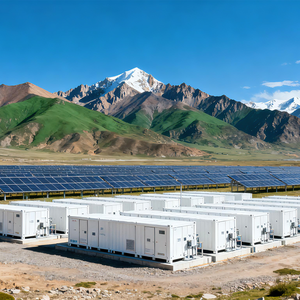
  • Modular Containerized Enclosures (BESS): Standardizing 10ft, 20ft, and 40ft high-cube ISO shipping container housings designed specifically for liquid-cooled 314Ah LiFePO4 arrays, achieving megawatt-hour energy densities with factory-tested IP55/65 weatherproof protection.

Frequently Asked Questions (FAQ)

Comprehensive engineering guidance for custom cylindrical battery enclosure sourcing and OEM development.

What enclosure materials are recommended for outdoor industrial ESS applications?
For stationary industrial energy storage, powder-coated galvanized steel or extruded AL 6063-T6 aluminum alloys are primary choices. They offer exceptional corrosion resistance (C4/C5 marine grade coating), mechanical yield strength to endure earthquake seismic ratings (Zone 4), and high thermal conductivity to support active heat exchange.
How do you guarantee flame retardancy in plastic cell holders?
All internal plastic cell holders, spacers, and terminal brackets are molded exclusively using virgin ABS+PC or PBT compounds certified to UL94-V0 standards. This guarantees that combustion self-extinguishes within 10 seconds without producing flaming drips.
Can enclosures be customized for non-standard cylindrical cell dimensions?
Yes. We engineer fully custom tooling for extruded profiles, injection molds, and CNC-machined end-plates to fit specialized cylindrical diameters, such as custom 26650, 32700, 38120, or next-generation 4680 configurations, complete with flexible busbar alignment channels.
What structural tests are conducted on completed enclosure assemblies?
Our standard quality assurance protocol includes IP67/IP68 helium leak rate testing, salt spray corrosion exposure (MIL-STD-810H), three-axis random mechanical vibration testing, mechanical shock testing up to 50G, and thermal shock chamber cycling (-40°C to +85°C).
What is the typical tooling lead time for custom aluminum extrusions?
Rapid prototyping tooling for aluminum extrusion profiles generally takes 12 to 18 business days, with initial first-article inspection (FAI) samples delivered immediately following die validation. Plastic injection molds require 25 to 35 calendar days depending on core complexity.
How do you mitigate electromagnetic interference (EMI) in high-voltage packs?
We integrate continuous conductive nickel-plated gaskets, specialized ground-lug mounting pads, and optional internal mu-metal or aluminum foil shielding liners that isolate high-frequency switching noise emitted by integrated BMS power electronics.
What thermal interface materials (TIM) work best inside cylindrical cases?
We recommend multi-component thermally conductive potting compounds (1.5–3.0 W/m-K) for complete cell immersion encapsulation, or pre-cut silicone thermal gap pads positioned between cell bases and the bottom liquid plate for clean serviceability.
Are explosion-relief safety features integrated into containerized ESS housings?
Yes. All containerized battery energy storage systems (BESS) are engineered with automatic burst discs, NFPA 69 compliant explosion venting panels, integrated gas detection (CO/H2 sensors), and automated clean-agent fire suppression nozzles.

Request Turnkey Technical Consultation & Custom Quotation

Connect directly with our senior mechanical and electrochemical engineering team in China to review CAD models, select optimal enclosure materials, and optimize your procurement budget for scale.

Contact Us