Explore our engineered containerized systems, high-voltage battery cabinets, and bespoke industrial LiFePO4 modules designed for rapid prototyping and utility-scale deployment.
In the rapidly evolving global energy sector, the demand for high-density, reliable, and application-specific energy storage systems (ESS) has transitioned from standard off-the-shelf modules toward highly engineered China wholesale custom battery pack rapid prototyping solutions. Original Equipment Manufacturers (OEMs), engineering procurement and construction (EPC) firms, and energy aggregators face stringent time-to-market constraints coupled with aggressive performance specifications. Bridging the gap between initial electrochemical concept design and utility-scale mass production requires a robust manufacturing framework that combines western design engineering rigor with China’s unmatched supply chain velocity and cost efficiency.
As a senior authority in electrochemical engineering and battery management system (BMS) integration, our enterprise leveraging over 120 years of collective technical expertise provides an authoritative blueprint for B2B buyers seeking advanced custom battery solutions. This technical whitepaper explores the intricate mechanics of rapid prototyping, cell chemistry selection (focusing on the emergence of high-capacity 314Ah LiFePO4 cells), thermal management design (liquid cooling vs. forced air cooling), micro-architectural safety protocols, and strategic procurement frameworks driving the global energy transition.
Optimizing physical enclosures, cell layout geometries, busbar routing, and thermal dissipaters prior to tooling tooling investment, cutting prototype iterations by up to 60%.
Integrated smart BMS featuring dual-core MCU architectures, hardware-level overcurrent protection, isolation monitoring, and active balancing up to 5A per string.
Aerogel insulation barriers, directional gas relief venting, and aerosol-based automatic fire suppression compliant with UL 9540A thermal explosion propagation standards.
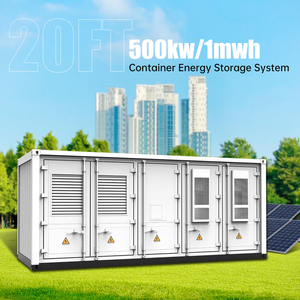
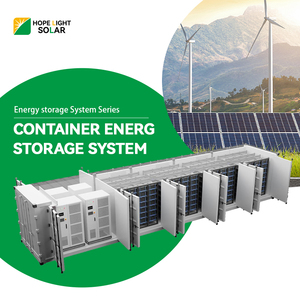
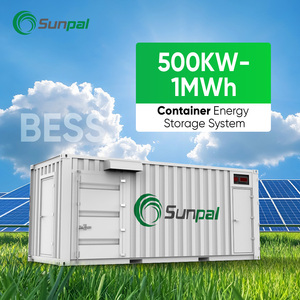
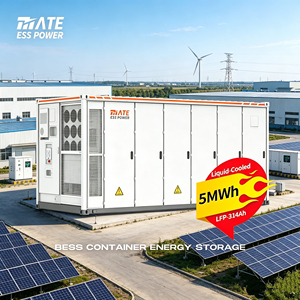
Rapid prototyping in the context of commercial and industrial (C&I) battery systems goes far beyond assembling pre-existing 18650 or 21700 cells into plastic housings. Modern utility-scale applications demand bespoke high-voltage (HV) architecture, ranging from 215kWh smart cabinets to 5MWh 40ft containerized battery energy storage systems (BESS). The rapid prototyping engine requires a seamless 5-stage technical workflow:
| Prototyping Phase | Primary Technical Deliverables | Quality & Validation Milestones | Turnaround Time |
|---|---|---|---|
| 1. Requirement Mining & Simulation | Duty cycle profiling, load analysis, FEA thermal modeling, CAD 3D layout design. | Electrochemical simulation sign-off, volume & gravimetric density verification. | Days 1 - 3 |
| 2. BMS Software & PCB Layout | Schematic design, CANbus/Modbus/Ethernet communication protocol setup, firmware logic. | HIL (Hardware-in-the-Loop) simulation, short-circuit response testing (<10µs). | Days 4 - 7 |
| 3. Mechanical & Thermal Prototyping | CNC precision laser cutting, liquid cooling plate hydro-testing, structural frame assembly. | Helium leak detection (10⁻⁶ mbar·L/s), IP67 ingress protection validation. | Days 8 - 10 |
| 4. Automated Pack Assembly | Laser wire bonding/ultrasonic welding, busbar installation, sensor array wiring. | 100% End-of-Line (EOL) impedance testing, dielectric strength insulation checks. | Days 11 - 12 |
| 5. Environmental & Compliance Validation | Full-cycle rate discharge, thermal chamber stress tests (-30°C to +65°C), vibration profile. | Pre-certification compliance report for UN 38.3, UL 1973, and CE standards. | Days 13 - 14 |
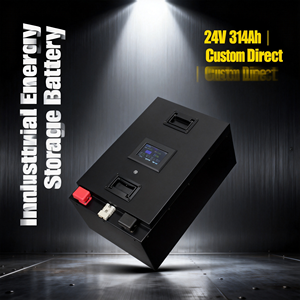
A major industry shift in industrial battery procurement is the migration from legacy 280Ah cells to high-capacity 314Ah Lithium Iron Phosphate (LiFePO4) prismatic cells. By leveraging 314Ah cell chemistry in a standard 1P16S pack configuration, energy density is expanded by approximately 12% without increasing the footprint of standard 20ft or 40ft BESS enclosures. This cell innovation enables standard 20ft containers to achieve a capacity of 3.72MWh and 40ft containers to reach up to 5MWh liquid-cooled capacity.
LiFePO4 chemistry provides inherent thermal stability with a decomposition temperature exceeding 270°C, drastically reducing thermal runaway risks compared to high-nickel ternary (NMC) formulations. When combined with customized pack prototyping from top China suppliers, OEMs benefit from lower levelized cost of storage (LCOS) and extended operational lifecycles reaching up to 6,000 to 8,000 complete charge/discharge cycles at 80% Depth of Discharge (DOD).
Thermal management is the single most critical factor governing battery lifespan, capacity retention, and operational safety. During high C-rate charge and discharge operations, internal resistance generates significant heat across cell terminals. In traditional air-cooled systems, temperature gradients across a containerized system can exceed 8°C to 10°C, accelerating cell degradation in hot zones and leading to string imbalance.
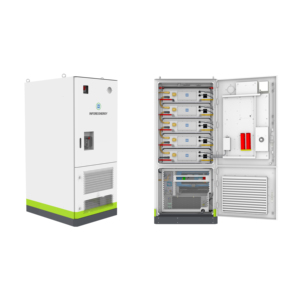
Utilizes high-CFM HVAC units and internal ducting to circulate ambient cold air through battery racks. Best suited for small-to-medium C&I applications (e.g., 100kW/215kWh or 233kWh cabinets) where space constraints are moderate and power discharge rates remain below 0.5C.
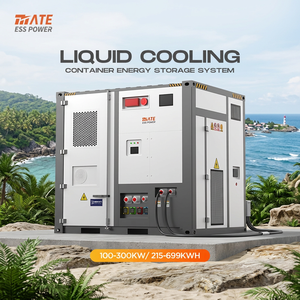
Direct-to-cell cold plates utilizing ethylene glycol water mixture circulating through internal micro-channels. Essential for high-voltage, high-density 1MWh to 5MWh containerized BESS solutions operating at 1C continuous rates.
In our rapid prototyping facility, liquid-cooling plates are custom-designed using vacuum brazing technology. Each plate undergoes automated helium mass spectrometer leak testing at high pressure (up to 600 kPa) to guarantee zero coolant leakage risk over a 15 to 20-year design life.
Partnering with a reliable China wholesale custom battery pack factory requires rigorous auditing of quality control systems, supply chain transparency, and international compliance certifications. Drawing upon our engineering team's legacy—which encompasses over 120 years of collective specialized expertise—our manufacturing ecosystem integrates military-grade quality standards into commercial energy storage production.
100% automated voltage, internal resistance (AC-IR/DC-IR), and capacity sorting ensuring ultra-tight cell pairing tolerances (ΔIR < 0.05 mΩ, ΔV < 2mV).
Automated fiber laser welding systems with real-time beam penetration monitor to ensure zero-defect copper-to-aluminum busbar joints without thermal stress.
Turnkey assistance for full compliance testing including UN 38.3 (transport safety), UL 1973 (stationary batteries), UL 9540A, IEC 62619, and CE-EMC certifications.
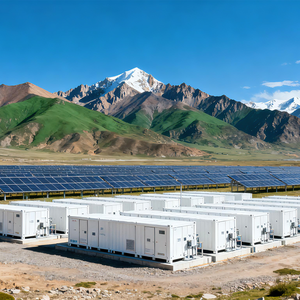
As the global energy storage market scales toward multi-terawatt-hour installations, procurement teams must align their supply chain strategies with key technological trends:
Modern commercial and utility-scale BESS installations are rapidly transitioning from legacy 1000V DC system voltages to 1500V DC operating platforms. Increasing operating voltage significantly reduces current requirements for equivalent power output, allowing for thinner cable cross-sections, reduced copper usage, and lower system transmission losses. This yields a 1.5% to 2% increase in round-trip efficiency (RTE) and lowers system CAPEX by up to 10%.
Prototyping next-generation battery packs involves embedding IoT-enabled edge gateways that stream real-time cell parameters (voltage, temperature, State of Charge - SOC, State of Health - SOH) to cloud-based AI analytics platforms. Neural network models predict thermal anomalies, dendrite growth, and capacity fade curves up to 30 days before potential system failure, enabling proactive maintenance schedules.
Rather than procuring separate inverters, transformers, and battery racks, industrial end-users increasingly prefer integrated, pre-tested All-in-One BESS units (such as 100kW/215kWh or 233kWh outdoor cabinets). These factory-assembled systems integrate the Power Conversion System (PCS), Smart BMS, HVAC cooling, and fire suppression within a plug-and-play IP54/IP65 enclosure, drastically shortening site installation timelines from weeks to days.
Essential engineering, manufacturing, and logistic answers to guide global buyers during the custom battery rapid prototyping and sourcing process.
Connect directly with our senior engineering team to discuss your application parameters, request custom BMS design schematics, or obtain competitive wholesale pricing for high-voltage LiFePO4 battery packs and BESS containers.