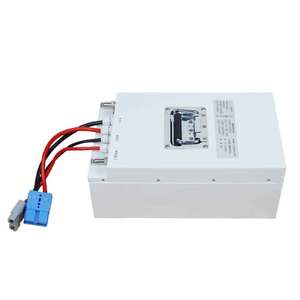
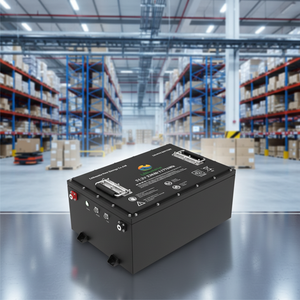
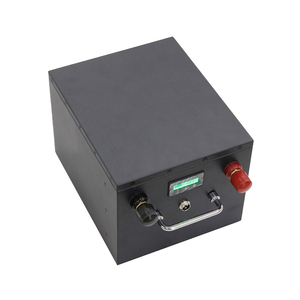
Industrial-grade battery packs tailored for Autonomous Mobile Robots (AMRs), Automated Guided Vehicles (AGVs), heavy payload forklifts, and modular energy systems.
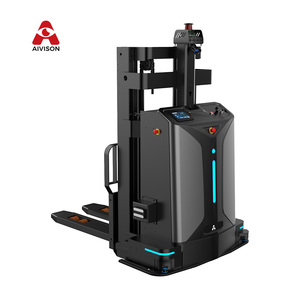
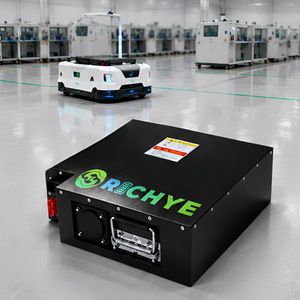
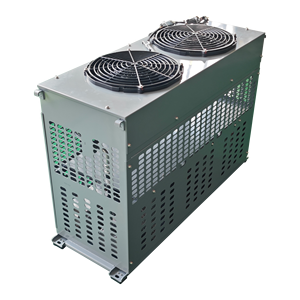
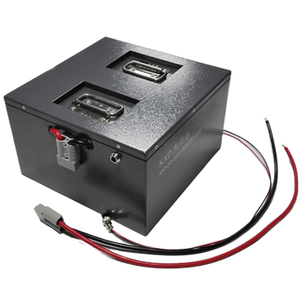
Empowering global logistics centers, automotive manufacturing lines, and semiconductor cleanrooms with high-availability power architecture.
In modern automated material handling (AMH) environments, Autonomous Mobile Robots (AMRs) and Automated Guided Vehicles (AGVs) represent the backbone of 24/7 smart manufacturing andIntralogistics. As warehouses transition to high-density autonomous racking, automated pallet handling, and heavy-payload robotic traction, the demands placed on the electrochemical storage system have undergone a paradigm shift. Standard industrial lead-acid and off-the-shelf lithium-ion packs no longer meet the stringent uptime, thermal safety, and rapid charge-acceptance requirements of continuous industrial operations.
As a premier China Top Robotics and AGV Battery Systems Manufacturer & Supplier, our engineering methodologies focus on cell-to-pack (CTP) structural optimization, advanced electrochemistry selection—such as Lithium Iron Phosphate (LiFePO4) and Lithium Iron Magnesium Phosphate (LMFP)—and active liquid-cooled Thermal Management Systems (BTMS). Providing true Information Gain for industrial procurement teams requires examining the structural, electrical, and thermal engineering vectors that govern total cost of ownership (TCO) in robotic fleet operations.
Key Engineering Insight: Transitioning from conventional 0.5C charging to 2C–3C opportunity charging reduces AGV fleet downtime by up to 68%, but demands dual-loop CANbus communication and micro-second cell-level voltage balancing to prevent localized thermal degradation.
Selecting the optimal lithium-ion chemistry for robotic applications requires balancing volumetric energy density, cycle life, operational thermal window, and safety under mechanical shock or puncture conditions:
Fast opportunity charging (e.g., automated slide-in pad charging during 15-minute pallet loading intervals) generates localized heat within cell cores. Internal thermal resistance can cause cell divergence, premature capacity fade, or thermal runaway if unmanaged. Intelligent Battery Thermal Management Systems (BTMS) operating at high DC voltages (400V to 750V) utilize closed-loop liquid-to-glycol cooling and heating plates sandwiched between prismatic cells. This maintains cell-to-cell thermal delta below 2°C, ensuring uniform internal impedance even in cold-storage automated facilities (-30°C) or high-temperature metallurgy plants (+55°C).
Engineered for 1C continuous and up to 3C pulse charging. Allows AGVs to replenish 80% SOC within 20-minute operational breaks without manual battery swapping.
Integrated microcontrollers supporting CANopen, SAE J1939, and Modbus-RTU. Provides real-time telemetry for state-of-health (SOH), impedance, and telemetry logging.
Heavy-duty aluminum alloy casings designed to withstand 5G shock impacts and continuous vibration encountered on uneven concrete factory flooring.
As global supply chains expand automated logistics hubs, procurement teams are shifting focus from initial capital expenditure (CapEx) to lifetime operational expenditure (OpEx) optimization. Key procurement trends dominating the market include:
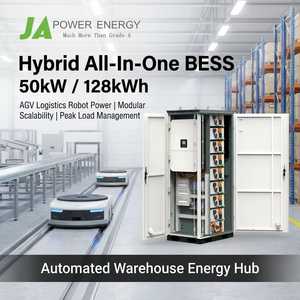
Modern logistics parks are adopting unified energy architectures where central Battery Energy Storage Systems (BESS)—such as our 128kWh IP55 modular systems featuring 314Ah cells—buffer local power grids. These stations dynamically distribute power to automated fast-charging pads across the factory floor, preventing peak-demand utility surcharges while maintaining continuous fleet operation.
Leading OEMs require smart BMS architecture capable of streaming high-frequency cell telemetry to cloud-based fleet analytics platforms. By analyzing internal impedance drift, coulombic efficiency, and thermal decay curves, facility managers can perform predictive maintenance weeks before a cell failure causes an unpredicted line stoppage.
Customization flexibility across 12V, 24V, 36V, 48V, up to 750V platforms allows robot manufacturers to utilize modular battery building blocks across disparate payload classes—ranging from 50kg light sorting AMRs to 50-Ton automated pallet handling forklifts.
Combining over 120 years of collective battery engineering expertise with world-class automated assembly and rigorous international compliance standards.
Our engineering leadership brings more than a century of combined expertise across electrochemical cell selection, custom PCB design, and mechanical thermal safety.
From mechanical enclosure design and custom wiring harnesses to specialized firmware integration, we tailor battery systems to your exact robotic chassis dimensions.
All battery packs are tested and certified to international safety standards including UN38.3, UL2580, UL1973, CE, and IEC 62619 for seamless global export.
Direct technical and commercial answers for procurement managers, systems integrators, and robotics design engineers.
LiFePO4 battery systems offer up to 4x longer cycle life (4,000+ deep cycles vs 1,000 cycles for lead-acid), 95%+ energy efficiency, zero maintenance requirements, and zero off-gassing. Furthermore, LiFePO4 allows for continuous 1C-3C opportunity charging, eliminating the need for spare battery changing rooms, overhead cranes, and battery-swap downtime.
An active Battery Thermal Management System (BTMS) circulating liquid coolant or heating fluids regulates internal core temperature between 20°C and 35°C. In cold-storage logistics (-30°C), internal heaters warm cells before fast-charging to prevent lithium plating. In heavy-duty high-ambient environments (+50°C), liquid cooling prevents thermal runaway and capacity degradation.
Yes. Our custom BMS architecture natively supports standard industrial communication protocols including CANbus (CANopen, J1939), RS485 (Modbus-RTU), and Ethernet/IP. We provide customized DBC files and register maps to allow direct real-time communication with PLC systems from Siemens, Beckhoff, Omron, or proprietary AMR controllers.
We offer end-to-end customization including voltage range (12V to 750V), capacity (20Ah to 600Ah+), physical footprint, housing material (stainless steel, powder-coated sheet metal, or aluminum), IP rating (IP54 to IP67), connector interfaces (Anderson, REMA, custom heavy-duty pins), and specialized BMS algorithms.
Our AGV and robotics battery packs undergo rigorous compliance testing. Complete UN38.3 diagnostic reports, MSDS, and air/sea transport safety certificates are provided with every batch. Individual product lines are built with UL1973, UL2580, CE, and IEC 62619 compliance for frictionless global deployment.
Partner with China's leading OEM/ODM robotics battery manufacturer. Contact our engineering team today to review your CAD dimensions, load profiles, and electrical specifications.
Get a Quote