Engineered with Grade-A 280Ah/314Ah LiFePO4 cells, active balance BMS, and intelligent thermal management. Select a configuration below to access direct engineering specifications.
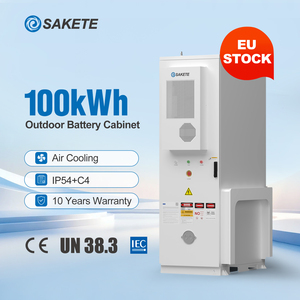
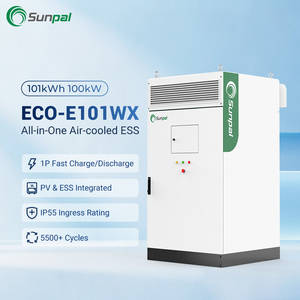
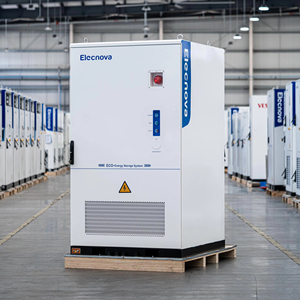
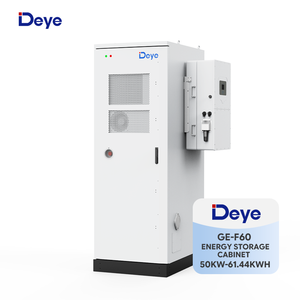
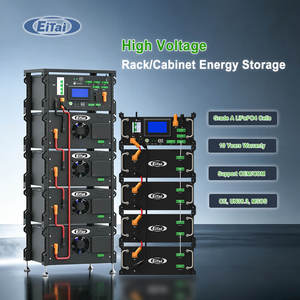
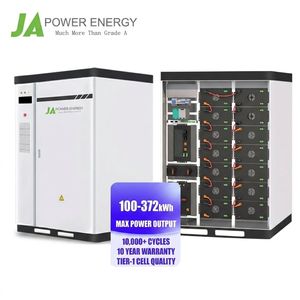
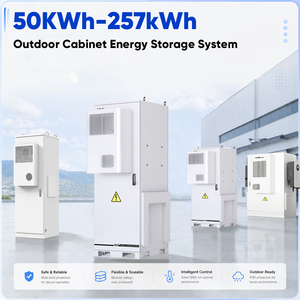
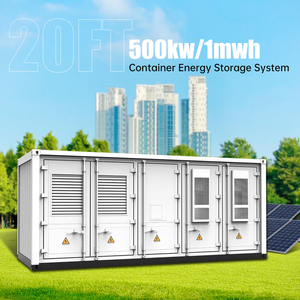
As global power grids undergo rapid decentralization and commercial end-users face increasing peak demand charges, the demand for industrial battery energy storage systems (BESS) has surged. China has established itself as the epicenter of advanced battery chemistry development, automated cell manufacturing, and systemic power conversion engineering. As an industry-leading OEM/ODM supplier with over 120 cumulative years of senior battery engineering expertise, our manufacturing baseline represents the absolute pinnacle of current lithium technology.
The transition from legacy lead-acid and early-generation NMC (Nickel Manganese Cobalt) chemistries to advanced Lithium Iron Phosphate (LiFePO4) has fundamentally redefined safety, thermal stability, and operational longevity. Our state-of-the-art production lines integrate fully automated cell matching, laser tab welding, automated pack assembly, and real-time cloud-based testing matrices to ensure zero-defect manufacturing.
We source exclusively tier-1 280Ah and 314Ah prismatic LFP cells. Each cell undergoes rigorous impedance matching (ΔR ≤ 0.05mΩ) and capacity grading (ΔC ≤ 0.5Ah) before string insertion to ensure maximum cycle life.
Our proprietary Battery Management System features Cell-level, Module-level, and System-level monitoring. Embedded with high-speed CANbus/RS485/Modbus TCP protocols, it prevents cell overvoltage, deep discharge, and thermal runaway.
From custom metal enclosure IP ratings (IP54/IP55/IP65) and customized HVAC sizing to tailored EMS energy management algorithms for arbitrage and peak shaving, we deliver end-to-end ODM designs.
Operating a utility or industrial-scale BESS requires absolute adherence to rigorous safety standards. Our ODM systems undergo comprehensive testing protocols to achieve compliance across major international markets:
Procurement directors, energy project developers, and system integrators face a rapidly changing technological landscape. Understanding macro trends in industrial battery purchasing is essential to avoiding premature equipment obsolescence and maximizing return on investment (ROI).
While 280Ah LFP cells remain the industry workhorse, the market is rapidly migrating to 314Ah single-cell architectures. Transitioning to 314Ah cells yields a 12% increase in volumetric energy density at the cabinet level without modifying standard footprint dimensions (e.g., standard 20ft container systems increasing from 3.35MWh to 5.0MWh+). Procurement strategies must prioritize suppliers with flexible BMS topologies that support both current 280Ah and next-gen high-density cells.
Thermal management is the single most critical factor determining BESS lifespan and safety. Air-cooling systems suffer from temperature differentials (ΔT) of 5°C to 8°C between interior cells, accelerating localized cell degradation. Advanced Liquid Cooling Systems maintain system-wide ΔT under 3°C, reducing parasitic HVAC auxiliary power consumption by over 30% and extending system operational lifespan by up to 20%.
| Technology Metric | Traditional Air Cooling Systems | Next-Gen Liquid Cooling Systems | Procurement Impact |
|---|---|---|---|
| Cell Temp Uniformity (ΔT) | 5°C – 8°C | ≤ 3°C | Significantly extends overall cycle life |
| Auxiliary Power Usage | High (7% – 12% total BESS loss) | Low (3% – 5% total BESS loss) | Increases system Round-Trip Efficiency (RTE) |
| Energy Density (MWh/Footprint) | Baseline (Air ducts consume volume) | +40% Density increase | Reduces expensive land acquisition & civil engineering costs |
| Noise Levels | > 75 dBA (High fan noise) | < 65 dBA (Quiet liquid pump) | Enables urban & residential border installation |
Industrial battery systems are rapidly migrating from 1000V DC to 1500V DC topologies. Raising system voltage decreases operating current, allowing for thinner copper cabling, smaller junction boxes, and reduced internal resistive losses ($I^2R$). This architectural shift reduces overall System Balance of Plant (BOP) costs by 8% to 15% while improving PCS conversion efficiency.
An industrial energy storage system is not merely a collection of battery cells; it is an integrated mechatronic solution requiring precise power electronics, thermal control, and fire suppression engineering.
Bi-directional hybrid inverters (ranging from 50kW to 500kW) execute sub-10ms grid switching (UPS grade), dynamic reactive power compensation (VAR), and seamless black-start functionality for critical off-grid resilience.
Equipped with dual-stage gas detection (CO and H2 early warning sensors), aerosol or Novec 1230 fire suppression fluids, and automated pack-level isolation dampers to prevent cascading thermal failure.
Integrated Edge Controllers leverage Machine Learning to monitor State of Health (SOH) and State of Charge (SOC). Algorithms automatically execute peak-shaving, load-shifting, and VPP (Virtual Power Plant) monetization strategies.
Choosing the correct ODM configuration depends heavily on the intended operational use case:
Answers to essential technical, commercial, and operational questions asked by system integrators and global procurement managers.
Our complete ODM engineering services cover customized mechanical enclosure designs (IP54 to IP65, NEMA 3R/4X, specialized anti-corrosion C5 coating for coastal environments), custom DC voltage configurations (200V–1500V), tailored PCS inverter integrations (Deye, Megarevo, Kehua, Sungrow), white-label software branding, and specialized BMS communication protocol matching (Modbus TCP, CAN2.0B, Profinet).
Air Cooling utilizes forced air HVAC units to regulate internal cabinet temperature. It features a lower initial capital expenditure (CAPEX), making it suitable for moderate climates and lower C-rate applications (≤0.5C). Liquid Cooling uses liquid cold plates directly attached to battery cells, offering superior thermal conductivity, maintaining cell temperature variance under 3°C, enabling higher C-rates (≥1C charge/discharge), and delivering a 20% longer battery lifecycle with lower operating expenses (OPEX).
BESS ROI is calculated by comparing system CAPEX (equipment purchase, shipping, civil work, installation, commissioning) against operational revenues and savings over the project lifetime (typically 10 to 15 years). Key value streams include peak shaving tariff savings, electricity price arbitrage (charging during off-peak hours and discharging during peak rates), demand response incentives, and avoided loss of revenue during power outages. Most industrial applications achieve complete payback within 3.5 to 6 years.
Our systems employ a multi-layered safety architecture. Level 1: Cell-level Ceramic Separator LFP chemistry (inherently stable). Level 2: Active BMS real-time monitoring of cell voltage, current, and temperature with automated relay disconnection. Level 3: Dual gas detectors (CO/H2) for off-gas detection prior to thermal runaway. Level 4: Integrated Aerosol or Novec 1230 automatic fire suppression systems along with explosion-relief valves compliant with NFPA 855 guidelines.
We offer standard warranties of 6,000 to 8,000 cycles at 80% Depth of Discharge (DOD) under standard operating temperatures (25°C ± 2°C). This translates to a 10-to-15-year operational service life depending on daily charge/discharge frequency (e.g., 1.5 cycles per day).
Yes. Our modular outdoor BESS cabinets (such as our 215kWh and 241kWh units) are designed for seamless parallel expansion. Up to 10 to 20 cabinets can be connected on a shared AC/DC bus bar controlled by a single master EMS controller, enabling scalable energy deployment from 100kWh up to 10MWh+ containerized microgrids.
Partner with China's premier ODM industrial battery systems manufacturer. Our senior engineering team is ready to deliver tailored BESS specifications, mechanical drawings, and competitive wholesale pricing within 24 hours.