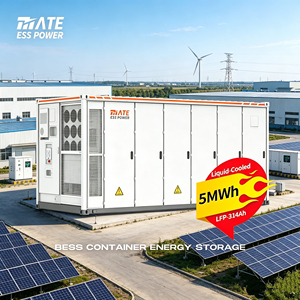
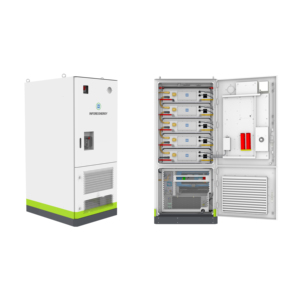
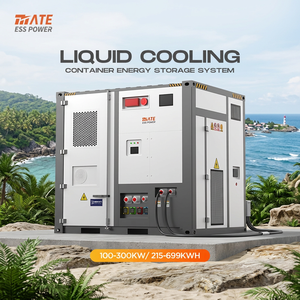
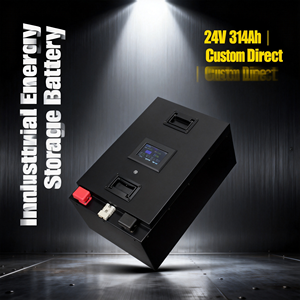
The global transition toward electrified transport and industrial decarbonization has elevated China to the epicenter of automotive-grade lithium-ion traction battery manufacturing. As auto OEMs, commercial fleet integrators, and grid storage developers scale production, evaluating high-performance Electric Vehicle (EV) battery modules from China has evolved into a strategic procurement discipline. China currently controls over 75% of global lithium-ion cell refining capacity and 85% of battery module manufacturing, backed by vertically integrated supply chains spanning raw precursor processing, high-precision automated laser welding, and advanced Battery Management System (BMS) software integration.
A standard EV battery module serves as the fundamental building block of modern battery packs. By combining multiple prismatic or cylindrical lithium-ion cells in series-parallel configurations via copper or aluminum busbars, these modules deliver optimized voltage, thermal management, and structural rigidity. In modern automotive applications—ranging from passenger EVs and e-buses to heavy-duty mining trucks and commercial BESS—the quality of module assembly directly dictates volumetric energy density, high-rate discharge efficiency, fast-charging tolerance, and thermal runaway resistance under severe stress testing.
High-strength extrusion aluminum alloy side plates and honeycomb sandwich structures engineered to withstand shock loads up to 50G in compliance with ECE R100.03 automotive safety standards.
Dual-channel serpentine liquid-cooling plates integrated directly into the module base plate, maintaining intra-module temperature variance within ≤ 2.5°C during fast charging (1.5C to 3C).
Embedded automotive-grade CANbus / Modbus communication interfaces supporting daisy-chained ISO 26262 ASIL-D functional safety monitoring for millivolt-level cell tracking and SOC/SOH diagnostics.
Selecting the optimal chemistry for custom EV battery module procurement involves balancing volumetric density, thermal stability, lifetime cost per kWh, and operating ambient envelope. Below is an engineering comparison benchmarked from leading Chinese Tier-1 battery manufacturers:
| Technology Parameter | Prismatic LFP (314Ah / 280Ah) | Prismatic High-Nickel NMC (811) | Semi-Solid State Chemistry |
|---|---|---|---|
| Nominal Cell Voltage | 3.2 V | 3.6 V - 3.7 V | 3.7 V - 3.85 V |
| Cell Gravimetric Density | 160 - 185 Wh/kg | 260 - 300 Wh/kg | 350 - 400 Wh/kg |
| Cycle Life (80% DOD @ 25°C) | 6,000 - 10,000 Cycles | 2,000 - 3,500 Cycles | 1,500 - 2,500 Cycles |
| Thermal Runaway Onset (Tcr) | > 270°C (Exothermic Stability) | ~ 210°C (Requires Insulation) | > 320°C (Solid Electrolyte) |
| Fast Charge Rate (C-Rate) | 1.0C - 3.0C Continuous | 2.0C - 4.0C Continuous | 4.0C - 6.0C Peak Fast Charge |
| Primary Target Application | Heavy Trucks, E-Busses, ESS, Utility EVs | High-Performance Passenger EVs, Drones | Next-Gen Premium EVs, Aerospace/UAV |
As global regulatory frameworks demand higher efficiency, stricter safety compliance, and enhanced sustainability, battery suppliers in China are pioneering three main technological transitions:
The commercial EV and industrial battery sector is undergoing a standard shift from legacy 280Ah prismatic cells toward high-capacity 314Ah and 320Ah form factors. By maintaining the same physical footprint as standard 280Ah cells while delivering a 12% energy capacity gain, these cells allow module fabricators to construct higher-capacity 1P12S or 1P16S modules. Concurrently, traditional forced-air thermal management is being replaced by micro-channel liquid-cooling plates coated with phase-change thermal interface materials (TIM). Liquid-cooled modules deliver up to 40% higher heat dissipation efficiency, effectively mitigating hot-spot degradation and extending lifetime pack availability.
To overcome the physical energy limit of liquid organic electrolytes (~300 Wh/kg), top-tier Chinese manufacturers are accelerating the commercial scale-up of semi-solid state battery modules. Utilizing hybrid solid-liquid electrolytes with high-nickel cathodes and silicon-carbon anodes, these modules eliminate liquid leakage risks and raise pack safety thresholds under severe puncture and mechanical crushing conditions.
With the implementation of the European Union’s New Battery Regulation (EU 2023/1542), global EV battery module buyers now require full supply chain traceability. Top Chinese exporters are adopting blockchain-backed "Battery Passports" that track carbon footprint accounting from raw lithium extraction to automated laser module assembly. Recycled content quotas (minimum levels of recycled Cobalt, Lead, Lithium, and Nickel) and standardized disassembly design principles ensure that modules can be efficiently repurposed for second-life stationary ESS applications before final recycling.
Navigating the complex landscape of Chinese battery suppliers requires an engineering-driven evaluation model. International buyers, original equipment manufacturers (OEMs), and system integrators should focus on several operational strategies:
While standardized VDA sizes lower initial tooling costs and compress prototype delivery lead-times to 4–6 weeks, custom-extruded aluminum chassis designs optimize volumetric efficiency by fitting non-standard vehicle frame rails and equipment bays.
Ensure suppliers strictly utilize Grade-A fresh cells from accredited tier-1 cell manufacturers (such as CATL, BYD, EVE Energy, CALB, or Gotion High-Tech) featuring factory QR-code traceabilities, preventing the use of downgraded or second-life cells in traction modules.
Partner exclusively with factories maintaining certified IATF 16949 quality management protocols. Automated Manufacturing Execution Systems (MES) should track laser welding energy, busbar resistance, and end-of-line (EOL) electrical safety testing for 100% of production units.
Global export readiness requires valid UN 38.3 transport safety reports, UL 1973 (stationary), UL 2580 (EV traction), IEC 62619, and ECE R100 Rev3 certifications, ensuring seamless customs clearance across European, North American, and Asia-Pacific ports.
As a leading China-based EV battery module developer and global exporter, our enterprise integrates decades of battery packaging experience with state-of-the-art automated manufacturing infrastructure. We deliver end-to-end custom battery solutions tailored for international OEMs:
• Advanced Automated Manufacturing Footprint: Fully automated cell sorting, automated ultrasonic/fiber-laser busbar welding, and computerized EOL diagnostic testing lines ensure zero weld defects and consistent internal module resistance (≤ 0.5 mΩ variance).
• Customized BMS Hardware & Firmware Development: In-house hardware engineering for 12V, 24V, 48V, up to 800V high-voltage platforms featuring active cell balancing, multi-channel thermal monitoring, and customizable CAN bus protocols (SAE J1939, CANopen).
• Rigorous Qualification & Thermal Testing: Every module design undergoes extensive environmental stress testing, including 3-axis vibration testing, thermal shock cycling (-40°C to +65°C), moisture resistance testing, and nail-penetration safety validation.
Here are authoritative answers to common engineering and commercial questions when sourcing EV battery modules from China:
Whether you require custom traction battery modules for specialized EV platforms, high-voltage commercial fleets, or containerized energy storage integration, our engineering team provides end-to-end OEM/ODM design, prototyping, and mass production services.