High-voltage containerized, cabinet-based, and modular lithium battery packs engineered for utility power, C&I microgrids, and heavy industrial applications worldwide.
As the global energy transition accelerates, conventional liquid electrolyte lithium-ion batteries (NMC and standard LiFePO4) are approaching their theoretical volumetric energy density limits (roughly 300 Wh/kg). The industrial market requires higher safety margins, broader operating temperature windows, and significantly greater charge storage density. China has emerged as the global epicenter for advanced battery engineering, pioneering the commercialization of semi-solid-state and all-solid-state lithium battery packs.
Solid-state battery technology replaces traditional organic liquid electrolytes and flammable polymer separators with non-combustible inorganic solid-state electrolytes (SSE). This technological leap eliminates thermal runaway propagation risks while enabling the direct utilization of high-capacity lithium-metal anodes and high-voltage manganese-rich cathodes.
Chinese Tier-1 battery manufacturers and specialized OEM pack integrators utilize three primary solid electrolyte material systems, each presenting unique engineering trade-offs:
To assist industrial procurement managers and OEM product designers in selecting the optimal technology stack, the following empirical comparison highlights the core performance parameters:
| Performance Metric | Conventional LiFePO4 | Semi-Solid Lithium (Inorganic Hybrid) | All-Solid-State Lithium Pack |
|---|---|---|---|
| Gravimetric Energy Density | 160 – 210 Wh/kg | 300 – 380 Wh/kg | 400 – 520 Wh/kg |
| Volumetric Energy Density | 350 – 450 Wh/L | 600 – 750 Wh/L | 800 – 1100 Wh/L |
| Thermal Runaway Start Temp | ~210°C (Gas generation) | ~350°C (Minimal off-gassing) | >600°C (Non-combustible) |
| Low-Temp Capacity Ret (-30°C) | 45% – 55% | 75% – 82% | 88% – 93% |
| Cycle Life (80% SOH) | 3,500 – 6,000 Cycles | 6,000 – 9,000 Cycles | 10,000+ Cycles |
| Mechanical Safety Profile | Requires rigid thermal isolation | Self-healing separator layer | Puncture-proof, bullet-resistant core |
A fundamental challenge in high-energy solid-state packs is the formation of metallic lithium dendrites across grain boundaries during high-rate fast charging. Leading Chinese manufacturers solve this via three proprietary engineering innovations:
First, applying 3D porous lithiophilic framework anodes (such as carbon nanotube-graphene scaffolds coated with trace zinc/tin) which evenly distribute local current density, suppressing localized electric field concentration. Second, implementing ultra-thin atomic layer deposition (ALD) alumina/titanate artificial interphases that prevent parasitic chemical side-reactions between the solid electrolyte and reactive lithium metal. Third, integrating dynamic mechanical compression mechanisms within custom battery enclosures. As solid-state cells undergo micro-volume expansion during charge-discharge cycles, internal spring-loaded or elastomeric tension plates maintain optimal interfacial contact pressure (1.5 – 3.0 MPa), preventing contact delamination.
As a senior custom battery pack manufacturer and authorized assembler with over 120 years of collective engineering expertise across North American and Asian manufacturing facilities, our production lines bridge cutting-edge electrochemistry research with industrial scale manufacturing.
Solid-state atmospheric moisture control under dry-room environments with dew points below -60°C, ensuring zero moisture degradation of sulfide and oxide solid precursor materials.
Custom-engineered Battery Management Systems featuring localized impedance spectroscopy (EIS), real-time solid electrolyte interface monitoring, and multi-node thermal control algorithms.
Full compliance for military, aerospace, and commercial export logistics. Every custom pack undergoes rigorous altitude simulation, thermal shock, vibration, and mechanical drop tests.
Transitioning from traditional solvent-based wet slurries to dry PTFE binder powder mixing, eliminating toxic NMP solvent recovery and reducing cell fabrication energy consumption by 42%.
Our custom battery design service supports full lifecycle development: from initial 3D CAD rapid prototyping and thermal FEA simulation to high-volume automated spot welding, laser busbar jointing, and cloud-connected remote telemetry diagnostic setup.
Work directly with our senior electrochemical engineers to customize pack dimensions, C-rate performance, BMS communication protocols (CANbus, RS485, Modbus), and enclosure IP ratings.
For B2B procurement executives, energy storage system (ESS) integrators, and OEM device designers, navigating the rapid technology transition in China's battery ecosystem requires deep market foresight. Over the next decade, four key procurement trends will shape the custom battery manufacturing landscape:
While all-solid-state batteries reach commercial maturity in niche aerospace and high-end automotive applications, semi-solid-state batteries (containing 5%–10% liquid electrolyte gel matrix) have achieved immediate mass production capability. Procurement directors are increasingly shifting utility-scale containerized RFP specifications toward semi-solid LiFePO4 cells due to their non-propagating thermal safety characteristics and lower lifetime Levelized Cost of Storage (LCOS).
China controls over 80% of global solid-state precursor refining (lithium lanthanum zirconium oxide, sulfide electrolytes, and synthetic graphite-silicon anodes). Strategic procurement mandates partnering directly with Chinese original manufacturers who possess vertically integrated supply chains—from raw precursor synthesis to pack assembly—guaranteeing component traceability and long-term price stability against raw material market volatility.
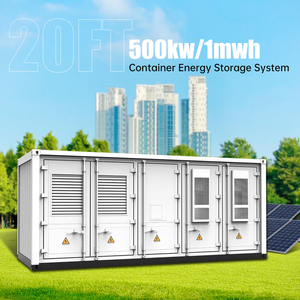
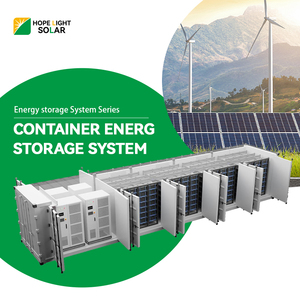
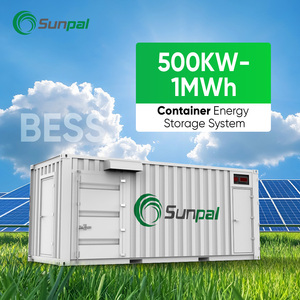
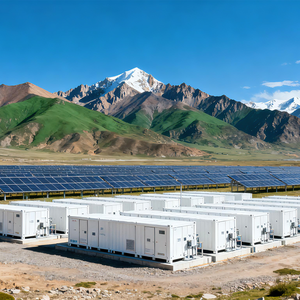
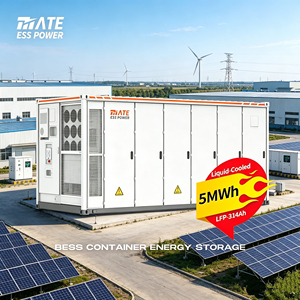
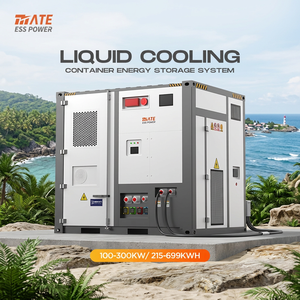
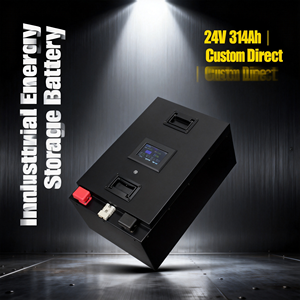
Modern commercial energy storage procurement has standardized around high-density 20ft and 40ft modular containers operating at 1500V DC. Liquid-cooled 314Ah cell configurations integrated with semi-solid matrices allow up to 5MWh+ capacity per single container footprint, dramatically lowering civil engineering installation costs and site footprint requirements for factories, data centers, and renewable solar farm installations.
With global regulations such as the EU Battery Regulation requiring digital Battery Passports, procurement mandates in North America and Europe require Chinese suppliers to provide audited carbon footprint data for every pack manufactured. Next-generation solid-state battery designs incorporate closed-loop direct recycling chemistry, allowing mechanical separation of solid ceramic powders without hydrometallurgical energy consumption.
Answers to critical technical, regulatory, and commercial questions asked by industrial buyers and engineering leads when procuring solid-state and custom lithium battery packs from China.
Semi-solid-state batteries retain a minimal percentage (typically 5–10 wt%) of liquid or gel polymer electrolyte to maintain ion transport across electrode interfaces, allowing them to be manufactured on slightly modified existing Li-ion production lines. All-solid-state batteries completely eliminate liquid content, using 100% solid inorganic matrices (sulfides or oxides), achieving higher energy densities (>400 Wh/kg) and absolute non-flammability under extreme mechanical damage.
China maintains an overwhelming supply chain advantage in raw material processing, solid electrolyte synthesis, dry-electrode manufacturing equipment, and giga-scale production efficiency. Chinese manufacturers offer unmatched cost-to-performance ratios, rapid prototyping speed, and full compliance with international certification standards (UN38.3, UL1973, UL9540A, CE, IEC62619).
Traditional liquid electrolyte batteries undergo exothermic decomposition at temperatures above 130°C, releasing flammable hydrocarbons. Solid-state electrolytes remain structurally stable at temperatures exceeding 600°C to 1000°C. Even under extreme nail penetration, mechanical crushing, or electrical short-circuiting, solid-state cells do not experience oxygen release or explosive fire propagation.
Standard custom engineering projects (custom casing, BMS programming, wiring harness integration) typically require an MOQ starting at 50 to 100 units for large-scale industrial packs, or 1,000 units for compact smart battery modules. Sample prototyping lead time is typically 3 to 4 weeks, while mass production delivery spans 6 to 8 weeks depending on raw material customization.
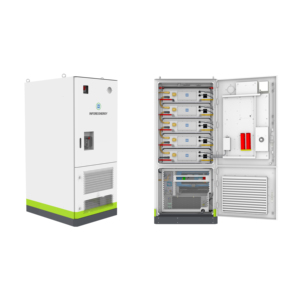
Yes. Our custom pack engineering teams design solid-state modules to match standard form factors (such as 19-inch rack-mount cabinets, 20ft/40ft ISO shipping container locks, or custom OEM device cavities). The integrated BMS automatically translates system communication protocols to match your legacy inverter or system controllers.
All industrial lithium and solid-state battery shipments comply strictly with Dangerous Goods (DG) shipping regulations under Class 9 UN 3480 / UN 3536 standards. Containers are certified for UN38.3 vibration and shock transport and are shipped at optimal state-of-charge (typically 30% SOC) inside certified fire-rated marine packing structures.
Our smart BMS platforms support native CAN2.0B, CANopen, RS485, Modbus RTU, Modbus TCP/IP, and optional IoT cellular/Wi-Fi cloud monitoring modules. This enables real-time remote cell monitoring, automated state-of-charge (SOC) balancing, state-of-health (SOH) reporting, and predictive fault diagnostics.
Download our comprehensive technical product catalog, solid-state cell datasheets, and whitepapers. Connect with our technical sales team for custom project quotes.