
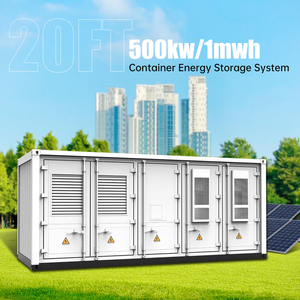
Explore our export-ready LiFePO4 and Lithium-Ion battery systems engineered for commercial, industrial, and utility-scale energy storage applications worldwide.
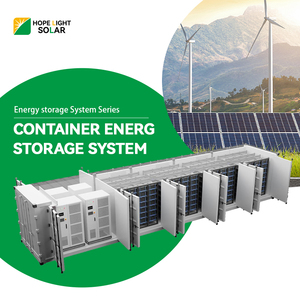
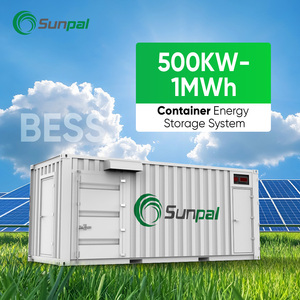

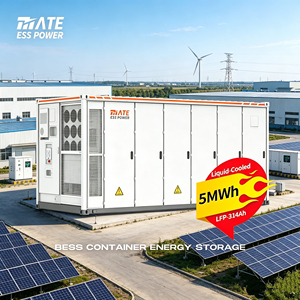
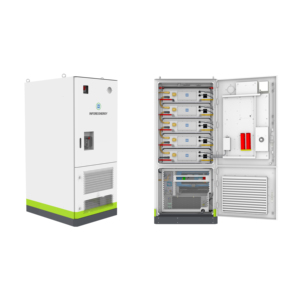
We bridge cutting-edge electrochemistry with precision mechanical execution. Here is how our engineering team delivers superior performance, extended lifecycle, and uncompromised safety for global OEMs.
Our senior battery engineering team combines over a century of collective industry experience in custom pouch cell tab welding, aluminum-laminated film casing design, and complex multi-series, multi-parallel configuration engineering.
Every customized pouch cell battery pack features integrated hardware and software BMS architectures (CANbus, RS485, Modbus). We monitor real-time cell voltage, temperature coefficient gradient, SOC, and SOH with predictive cell-level balancing.
Pouch cells offer vast surface area for thermal dissipation. We design phase-change material (PCM) matrices, ultra-thin liquid cooling plates, and silicone thermal pads to maintain thermal uniformity within <2°C across all cells.
Lithium pouch cells expand over life cycles due to gas evolution and intercalation. Our mechanical housings incorporate pre-tightened elastomeric compression pads and rigid endplates to exert optimal uniform pressure (30–50 kPa).
Our manufacturing and assembly lines strictly adhere to ISO9001, IATF16949, and ITAR quality protocols. All shipped pouch battery packs hold complete UN38.3, IEC62619, UL1973, and CE compliance documentation for fast global customs clearing.
From initial CAD enclosure prototyping, ultrasonic tab welding, custom silicone potting, to automated mass production testing, we provide a complete turnkey design-to-shipment OEM engineering solution for global clients.
Pouch cell lithium batteries represent the pinnacle of gravimetric and volumetric efficiency in modern electrochemical energy storage. Unlike rigid cylindrical (e.g., 18650, 21700) or metallic prismatic cells, pouch cells utilize flexible aluminum-laminated conductive foil outer envelopes. This design eliminates heavy nickel-plated steel cans, yielding weight savings of 20% to 30% for identical electrical capacities. However, extracting maximum cycle life and guaranteeing absolute structural integrity demands sophisticated mechanical, thermal, and electrical design methodologies.
When engineering a custom pouch battery pack, selecting the correct electrochemistry dictates operational boundary parameters. The two primary chemistries dominating OEM procurement are Lithium Iron Phosphate (LiFePO4 / LFP) and Nickel Manganese Cobalt Oxide (NMC / NCM).
LiFePO4 pouch cells exhibit lower nominal voltage (3.2V) and energy density (160–200 Wh/kg), but offer unmatched thermal stability (decomposition temperature >270°C) and exceptional life cycles (>4,000 to 6,000 cycles at 80% Depth of Discharge). Conversely, NMC pouch cells deliver high nominal voltage (3.6V–3.7V) and volumetric energy density surpassing 300 Wh/kg, making them the preferred choice for weight-critical UAVs, high-altitude drones, advanced robotics, and medical devices.
| Performance Metric | LiFePO4 (LFP) Pouch Cell | NMC / NCM Pouch Cell | Prismatic Metallic Cell |
|---|---|---|---|
| Gravimetric Energy Density | 160 – 210 Wh/kg | 260 – 320 Wh/kg | 180 – 240 Wh/kg |
| Volumetric Energy Density | 330 – 420 Wh/L | 550 – 720 Wh/L | 400 – 500 Wh/L |
| Cycle Life (80% Capacity Retention) | 4,000 – 7,500 Cycles | 1,500 – 3,000 Cycles | 3,000 – 5,000 Cycles |
| Thermal Runaway Initiation Temp | > 270 °C (Ultra-Safe) | > 210 °C (Requires Active Cooling) | > 240 °C |
| Weight Reduction Efficiency | Baseline Reference | +35% Gravimetric Gain | -25% Heavier Enclosure |
Designing a reliable pouch cell pack requires mastering two critical physical phenomena: volumetric expansion (breathing) and high-current tab tab welding resistance.
During charge and discharge cycles, pouch cells experience linear swelling of 5% to 10% across their thickness due to lithium ion insertion (intercalation) into the graphite anode, along with trace gas formation. If a battery module is constrained rigidly without internal compliance, localized stress concentration exceeds 200 kPa, accelerating internal micro-short circuits, separator degradation, and rapid capacity fade. As a premier China pouch cell supplier, our engineering team integrates precision-calibrated compressible polyurethane or silicone foam pads between adjacent pouch layers. Furthermore, heavy-duty aluminum endplates with spring-loaded tension rods maintain a steady compressive pressure of 30 to 50 kPa throughout the entire multi-year lifecycle.
We utilize multi-head ultrasonic tab welding machines to bond solid copper and aluminum cell tabs to solid copper busbars. Ultrasonic friction welding eliminates thermal heat-affected zones, reducing contact resistance to micro-ohm levels (<15 µΩ per joint).
For high-vibration applications (off-road EVs, marine, defense), pouch tab joints are potted in low-viscosity, flame-retardant (UL94 V-0) polyurethane elastomers. This secures mechanical stress relief while insulating sensitive electrical contacts from moisture ingress.
The delicate outer aluminum pouch layer is vulnerable to mechanical puncture and corrosive electrolyte leakage. Our pack frames incorporate glass-filled polybutylene terephthalate (PBT) cell cradles that insulate each pouch casing independently.
Safety in lithium battery engineering is directly proportional to control speed and thermal dissipation efficiency. Pouch cells possess large planar surface areas, presenting an ideal geometry for surface-contact liquid cooling plates.
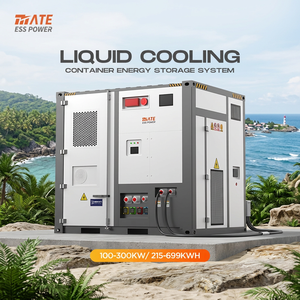
Our containerized and industrial energy storage packs utilize dual-circuit liquid cold plates circulating inhibited ethylene glycol solutions directly against the planar surfaces of pouch stacks. This system manages high discharge continuous rates (up to 3C continuous, 5C peak) while maintaining inter-cell temperature variances within <1.5°C. Concurrently, our proprietary Smart BMS executes real-time State-of-Charge (SOC) estimation via extended Kalman filtering (EKF) algorithms, accompanied by over-voltage, under-voltage, short-circuit, and thermal runaway warning protocols linked to cloud telemetry.
As global decarbonization accelerates, procurement officers, OEM project managers, and engineering directors face evolving technological requirements and regulatory mandates. When sourcing custom pouch cell battery packs from China, several strategic macro-trends redefine procurement specifications over the coming decade:
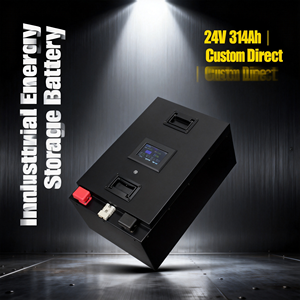
Utility-scale Energy Storage Systems (BESS) are rapidly transitioning from legacy 280Ah cells to 314Ah and 560Ah single-cell formats. Pouch cell formats allow higher volumetric packing efficiency, enabling standard 20ft containerized ESS units to expand total energy capacity from 3.35MWh to 5.0MWh+ without increasing physical footprints.
Semi-solid-state pouch cells incorporating polymer gel electrolytes and silicon-carbon composite anodes are entering mass commercial production. Offering energy densities exceeding 360 Wh/kg alongside zero thermal runaway propagation under nail puncture testing, semi-solid pouch packs are dominating high-end robotics, aviation, and defense procurement.
Driven by the European Union Battery Regulation (EU 2023/1542), global buyers require full supply chain transparency. Modern battery pack suppliers must supply Digital Battery Passports documenting cell origin, recycled cobalt/lithium percentages, and lifecycle CO2 footprint metrics at the point of export.
Gas evolution occurs due to electrolyte breakdown under elevated temperatures or high voltage exposure. We mitigate swelling through three engineering measures: 1) Utilizing high-purity, electrolyte-stabilized tier-1 cells; 2) Installing calibrated compression foam pads (30-50 kPa) to mechanically suppress gas pocket formation; and 3) Engineering active thermal management to keep cell temperatures under 40°C during continuous operation.
Pouch cells offer higher gravimetric energy density (less dead weight from metal cans), superior space utilization (no interstitial air gaps typical of round cylinders), and superior thermal dissipation due to large flat surface areas. They also allow customized geometric dimensions tailored to non-standard enclosure footprints.
Ultrasonic welding uses high-frequency mechanical vibrations (20–40 kHz) under pressure to create a solid-state atomic bond between copper/aluminum tabs and busbars. Unlike laser or spot welding, it generates minimal localized heat (<80°C), eliminating the risk of melting internal polymer separators or damaging pouch hermetic seals.
For air and sea freight export, UN38.3 (Transport of Dangerous Goods) and MSDS/UN54.2 are mandatory. For target market compliance, North America requires UL1973 (stationary storage) or UL2580 (EVs), while Europe mandates CE, IEC62619 (industrial lithium systems), and UN ECE R100 for automotive applications.
Initial engineering concept reviews, 3D CAD modeling, and thermal simulations take 1 to 2 weeks. Custom sample prototyping (including custom enclosure tooling and BMS configuration) requires 3 to 5 weeks. Non-Recurring Engineering (NRE) costs vary based on enclosure complexity, BMS customization, and certification testing scope.
Pouch cells are configured into tight modular racks with liquid cold plates sandwiched between pouch pairs. Flow channels connected to an external chiller unit pump fluid through the plates, maintaining uniform thermal gradients even during continuous 1C charging/discharging cycles.
Whether you require custom lithium pouch cell battery pack prototyping, high-capacity liquid-cooled ESS container solutions, or Tier-1 OEM manufacturing, our senior engineering team is ready to assist your project.
Get a Quote