
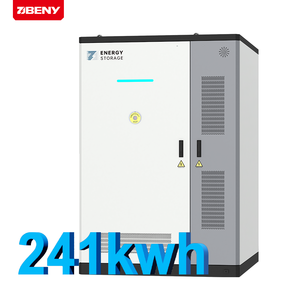
Beny LiFePO4 Battery 100kW/230kWh Industrial & Commercial Energy Cabinet
- Capacity: 230kWh / 241kWh Options
- Voltage: High-Voltage Bus System
- Protection: Liquid Cooling & Aerosol Suppression
Explore our certified lithium battery backup drivers, industrial energy storage modules, emergency bulbs, and smart self-testing fixtures designed for demanding global markets.
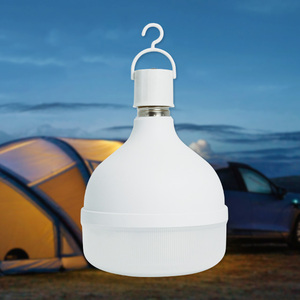
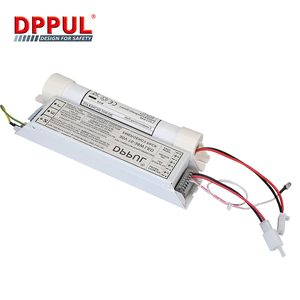
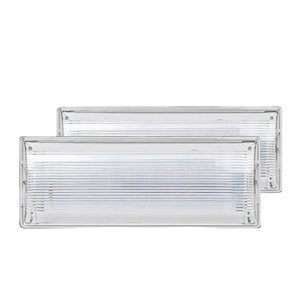
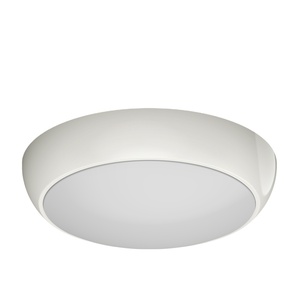
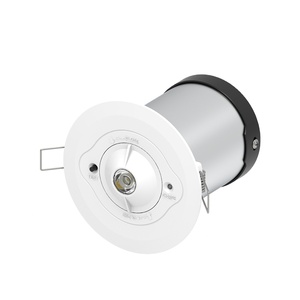
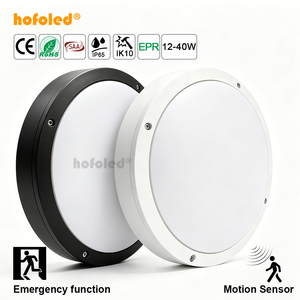
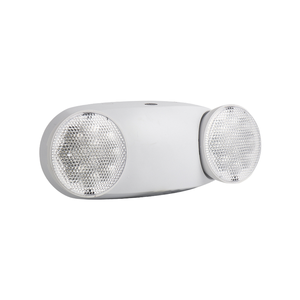
In commercial buildings, industrial complexes, healthcare facilities, and hazardous transport hubs, life safety lighting systems serve as the ultimate defense against catastrophic grid failure. Modern emergency lighting architecture relies heavily on lithium battery backup drivers (EMDs) and constant-power emergency power supplies (EPS). Over the past decade, the global lighting industry has underwent a fundamental technological shift—transitioning away from toxic Nickel-Cadmium (Ni-Cd) and maintenance-heavy Sealed Lead-Acid (SLA) chemistries toward ultra-dense, thermally resilient Lithium Iron Phosphate (LiFePO4) and specialized Lithium-Ion (Li-ion) systems.
As China’s premier emergency lighting lithium battery backup supplier and exporter, our engineering ecosystem delivers unmatched energy density, fast recharging response, and smart Battery Management Systems (BMS) calibrated specifically for international life-safety codes including UL 924 (Standard for Emergency Lighting and Power Equipment), EN 60598-2-22, IEC 61347-2-7, and BS 5266.
Unlike standard consumer electronics batteries, emergency lighting backup packs remain connected to AC trickling power continuously for years at elevated ambient temperatures (often 50°C to 60°C inside fixture housings). Lithium Iron Phosphate (LiFePO4) possesses an olivine crystal structure that remains thermally stable up to 270°C without releasing oxygen, eliminating thermal runaway risks while providing over 2,000 to 4,000 charge-discharge cycles at 80% DOD.
| Chemical Chemistry | Energy Density (Wh/kg) | Cycle Life (80% DOD) | Thermal Stability Threshold | Self-Discharge / Month | UL 924 & ESG Rating |
|---|---|---|---|---|---|
| LiFePO4 (LFP) | 140 - 170 Wh/kg | 2,000 - 4,000 Cycles | 270°C (Highest Safety) | < 1.5% / month | Optimal / Eco-Friendly |
| NMC / Li-ion (High Temp) | 200 - 250 Wh/kg | 800 - 1,200 Cycles | 210°C (Medium) | < 2.5% / month | High Density / Certified |
| Ni-Cd (Nickel Cadmium) | 40 - 60 Wh/kg | 500 - 800 Cycles | 180°C (Cadmium Hazard) | ~ 15% / month | Banned in EU (RoHS) |
| Sealed Lead-Acid (SLA) | 30 - 40 Wh/kg | 200 - 300 Cycles | 100°C (Sulfation Failure) | ~ 5% / month | Heavy / Toxic / High OpEx |
As a specialized tier-1 battery pack manufacturer and customized OEM supplier, our facility integrates complete end-to-end engineering, cell matching, automated BMS PCB assembly, and rigorous climate-chamber burn-in verification.
Our proprietary BMS algorithms maintain uniform LED lumen output throughout the entire 90-minute or 180-minute emergency discharge cycle without voltage drop.
Integrated hardware overcharge protection, deep discharge cutoff, short-circuit suppression, and internal NTC thermal sensors preventing operation out-of-spec.
Automated monthly and annual self-diagnostic routines per NFPA 101 standards, with optional DALI-2 and wireless mesh communication for smart building telemetry.
Exporting emergency lighting battery backups requires strict compliance with international customs, environmental regulations, and safety standards. Every battery batch leaving our Shenzhen and Dongguan manufacturing hubs undergoes rigorous quality gates:
Input Voltage Range: AC 100V - 277V (50/60Hz)
Output Voltage to LED Load: DC 10V - 300V Auto-adjusting
Emergency Output Power: 5W, 8W, 12W, 15W, 25W, 40W Constant Wattage
Recharge Duration: < 24 Hours (Meeting UL 924 Standard)
Operating Temp Range: -10°C to +60°C Ambient
Strategic buyers, procurement directors, and lighting fixture OEMs must navigate key macro-trends shaping the emergency power industry over the next five years:
Modern commercial lighting is migrating toward high-voltage DC LED engines (100V-300V DC). New emergency drivers incorporate non-isolated buck-boost converters that directly power standard LED arrays in emergency mode without requiring dedicated low-voltage secondary taps.
Manual inspection of emergency exit signs and pack units is prohibitively expensive for enterprise facility managers. Integration of Bluetooth Mesh, DALI-2, and Zigbee allows automated reporting of battery health, load presence, and charging status to centralized facility management dashboards.
Architectural linear slots, ultra-thin LED panels, and micro-downlights demand miniaturized lithium battery stick packs (diameter < 22mm) capable of fitting inside restricted junction boxes and narrow wireways.
Tightening environmental legislation across North America and Europe prohibits heavy metals. Lithium Iron Phosphate represents the standard green choice for corporate sustainability (ESG) reporting.
Below are technical responses to the most common questions raised by OEM lighting engineers, electrical contractors, and international procurement managers when sourcing emergency backup batteries from China.
Constant Power emergency drivers automatically adjust their output current depending on the connected LED fixture's forward voltage (Vf), ensuring that the exact emergency wattage (e.g., 10W) is maintained throughout the full 90-minute discharge. Constant Current drivers supply a fixed amperage, which can result in inconsistent brightness or overloading if paired with mismatched LED loads.
LED light engines generate significant localized heat. Our high-temperature LiFePO4 battery packs use specialized electrolyte formulas and high-grade thermal separators rated for continuous operation at up to +60°C ambient without capacity degradation or thermal degradation over a 5 to 7-year service life.
For North America, emergency drivers must meet UL 924 standards and possess UL Listed or Recognized component status, along with FCC compliance for EMI. For Europe and international markets, CE, EN 60598-2-22, IEC 61347-2-7, and RoHS certificates are mandatory. For shipping, UN38.3, MSDS, and 1.2m drop test reports are required.
Due to ultra-low self-discharge rates (< 1.5% per month for LiFePO4), our backup battery packs can be stored for up to 6 to 9 months at room temperature (20°C - 25°C) before requiring a refresh charge. We recommend powering up the units within 6 months of delivery for optimal lifecycle preservation.
Yes. We specialize in OEM/ODM design. We can customize the aluminum or polycarbonate enclosure size, wire harness connector types (e.g., Ideal, Molex, WAGO), battery cell geometry (stick pack, side-by-side, or split-pack), and test switch assembly to fit seamlessly inside your fixture housing.
The internal MCU on our smart emergency drivers automatically performs a 30-second discharge test every 30 days and a full 90-minute discharge test once every 365 days. A multi-color LED indicator light displays operational status (Green = Normal, Red Flashing = Battery Disconnected or Capacity Failure, Yellow = Driver Fault), fulfilling building code requirements without manual labor.
Looking for reliable OEM lithium emergency drivers, customizable battery packs, or competitive factory-direct pricing? Our engineering team is ready to assist with your technical specs and compliance requirements.