Precision-engineered, safety-audited lithium battery packs and testing chambers certified to UL 2054, IEC 62133-2, CE, UN38.3, and UL 1973 standards.
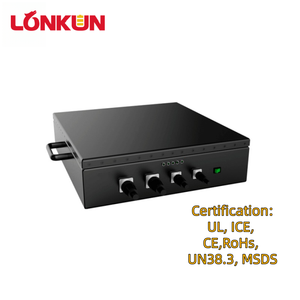
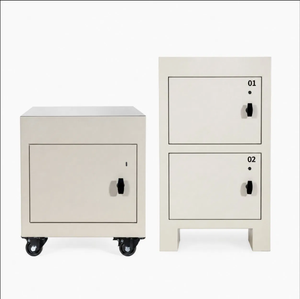
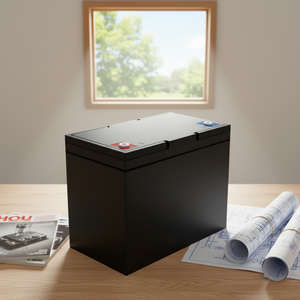
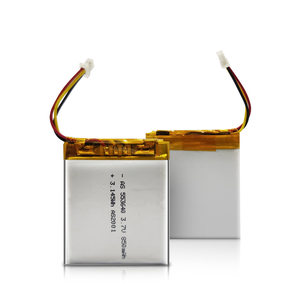
In the modern international electronics marketplace, battery compliance is no longer a downstream administrative checkbox; it is an upstream core engineering requirement. OEM original equipment manufacturers designing products for commercial, medical, industrial, and defense sectors face stringent safety standards. Among these, UL 2054 (Underwriters Laboratories Standard for Household and Commercial Batteries) stands as the definitive safety benchmark for portable battery packs in the United States and North American markets.
A frequent technical point of confusion among procurement officers and system integrators is the distinction between UL 1642 and UL 2054 certification. Understanding this difference is critical to avoiding costly regulatory rejections during Amazon US audits, FCC approvals, or FDA medical device clearances:
A battery pack constructed entirely from UL 1642 certified cells does NOT automatically comply with UL 2054. The finished pack must independently undergo a comprehensive battery safety regimen to prove that no single failure mode (e.g., short circuit, component failure, trace breakdown) can trigger thermal runaway, fire, explosion, or toxic gas leakage.
| Regulatory Standard | Geographic Jurisdiction | Audit Scope | Primary Mandatory Tests Required | Target OEM Applications |
|---|---|---|---|---|
| UL 2054 | North America (USA / Canada) | Full Pack System & Protection Electronics | Abnormal Charge, Short Circuit, 250N Crush, Drop, Impact, Limit Power | Commercial, Portable Tools, Amazon Devices, Medical Electronics |
| UL 1642 | Global / North America | Bare Lithium Cells (Sub-component) | Internal Short Circuit, Heating Test, Projectile Test, Impact Test | Cell Manufacturers & Battery Assembly Plants |
| IEC 62133-2 | European Union / Global (CB Scheme) | Cell & Pack Safety (Alkaline/Lithium) | Thermal Abuse, Continuous Low-Rate Charge, Overcharge Failsafe, Drop | CE Marking Compliance, Medical Equipment, Consumer Tech |
| UN 38.3 | International (ICAO/IATA/DOT) | Transport & Logistics Safety | Altitude (T1), Thermal (T2), Vibration (T3), Shock (T4), External Short (T5) | Mandatory for Air, Sea, & Ground Freight of Lithium Batteries |
| UL 1973 | North America / International | Stationary ESS & Motive Auxiliary Power | Thermal Runaway Propagation, Overcharge, Short Circuit, Salt Fog Corrosion | Residential Solar ESS, Telecom Backup, Commercial Rack Batteries |
To achieve CE Marking compliance (under the Electromagnetic Compatibility EMC Directive 2014/30/EU and Low Voltage Directive LVD) alongside UL 2054 compliance, battery engineering teams must execute multi-layered hardware and firmware protection strategies. At Emerging Power, our custom pack designs implement the following mandatory safety controls:
End-to-end custom design, prototyping, compliance validation, and scalable assembly across multiple high-reliability sectors.
Integration of SMBus, CANbus, RS485, and Bluetooth IoT communication protocols with Coulomb counting state-of-charge (SoC) and state-of-health (SoH) telemetry algorithms.
ITAR-registered manufacturing capability providing ruggedized, high-density power solutions for mission-critical defense, tactical UAVs, and communication gear.
In-house capability to conduct full pre-compliance testing for UL 2054, IEC 62133, and UN 38.3, cutting certification timelines by up to 60% for fast market entry.
Custom lithium polymer and cylindrical packs engineered to meet ISO 13485 quality systems and IEC 60601-1 medical device electrical equipment standards.
Specialized LFP and Li-Ion solutions operating seamlessly across wide temperature envelopes from -40°C arctic conditions up to 75°C industrial applications.
Direct supply agreements with premium global tier-1 cell manufacturers (including Amprius high-energy silicon-anode cells and Energizer industrial primaries).
As energy density demands increase alongside strict global carbon reduction policies, procurement officers and engineering directors must adapt to four pivotal technology trends shaping the custom battery landscape:
Traditional graphite-anode lithium-ion cells are approaching their theoretical volumetric energy density limit (approx. 700-750 Wh/L). Modern OEMs in drones, wearable medical monitoring, and portable power stations are rapidly shifting procurement contracts toward silicon-nanowire and silicon-composite anodes. Companies like Amprius are delivering gravimetric energy densities reaching 450–500 Wh/kg. Procurement teams must ensure their chosen pack manufacturer possesses the ultrasonic welding and specialized BMS balancing hardware required to manage silicon anode expansion profiles during charge cycles.
Future UL 2054 and CE certified battery systems are evolving from passive protection boards into active intelligence nodes. Advanced smart packs now embed low-power edge microcontrollers running predictive AI algorithms. These algorithms monitor micro-impedance changes, internal resistance drift, and thermal gradients in real time, predicting potential internal micro-short circuits weeks before a failure occurs. Procurement specifications are increasingly mandating telemetry output protocols (CAN 2.0B, Modbus, BLE 5.4) to feed battery health metrics into enterprise IoT dashboards.
Driven by raw material availability, thermal stability, and superior lifecycle economics, Lithium Iron Phosphate (LiFePO4) has dominated server rack energy storage (ESS), industrial robotics, and residential solar backup systems. Delivering 4,000 to over 6,000 charge cycles at 80% Depth of Discharge (DoD)—compared to 500-1,000 cycles for traditional NMC chemistries—LFP drastically lowers the total cost of ownership (TCO). Standardized certifications such as UL 1973 and UL 9540A (fire propagation testing) are now standard requirements alongside UL 2054 for large-format commercial power systems.
E-commerce marketplaces and global regulatory bodies have tightened compliance enforcement. Amazon US now enforces mandatory submission of ISO 17025 accredited laboratory test reports for UL 2054 and UL 1642 before listing any lithium battery product. Concurrently, the European Union's New Battery Regulation requires full lifecycle tracking via a digital "Battery Passport" by 2027. Procurement directors must partner exclusively with battery suppliers capable of providing transparent batch traceability, conflict-free mineral declarations, and official UN 38.3 test summaries (SDS/MSDS).
To deliver flawless UL 2054 compliant battery assemblies tailored to custom physical dimensions and electrical profiles, our team executes a structured 5-phase engineering protocol:
Analyzing peak discharge current, continuous draw, voltage range, operating temperature, mechanical shock profiles, and target runtimes.
Matching optimal Tier-1 cells (Li-Ion, LFP, LiPo) with custom PCB/BMS protection circuitry featuring SMBus/CAN communications.
Engineering IP67 waterproof housings, flame-retardant (UL 94-V0) plastics, internal nickel busbar layouts, and thermal potting.
Executing thermal shock, forced discharge, abnormal overcharge, vibration, and short-circuit testing to guarantee zero certification risk.
Automated spot welding, 100% automated optical inspection (AOI), cell sorting, UN38.3 transport packaging, and global logistics execution.
Expert insights addressing key regulatory, engineering, and manufacturing questions for enterprise purchasing officers.
Partner with a trusted USA-engineered battery manufacturer backed by 120+ years of collective expertise. Contact our engineering team today to review your project specifications, target compliance standards, and volume pricing.
Get a Quote