
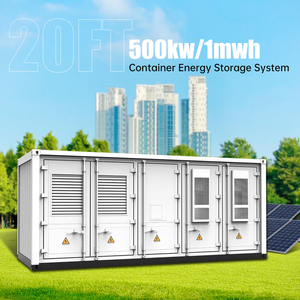
BENY 1Mwh 5mwh Container Energy Storage High Voltage LIFEPo4 Lithium Ion Batteries ESS Industrial And Commercial Battery
- Capacity: 1MWh - 5MWh Scalable
- Cell Standard: UL 1642 LiFePO4
- System Voltage: 1000V - 1500V DC
High-voltage containerized battery energy storage systems (BESS), smart cabinets, and custom off-grid battery modules manufactured in certified precision facilities.
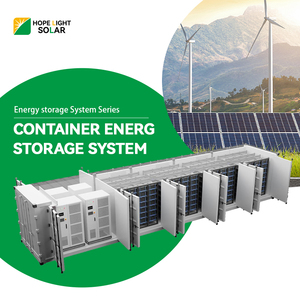
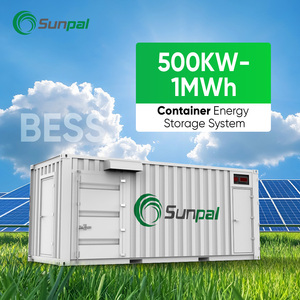

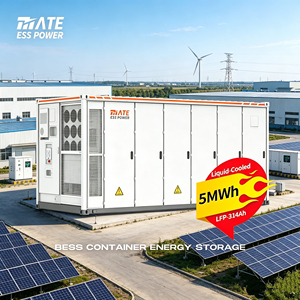
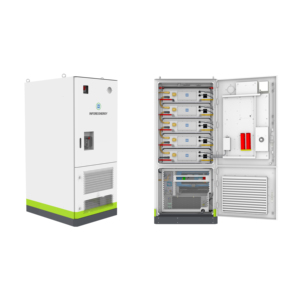
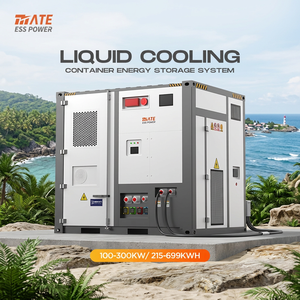

In the rapidly evolving global transition toward renewable microgrids and megawatt-scale battery energy storage systems (BESS), procuring industrial lithium-ion and LiFePO4 battery packs from accredited manufacturing facilities is no longer merely a logistical decision—it is a critical risk-management imperative. This whitepaper analyzes the technical architecture, regulatory standards, and engineering practices that distinguish world-class CE and UL 1642 certified battery pack factories.
Core Procurement Takeaway: UL 1642 certification validates cell-level internal safety under severe electrical, thermal, and mechanical abuse, while CE marking guarantees module- and pack-level electromagnetic compatibility (EMC 2014/30/EU) and low-voltage electrical safety (LVD 2014/35/EU). Tier-1 OEM integrators must require dual-level certification to prevent catastrophic field failures.
When enterprise procurement teams evaluate international battery pack factories, confusion often arises regarding the scope of global certifications. A rigorous compliance framework requires a granular understanding of where cell-level protection ends and system-level containment begins.
UL 1642 (Standard for Lithium Batteries): Standardized by Underwriters Laboratories, UL 1642 specifically governs primary (non-rechargeable) and secondary (rechargeable) lithium battery cells used as power sources in technician-replaceable or user-replaceable applications. A factory producing UL 1642 certified packs utilizes cells that have individually survived grueling physical stress tests:
CE Marking (Conformité Européenne): Unlike UL 1642 which targets individual battery cells, CE marking represents a mandatory legal declaration for energy storage systems imported into or operational within the European Economic Area (EEA). It evaluates the entire battery pack or containerized BESS against multiple harmonized directives, including the Low Voltage Directive (LVD 2014/35/EU), Electromagnetic Compatibility Directive (EMC 2014/30/EU), and the new EU Battery Regulation (2023/1542).
Drawing from over 120 years of collective engineering heritage, our advanced manufacturing facilities integrate aerospace-grade assembly quality (AS9100) with scalable commercial production line automation. Certified OEM/ODM battery factories must maintain rigorous cleanroom environments and automated quality gates to guarantee zero-defect yields across high-voltage C&I applications.
Every cell entering our assembly line undergoes automated IR (Internal Resistance) and voltage matching within tight ±0.5mΩ and ±2mV tolerances, ensuring optimal pack balance and extended cycle life.
Proprietary 3-tier Battery Management Systems monitor cell voltages, state of charge (SOC), state of health (SOH), and localized temperatures in real-time with CANBus, Modbus TCP, and RS485 telemetry.
High-efficiency liquid cooling cold plates maintain containerized BESS core cell temperature deltas within ≤3°C, preventing thermal runaway propagation even during 1C continuous discharge cycles.
Integrated multi-stage fire safety incorporating off-gas detection (CO/VOC), automated aerosol suppression, and localized water mist injection meeting NFPA 855 and UL 9540A standards.
Automated robotic fiber laser welding eliminates cold solder joints and minimizes contact resistance across heavy-duty copper/aluminum busbars in 314Ah high-capacity LFP packs.
Fully compliant with ITAR, AS9100, and defense procurement specifications, supporting ruggedized portable packs, UAV flight batteries, and mission-critical auxiliary power units.
| System Architecture | Cell Chemistry & Capacity | Cooling Technology | Cycle Life (80% DOD) | Safety Certifications |
|---|---|---|---|---|
| 5MWh Liquid-Cooled Container | Prismatic LFP 314Ah (3.2V) | Active Liquid Chiller (HVAC) | >8,000 Cycles | UL 1642, CE, UL 9540A, IEC 62619 |
| 1MWh / 500kW Smart Cabinet | Prismatic LFP 280Ah (3.2V) | Smart Forced Air / Liquid Optional | >6,500 Cycles | UL 1642, CE, UN 38.3, IEC 61000 |
| 233kWh Commercial Cabinet | High-Density LFP 100Ah/280Ah | Industrial Air HVAC | >6,000 Cycles | CE, UL 1642, LVD 2014/35/EU |
| 10ft / 20ft Island Grid BESS | Modular LiFePO4 Racks | Dual-Redundant Liquid Loop | >7,000 Cycles | CE, UL 1642, ITAR Compliant Assembly |
As grid operators, commercial enterprise facilities, and utility-scale solar developers shift toward multi-megawatt energy storage deployments, the global battery procurement landscape is undergoing three fundamental shifts:
A. Transition to Ultra-High-Capacity 314Ah+ LFP Cells: The industry is rapidly migrating away from legacy 280Ah cells toward next-generation 314Ah and 500Ah prismatic Lithium Iron Phosphate (LFP) cells. These higher-density chemistries allow standard 20-foot containerized BESS enclosures to reach 5MWh+ volumetric energy capacities, reducing footprint requirements by over 35% and dramatically lowering balance-of-system (BOS) installation costs.
B. Dominance of Active Liquid Cooling over Forced Air: While forced-air cooling remains cost-effective for smaller residential or commercial cabinets (<100kWh), large-scale 1MWh to 5MWh container systems have made liquid cooling standard. Liquid cooling systems reduce auxiliary energy consumption by up to 30% while maintaining cell-to-cell thermal uniformity within a narrow 3°C margin, directly extending operational life by 3 to 5 years.
C. Mandatory Digital Battery Passports & ESG Traceability: In accordance with the EU Battery Regulation 2023/1542, future battery pack factories must provide end-to-end supply chain transparency via digital passports. Procurement managers must verify carbon footprint metrics, recycled material content percentages, and conflict-free mineral sourcing from raw lithium mining to final pack assembly.
The next decade of battery pack design focuses on solid-state battery integration, silicon-anode cell innovations, and AI-driven predictive Battery Management Systems:
UL 1642 is the definitive gold standard for cell safety. It guarantees that the individual lithium cells inside a custom battery pack or containerized BESS will not explode or ignite when subjected to extreme short circuits, physical crushing, impact, overcharging, or thermal abuse up to 130°C. Sourcing from a factory that uses non-UL 1642 certified cells exposes enterprise buyers to severe thermal runaway risks and invalidates commercial property insurance.
UL certification (such as UL 1642 for cells and UL 9540 for complete BESS installations) focuses strictly on fire, electrical, and structural safety through destructive testing. CE marking is a statutory European directive requiring compliance with Low Voltage (2014/35/EU) and Electromagnetic Compatibility (2014/30/EU) rules, ensuring the system does not emit harmful electromagnetic interference or endanger operators during grid tie-in.
Liquid cooling systems utilize synthetic coolant plates sandwiched directly between cell modules. Because liquid has a heat capacity over 4 times higher than air, heat generated during high C-rate charging/discharging is rapidly evacuated. This keeps maximum temperature differences across thousands of cells within 3°C, preventing localized hot spots from triggering catastrophic thermal runaway cascades.
International dangerous goods regulations mandate UN 38.3 transport testing reports (covering altitude simulation, thermal oscillation, vibration, shock, external short circuit, impact, overcharge, and forced discharge), Safety Data Sheets (SDS), ISO 1161 container lifting test reports, and Class 9 Dangerous Goods hazardous shipping certification.
Yes. Our engineering facility specializes in end-to-end OEM/ODM customization. We design custom voltage topologies (from 24V DC modules up to 1500V DC utility arrays), tailor physical enclosures (NEMA 3R, NEMA 4X, IP65, C5 anti-corrosion marine ratings), and program custom firmware for CANBus 2.0B, Modbus TCP, DNP3, and SNMP network interfaces.
Whether you are engineering a 5MWh containerized BESS, a high-density liquid-cooled cabinet, or a custom military-grade battery pack, our certified engineering team delivers compliance, safety, and performance built to your exact specifications.