Precision-engineered lithium module solutions for light electric vehicles, commercial utility carts, automated material handling, and high-capacity off-grid power storage.
The rapid global electrification of light transport—encompassing two-wheelers, e-three-wheelers (e-trikes), high-speed golf carts, municipal utility vehicles, autonomous delivery robots, and industrial AGVs—demands a paradigm shift in battery module architecture. Unlike standardized consumer electronics, Light Electric Vehicle (LEV) battery modules operate under intense thermal cycles, severe mechanical vibration, multi-axial mechanical shocks, and unpredictable environmental exposure.
To achieve compliance with European Union (EU) market regulations, battery modules must undergo rigorous evaluation under European Standards EN 50604-1 (specifically governing removable lithium-ion battery systems for light EV applications) alongside standard battery directives including CE Certification, IEC 62619, ISO 13849 (Functional Safety), and UN 38.3 (Transport Safety). As a primary factory and exporter, our engineering methodology integrates cell-level safety chemistry, active thermal dissipation, structural compression housing, and military-grade Battery Management Systems (BMS).
A primary cause of field degradation in LEVs is mechanical shear force generated during continuous off-road or urban transit. Our factory utilizes laser-welded busbars combined with structural epoxy potting and flame-retardant (UL94-V0) polycarbonate cell holders. This structural matrix isolates individual prismatic or cylindrical cells, preventing micro-vibrations from stressing weld points while forming a localized heat sink that suppresses thermal runaway cascading across adjacent cells.
Certified against crush testing, drop impact (1.2m), immersion, overcharge, thermal shock (-40°C to +65°C), and external short-circuit protection under full load.
Dual-microprocessor hardware monitoring cell voltages, active balance current (up to 2A per string), SOC/SOH estimation algorithm, and hardware-level MOSFET protection.
Precision extruded aluminum alloy and stainless steel casings with silicone gasket sealing, certified dust-tight and submersible against high-pressure washdown.
As global OEMs transition toward high-density platform architectures, the procurement strategy for LEV battery modules is shifting from reactive off-the-shelf buying to strategic co-engineering with specialized export factories. Key industry trends defining the 2026–2030 horizon include:
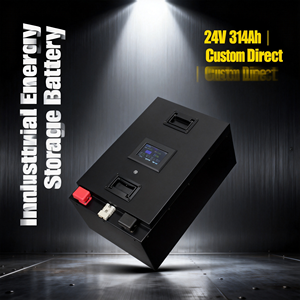
While cylindrical 18650/21700 cells historically dominated small personal mobility, commercial LEVs are rapidly converting to high-capacity prismatic Lithium Iron Phosphate (LiFePO4) and semi-solid-state chemistry. Prismatic 314Ah cells reduce the total internal connection points by up to 75%, drastically mitigating electrical resistance (IR) losses, simplifying BMS wiring harnesses, and minimizing failure nodes caused by thermal stress.
With the implementation of the new EU Battery Regulation (2023/1542), all LEV batteries imported into the European market must possess a digital "Battery Passport". This QR-coded digital twin records raw material provenance (ethical lithium, cobalt, nickel sourcing), recycled content percentages, carbon intensity during cell manufacturing, and real-time state-of-health (SOH) history. Factories with integrated traceability infrastructure provide an indispensable competitive edge for global exporters.
Procurement directors face a strategic split: high-utilization commercial fleets (such as urban delivery scooters and e-trikes) prioritize standardized, hot-swappable module geometries with standardized heavy-duty connectors. Conversely, heavy utility and specialized AGV manufacturers are adopting Cell-to-Pack (CTP) structural module designs, eliminating intermediate module housings to achieve volumetric efficiencies exceeding 65%.
| Module Architecture | Cell Chemistry | Energy Density (Wh/kg) | Cycle Life (80% DOD) | Safety Compliance | Ideal Application Target |
|---|---|---|---|---|---|
| Standard 48V/72V Swappable | LiFePO4 / NMC | 145 - 170 Wh/kg | 3,000+ Cycles | CE / EN 50604-1 | E-Scooters, Urban Delivery Trikes |
| Industrial AGV Heavy CTP | Prismatic LFP (314Ah) | 180 - 200 Wh/kg | 4,500+ Cycles | CE / IEC 62619 | Warehouse AGVs, Port Logistics |
| High-Speed Golf & Utility Carts | Lithium NMC / LFP | 160 - 190 Wh/kg | 3,500+ Cycles | CE / UN 38.3 | 48V/72V Commercial Utility Vehicles |
| Next-Gen Solid-State Hybrid | Silicon Anode Solid State | 260 - 320 Wh/kg | 2,000+ Cycles | Pending ISO 26262 | Long-Range Autonomous LEV Rovers |
Combining over 120 years of collective battery design heritage with state-of-the-art automated manufacturing, rigorous quality control, and authoritative global distribution channels.
Our multidisciplinary engineering team specializes in electrochemical cell selection, structural finite element analysis (FEA), thermal modeling, custom BMS firmware programming, and automated spot/laser welding assembly.
Operating under stringent quality frameworks equivalent to aerospace and defense specifications. Every battery module is subjected to 100% automated EOL (End-of-Line) test cycles, insulation resistance checks, and thermal imaging.
Direct supply partnerships with global cell pioneers (including Energizer, Amprius, and NanoGraf). We leverage tier-1 Grade-A prismatic and cylindrical cells to guarantee nominal capacity stability and zero internal micro-shorts.
Seamless international shipping support with full hazardous goods (Class 9) export documentation, MSDS, UN 38.3 test summaries, and drop-tested sea/air freight packaging certified for North America, Europe, and Asia-Pacific.
In-depth technical and commercial answers addressing common engineering queries, certification validation, OEM customization, and volume export shipping.
EN 50604-1 is the primary European safety standard specifically tailored for removable light electric vehicle battery systems. Certification requires passing severe mechanical, thermal, and electrical evaluations. Key test suites include: (1) Mechanical Vibration & Impact: Multi-axis sinusoidal vibration simulating 100,000 km of road surface shock; (2) Crush & Mechanical Shock: 100kN lateral crush forces without structural breach or thermal event; (3) Thermal Shock Cycling: Rapid ambient shifts between -40°C and +65°C; (4) Immersion Protection: IPX7 water ingress testing while energized; (5) Electrical Abuse: Continuous overcharge, forced deep-discharge, and external hard short-circuit protection at maximum temperature thresholds.
Our in-house electronics engineering team develops custom hardware and software for automotive-grade Smart BMS supporting Master-Slave architecture. Modules communicate via dual CANbus 2.0B, Modbus RTU, or Bluetooth 5.0 protocols. The BMS continuously samples individual cell voltages (accuracy ±2mV), pack current, localized temperatures via NTC thermistors, and calculates dynamic State of Charge (SOC) and State of Health (SOH) using extended Kalman filter algorithms. Active balancing circuitry equalizes cell voltages during both charging and discharging states, extending total module cycle life by up to 25%.
For standard modular platforms (such as 48V 50Ah or 72V 100Ah LFP packs), standard MOQ starts at 10 to 50 units. For fully custom OEM project developments requiring specialized aluminum housing tooling, custom PCB BMS layouts, and dedicated IP67 seals, our prototyping phase typically delivers functional evaluation samples within 3 to 5 weeks. Mass production manufacturing orders are executed within 4 to 6 weeks following engineering sign-off and UN38.3 test documentation release.
Commercial fleet operations prioritize total lifecycle economics (TCO) and intrinsic safety over absolute gravimetric energy density. Prismatic LiFePO4 chemistry provides: (1) Superior Cycle Life: Over 3,500 to 6,000 cycles at 80% DOD compared to 1,000–1,500 cycles for standard NMC; (2) Thermal Stability: Thermal runaway onset temperature exceeds 270°C for LFP versus 210°C for NMC; (3) Structural Integration: Heavy-duty prismatic cells eliminate thousands of tiny wire bonds required in cylindrical packs, significantly lowering internal resistance and reducing potential failure points during heavy vehicular vibration.
All battery modules produced by our factory are certified under UN 38.3 regulations governing the safe transport of dangerous goods (Class 9 Lithium-Ion Batteries). Every shipment includes complete UN 38.3 Test Summaries, MSDS documents, and 1.2m drop-test reports. Modules are packaged inside heavy-duty UN-approved fiberboard boxes or custom wooden crates fitted with shock-absorbing foam and fire-retardant barriers, fully compliant for International Air Transport Association (IATA) and International Maritime Dangerous Goods (IMDG) cargo handling.
Connect directly with our senior battery system engineers to request comprehensive technical datasheets, CAD 3D step files, CE compliance documentation, and custom OEM manufacturing quotes.