Industry knowledge, engineering insights, and technical advice from the Emerging Power team.
China Top 10 Custom Lithium Thionyl Chloride Battery Packs introduces a specialized field shaped by reliability, engineering discipline, and careful application matching. Custom Lithium-Thionyl Chloride Battery Packs support devices that may operate for years without routine maintenance. Typical examples include utility meters, pipeline monitors, tracking equipment, medical instruments, and remote security sensors.
Small current demand matters.
These batteries can deliver high energy density and stable voltage across demanding environments. However, pack design cannot rely on cell capacity alone. Engineers must examine pulse current, operating temperature, storage duration, connector design, protection features, and equipment communication needs. A pack used inside a desert monitoring station faces different risks from one installed in a refrigerated warehouse. That detail is easy to miss.
Battery-systems expert Dr. Bob Galyen has emphasized, “Battery safety begins with the application, not the cell alone.” This principle helps explain why reputable manufacturers review load profiles before recommending a configuration. They may add capacitors for short communication pulses, reinforce insulation, or adjust leads for vibration resistance. These choices should be documented and tested.
The word “top” also requires caution. Ranking suppliers by product photographs or advertised capacity can produce a misleading result. Manufacturing consistency, traceability, testing records, technical support, and customization experience deserve equal attention. Some published specifications may appear precise but lack real-world operating context. That weakness deserves reflection.
This guide examines ten leading custom pack options through a practical lens. It considers chemistry, construction quality, application suitability, and service reliability. Readers should still request current datasheets and independent validation before selecting a battery pack for critical equipment.
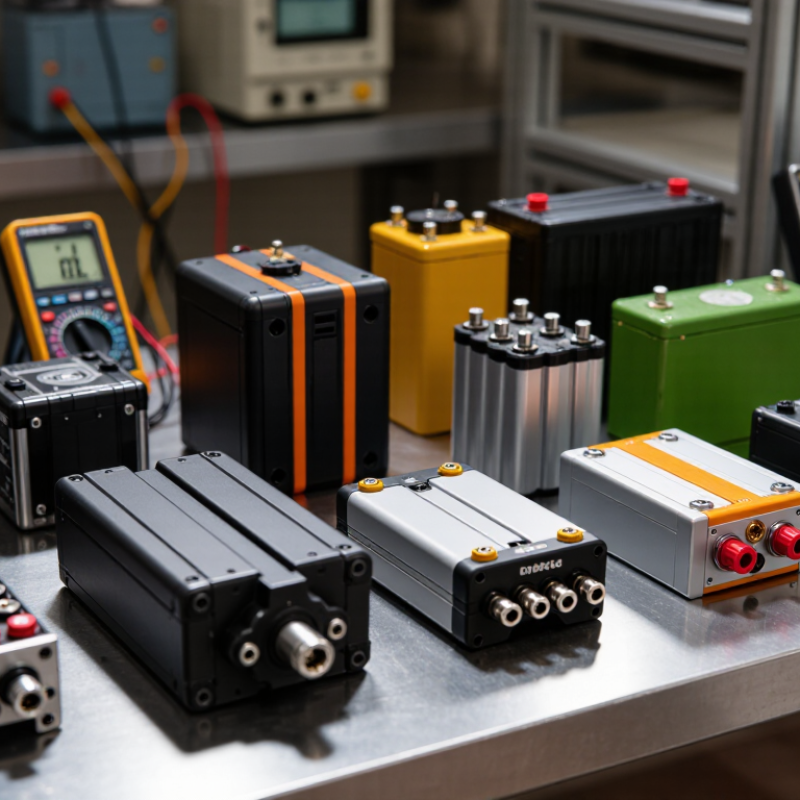
Lithium thionyl chloride technology delivers about 3.6 volts per cell and very low self-discharge. Industry analyses published by IDTechEx in 2024 report energy densities commonly reaching 500–700 Wh/kg. These figures explain its use in meters, tracking devices, and remote industrial sensors. The chemistry combines a lithium anode with thionyl chloride as both electrolyte and cathode material. During discharge, lithium ions move through the electrolyte while electrons power the external circuit. Quiet chemistry. Long service life.
A thin passivation film forms on the lithium surface during storage. It limits self-discharge, but can also create voltage delay after activation. A pulse may briefly demand more current than the cell can provide. Engineers often add a capacitor, hybrid layer, or carefully designed parallel cells. Custom packs must control insulation, sealing, welding quality, and heat paths. IEC 60086-4 testing guidance supports evaluation of safety, leakage, and abuse resistance. S&P Global Commodity Insights’ 2024 battery materials outlook also highlights stricter traceability and reliability expectations across industrial battery supply chains. In practice, specifications can look excellent on paper. Field temperature, pulse frequency, and aging may still reduce performance. That gap deserves testing.
Custom lithium thionyl chloride battery packs require careful specification, not just a higher capacity rating. These primary cells commonly provide a stable 3.6-volt nominal output and very low self-discharge. However, their continuous current and pulse capability differ greatly. Define the device’s average load, startup surge, pulse duration, and operating frequency before choosing a pack. A remote meter may need low current for years, while a wireless transmitter can demand short, intense pulses. These applications require different designs.
Pack dimensions also matter. Measure the available space, terminal position, cable route, and mounting method. Confirm the required operating temperature, storage temperature, humidity exposure, and expected service life. Safety vents, insulation, polarity markings, and secure connectors deserve equal attention. Lithium thionyl chloride cells are generally non-rechargeable. A charging circuit must never be added casually. Capacity estimates can also be optimistic when cold temperatures, aging, and high pulse loads are ignored. That mistake is common.
Tips: Request a real discharge curve, not only a capacity number. Ask for pulse-test data at your lowest operating temperature. Check whether the pack includes current-limiting components or a hybrid pulse capacitor. Verify dimensions with a physical sample. Review transport documentation and applicable battery regulations before shipment. If the load profile is uncertain, record the device’s current for several days. My practical preference is to test a prototype under worst-case conditions, then revise the design. A clean spreadsheet helps, but measurements are better.
China’s top 10 custom lithium thionyl chloride battery packs are selected for engineering capability, not advertising alone. These packs support remote meters, pipeline sensors, tracking devices, security equipment, and industrial data loggers. Their strengths include high energy density, low annual self-discharge, and stable output over long service periods.
A reliable custom pack begins with the application. Engineers review voltage, peak pulse demand, operating temperature, enclosure space, connector type, and expected service life.
A D-cell pack may power a meter for years, while a compact cylindrical pack may fit a narrow sensor housing. Pulse-support components can help wireless transmitters start cleanly. Small detail. Poor pulse testing can cause field failure.
The leading ten Chinese solutions should provide sample validation, traceable materials, insulation checks, leak screening, and controlled assembly. Production teams should verify capacity at different temperatures, not only at room temperature. Transport and safety documentation must match the destination market.
Some projects still overlook connector strain or moisture sealing. That deserves reflection. Clear technical drawings, batch records, and realistic delivery schedules also reveal supplier reliability. A strong pack is not simply powerful; it must remain predictable inside the customer’s equipment.
China Top 10 Custom Lithium Thionyl Chloride Battery Packs
Manufacturing Standards, Safety, and Quality Control
Custom lithium thionyl chloride battery packs require disciplined engineering, not simple cell assembly. These primary batteries must be designed for stable voltage, low self-discharge, and long service life. Engineers should define capacity, pulse current, operating temperature, dimensions, and connector requirements before production begins. They should also confirm whether the pack needs a capacitor or pulse-support circuit. Small details matter.
A controlled factory verifies incoming cells through voltage, internal resistance, dimensional, and visual checks. Cells should be matched within documented limits before welding. Insulation films, separators, terminals, and protective housings need clear specifications. Weld strength testing helps prevent loose connections during vibration. Each finished pack should receive open-circuit voltage, load, leakage, polarity, and appearance tests. Production records must link every pack to its material lot and inspection results.
Safety controls should reflect recognized battery and transport requirements, including UN 38.3 testing where applicable. Design reviews should assess short circuits, heat exposure, pressure changes, and accidental reverse connection. Operators need practical training, grounded workstations, and procedures for damaged cells. No inspection system is flawless. A checklist can miss a weak weld or incorrect label. Periodic audits, sample aging tests, and customer feedback expose those gaps. Sometimes the process needs revision, even when recent batches passed. Reliability grows through evidence, traceability, and honest review.
| No. | Manufacturing and Quality Dimension | Applicable Standard or Reference | Typical Control Requirements | Key Inspection or Verification Data |
|---|---|---|---|---|
| 1 | Cell Chemistry and Pack Architecture | IEC 60086-1; IEC 60086-4 | Use lithium metal and thionyl chloride cell chemistry with a design matched to the required voltage, pulse current, capacity, temperature range, and service life. | Nominal voltage, operating voltage range, rated capacity, maximum continuous current, pulse current, storage temperature, and intended service life. |
| 2 | Cell Selection and Incoming Inspection | IEC 60086-1; supplier qualification procedures | Accept cells only from approved sources and verify lot traceability, polarity, dimensions, terminal condition, open-circuit voltage, and appearance. | Lot number, production date, measured open-circuit voltage, dimensional tolerance, leakage or corrosion evidence, and sampling result. |
| 3 | Series and Parallel Configuration | IEC 60086-4; product-specific design verification | Use cells with compatible electrical characteristics. Control series matching, parallel-current paths, polarity, conductor sizing, and protection against reverse connection. | Pack nominal voltage, maximum voltage, total capacity, current capability, resistance balance, polarity check, and wiring inspection. |
| 4 | Hermetic Sealing and Electrolyte Containment | IEC 60086-4; manufacturer-defined leak-test method | Protect the lithium and thionyl chloride system from leakage, moisture ingress, contamination, and mechanical damage. Do not open or refill sealed cells during pack assembly. | Visual inspection, seal or enclosure inspection, leak-test result where applicable, electrolyte residue check, and post-test condition. |
| 5 | Protection Components and Current Limiting | IEC 60086-4; IEC 60079-11 where intrinsically safe equipment is involved | Use appropriately rated fuses, current limiters, thermal protection, diodes, or other approved protective components. Prevent external short circuits and uncontrolled high-current pulses. | Protective-device rating, trip or interruption performance, short-circuit response, abnormal-condition test result, and component traceability. |
| 6 | Electrical Performance Testing | IEC 60086-1; IEC 60086-4; approved product specification | Verify performance under the specified discharge profile rather than relying only on nominal capacity. Account for low-current operation, pulse demand, temperature, and passivation effects. | Open-circuit voltage, loaded voltage, discharge capacity, pulse-voltage recovery, internal resistance, and end-point voltage. |
| 7 | Environmental and Mechanical Reliability | IEC 60086-4; product-specific qualification plan | Evaluate vibration, shock, temperature cycling, damp heat, storage, and installation-specific mechanical loads using conditions defined for the final application. | Pre- and post-test voltage, capacity retention, leakage evidence, enclosure condition, terminal integrity, and dimensional change. |
| 8 | Safety and Abuse Testing | IEC 60086-4; applicable product and workplace safety requirements | Assess foreseeable misuse and abnormal conditions, including external short circuit, forced discharge where relevant, crushing, heating, and incorrect installation. | No hazardous leakage, rupture, fire, or dangerous disassembly under the defined test conditions; record temperature and physical damage. |
| 9 | Transportation and Regulatory Compliance | UN Manual of Tests and Criteria, Part III, Sub-section 38.3; applicable IATA, IMDG, ADR, or national rules | Complete applicable lithium-metal battery transport testing and classify, mark, label, package, and document shipments according to the transport mode and destination. | UN 38.3 test summary, lithium metal content, package design, shipping mark, transport documents, and state-of-charge or quantity requirements where applicable. |
| 10 | Final Inspection, Traceability, and Documentation | ISO 9001 quality-management principles; IEC 60086-4; customer specification | Release only conforming packs with controlled drawings, work instructions, inspection records, change control, and batch-level traceability. | Visual and dimensional inspection, voltage and polarity, continuity, insulation where specified, label verification, certificate package, and final release record. |
Note: Acceptance limits, test duration, discharge profiles, temperature ranges, and sampling plans must be defined in the approved product specification and may vary according to cell size, pack configuration, end-use application, and applicable jurisdiction.
China Top 10 Custom Lithium Thionyl Chloride Battery Packs
Custom lithium thionyl chloride battery packs support remote meters, security sensors, tracking equipment, and industrial monitoring systems. Their strong energy density suits devices that operate for years with limited access. Engineers must match voltage, pulse current, capacity, connector type, and enclosure size carefully. A pack may perform well in testing but fail earlier in cold weather or during repeated wireless transmissions. Real field conditions are less predictable.
Tips: Define the device’s average and peak current before selecting a pack. Add pulse-support components when the radio or alarm creates sudden demand. Keep batteries within the recommended temperature range. Never recharge primary lithium thionyl chloride cells. Record installation dates and operating conditions. Small records can prevent expensive guesswork.
Service life depends on temperature, discharge profile, storage time, and leakage control. Low-current applications may operate for ten years or longer, but this is not guaranteed. High pulse loads can shorten life quickly. Inspect housings, terminals, and cable seals during scheduled maintenance. Look for swelling, corrosion, damaged insulation, or loose connections. Replace packs before critical voltage loss affects stored data. Disposal should follow applicable local requirements. One practical mistake is relying only on the manufacturer’s capacity figure. Application testing remains essential.
They suit remote meters, pipeline sensors, tracking devices, security equipment, and industrial data loggers.
They should define voltage, pulse demand, temperature range, enclosure space, connector type, and service life.
A capacitor or pulse-support circuit can help transmitters start cleanly during short, demanding current bursts.
Inspectors should check voltage, internal resistance, dimensions, appearance, and documented matching limits before welding.
Tests should cover open-circuit voltage, load performance, leakage, polarity, appearance, insulation, and weld strength.
Records connect each pack with its material lot and inspection results. This supports faster investigation.
Reviews should consider short circuits, heat exposure, pressure changes, reverse connection, damaged cells, and moisture sealing.
Capacity and pulse behavior should be tested beyond room temperature. Field conditions can be less forgiving.
Documentation should match the destination market and applicable battery transport requirements, including UN 38.3 where required.
No inspection system is flawless. A checklist may miss a weak weld or incorrect label. Periodic audits still matter.
This article presents a practical overview of China’s top 10 Custom Lithium-Thionyl Chloride Battery Packs, explaining how lithium thionyl chloride technology works and why it is valued for high energy density, low self-discharge, and long-term stability. It introduces the key factors involved in selecting a customized pack, including voltage, capacity, pulse-current performance, operating temperature, dimensions, connector design, protection features, and compatibility with the target device.
The article also discusses manufacturing standards, safety procedures, quality control, and testing methods used to improve reliability and consistency. It compares typical application requirements in areas such as metering, industrial monitoring, security equipment, and remote data systems, while outlining expected service life and storage considerations. Finally, it offers practical guidance on installation, inspection, environmental conditions, and maintenance, helping users choose a safe, dependable, and application-appropriate battery solution.