Technical Articles & News

Custom Battery Pack Insights & Resources

Industry knowledge, engineering insights, and technical advice from the Emerging Power team.

0%

Custom Sealed Lead Acid Battery Packs are engineered power systems, not simply several batteries placed inside a box. They combine sealed lead acid cells, connectors, protective housings, wiring, and charging requirements. Their design can support security panels, emergency lighting, medical equipment, mobility devices, and backup communication systems. The details matter. A poorly selected cable may create heat, voltage loss, or early failure.

Isidor Buchmann, founder of Cadex Electronics and a widely recognized battery educator, wrote, “Lead acid is the oldest rechargeable battery system.” His observation remains relevant because mature technology still demands careful engineering. Customization involves more than choosing voltage and capacity. Engineers must evaluate discharge duration, standby conditions, operating temperature, terminal orientation, enclosure space, transportation needs, and the expected charging profile. A compact 12-volt pack may look suitable on paper, yet its performance can change significantly under continuous load.

Experience exposes practical gaps. Real equipment rarely operates under perfect laboratory conditions. Vibration, infrequent maintenance, aging chargers, and unexpected current peaks can shorten service life. That assumption can fail. Reliable Custom Sealed Lead Acid Battery Packs therefore require documented testing, traceable components, and clear maintenance guidance. Designers should verify polarity, thermal behavior, cycle expectations, and end-of-life indicators before production. Safety remains essential, even with sealed construction. “Sealed” does not mean risk-free. This article examines how custom packs are configured, where they perform well, and which design compromises deserve closer attention. The goal is practical understanding, not exaggerated promises.
What Are Custom Sealed Lead Acid Battery Packs?

Definition and Core Features of Custom Sealed Lead Acid Battery Packs

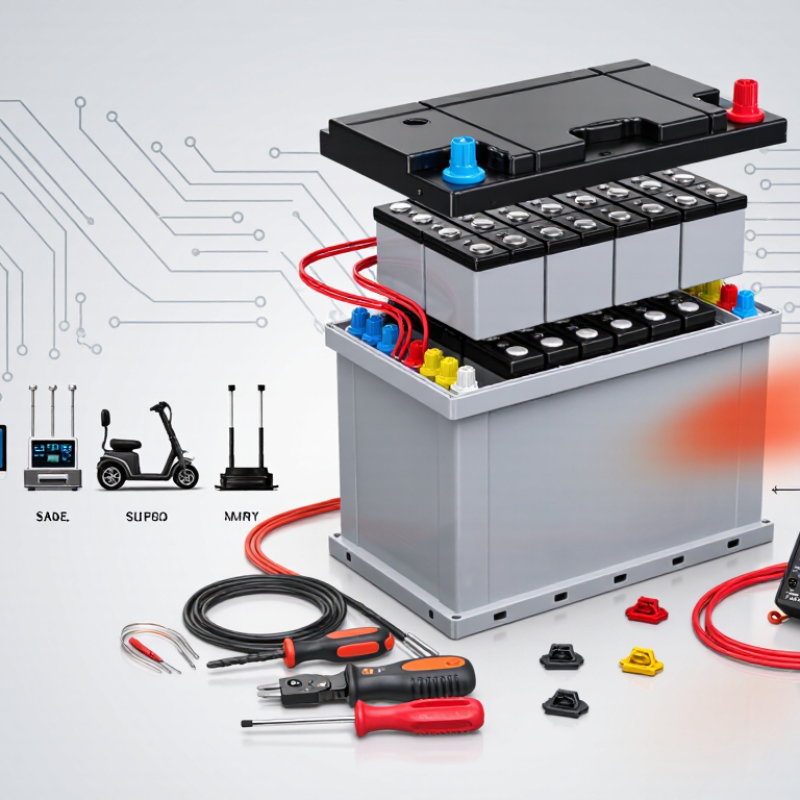
Custom sealed lead acid battery packs are application-specific assemblies built from valve-regulated lead acid cells. They usually use AGM or gel electrolyte technology. The electrolyte remains immobilized, reducing spill risk during normal operation. A pack can combine 2V cells or 6V and 12V monoblocks. Engineers tailor voltage, ampere-hour capacity, connectors, fuses, terminals, and enclosure dimensions. This makes the battery suitable for backup systems, medical equipment, alarms, mobility devices, and industrial controls.

They need careful engineering.

Core features include low water loss, enclosed construction, recombination of oxygen, and limited routine servicing. However, “maintenance-free” does not mean failure-proof. High temperatures, repeated deep discharges, and poor charging can shorten service life sharply. IEC 60896-21 and IEC 60896-22 specify performance and test requirements for valve-regulated stationary lead acid batteries. Battery Council International reports that more than 99% of lead batteries are recycled in the United States, supporting a mature recovery infrastructure. Actual pack performance still depends on operating conditions. A technical review should check float voltage, recharge time, discharge rate, thermal limits, and expected cycle count. Weight can also be overlooked. Lead acid packs often provide dependable standby power, but they are heavier than many newer chemistries. Customization improves fit and connection reliability, yet it cannot remove the chemistry’s basic limits.

Main Components and How the Battery Pack Works

A custom sealed lead-acid battery pack combines several valve-regulated lead-acid cells in a designed enclosure. Its main parts include positive lead-dioxide plates, negative sponge-lead plates, separators, sulfuric-acid electrolyte, terminals, casing, connectors, and protective fuses. AGM and gel designs immobilize the electrolyte, reducing leakage during normal use. A relief valve still matters.

The pack works through a reversible chemical reaction. During discharge, both plates gradually form lead sulfate, while the electrolyte becomes less concentrated. Charging reverses this process and restores usable capacity. Cells connected in series increase voltage. Parallel groups increase amp-hour capacity. The charger must match the pack’s voltage, chemistry, and charging profile. Most sealed lead-acid packs do not need a lithium-style battery-management system, but temperature sensing and overcurrent protection improve reliability.

Real-world limits remain. A 12-volt pack may deliver less energy in cold conditions, while heat accelerates aging. The U.S. EPA reports that nearly 99% of lead-acid batteries are recycled in the United States, supporting the value of controlled end-of-life handling. However, recycling performance does not make careless design acceptable. The pack should still include secure terminals, strain relief, ventilation paths, and clear polarity markings.

Tips: Specify voltage, capacity, peak current, dimensions, connector type, and operating temperature before ordering. Test the finished pack under its actual load. Small details often expose weak assumptions.

Customization Options for Voltage, Capacity, and Physical Design

What Are Custom Sealed Lead Acid Battery Packs?

Customization Options for Voltage, Capacity, and Physical Design

Custom sealed lead acid battery packs combine sealed construction with application-specific electrical and mechanical requirements. They commonly use AGM or gel technology, reducing leakage risks during normal operation. Battery Council International reports that lead batteries achieve recycling rates above 99 percent in the United States. This supports their established industrial role, but recycling performance depends on proper collection.

Voltage customization usually starts with 2-volt cells. Designers connect cells in series to create 6, 12, 24, or 48-volt packs. Capacity is measured in ampere-hours, such as 7 Ah or 100 Ah. Parallel connections increase available capacity without changing nominal voltage. A technical detail matters here. Manufacturers often rate capacity at a 20-hour discharge rate. Higher currents can deliver less usable energy.

Physical design can be equally important. Engineers may specify length, width, height, terminal position, connector type, and mounting holes. A narrow pack might fit beneath a medical cart shelf, while reinforced terminals can handle vibration in mobile equipment. IEC 60896 testing principles help evaluate stationary lead acid batteries, including capacity and discharge behavior. However, a perfect specification sheet does not guarantee perfect field performance. Heat, charging quality, aging, and repeated deep discharges can reduce service life. I have seen designs focus heavily on voltage while overlooking cable resistance and ventilation space. That mistake is easy to repeat.

Common Applications and Operating Requirements

What Are Custom Sealed Lead Acid Battery Packs?

Common Applications and Operating Requirements

Custom sealed lead acid battery packs use VRLA cells arranged for a specific voltage, capacity, connector, and enclosure. They commonly use AGM or gel construction. “Sealed” does not mean maintenance-free or risk-free. Correct charging, ventilation, and short-circuit protection remain essential.

Common applications include alarm panels, access-control systems, emergency lighting, mobility aids, and communication backups. A compact alarm cabinet may use a 12-volt pack. Larger equipment may require 24 or 48 volts. The charger must match the battery chemistry and series configuration. Float voltage should follow the cell manufacturer’s specifications. High temperatures accelerate aging. Deep discharge can permanently reduce capacity. A fuse near the positive terminal adds practical protection. It is a small detail.

A reliable design also considers starting current, cable length, enclosure space, and expected operating temperature. Medical or emergency equipment needs documented testing and suitable compliance checks. Battery packs should be tested under realistic loads, not only with a meter. Capacity estimates can be optimistic. A neat enclosure may still hide poor heat control.

Tips: Confirm peak current before ordering. Measure the enclosure carefully. Leave room for safe cable bending and inspection.

Custom Sealed Lead-Acid Battery Packs: Common Configurations

Sealed lead-acid packs are commonly built by connecting 2 V cells in series. Higher-voltage packs support applications such as emergency backup, access-control systems, alarm panels, mobility equipment, and small renewable-energy systems.

Float charging

A typical 12 V VRLA pack is maintained at approximately 13.5–13.8 V at 25 °C, equivalent to about 2.25–2.30 V per cell.

Discharge protection

The load should be disconnected near 10.5 V for a typical 12 V pack, or about 1.75 V per cell, to reduce deep-discharge damage.

Operating environment

Performance and service life depend strongly on temperature, charge voltage, discharge rate, ventilation, and correct battery orientation.

Safety, Maintenance, and Service Life Considerations

Custom sealed lead acid battery packs combine multiple valve-regulated lead acid cells with wiring, connectors, fuses, and a protective enclosure. “Sealed” does not mean risk-free or maintenance-free. During charging, a damaged pack can release gas, overheat, or develop internal pressure. Installers should follow the charger’s specified voltage and current limits. The enclosure also needs ventilation and secure strain relief. A loose connector can create heat quickly.

Maintenance is simple, but not optional. Inspect the pack every few months for swelling, cracked cases, corrosion, or unusual odor. Keep terminals clean and dry. Record charge voltage, ambient temperature, and backup time. A battery that suddenly loses runtime needs testing, not guesswork. The Battery Council International reports a lead battery recycling rate near 99% in the United States, showing why controlled collection matters. Never place failed batteries in general waste.

Service life depends heavily on temperature, discharge depth, and charging quality. The EUROBAT 2022 specification guide groups many VRLA batteries into design-life categories of 3–5, 6–9, and 10–12 years at approximately 20°C. Real service life is often shorter. A common engineering rule suggests life may fall by about half for each 10°C rise above the reference temperature, though this is not universal. Heat is often underestimated. A custom pack may look healthy while capacity quietly declines, so planned replacement and periodic capacity testing remain necessary.

What Are Custom Sealed Lead Acid Battery Packs? - Safety, Maintenance, and Service Life Considerations

Typical values are general engineering ranges. Actual performance depends on battery design, charging method, discharge rate, operating temperature, storage conditions, and application requirements.
Data Dimension Typical Information Safety or Service Consideration
Battery Type Sealed lead-acid batteries generally use either absorbent glass mat (AGM) or gel electrolyte technology. They are maintenance-free in normal use because electrolyte is immobilized, but they are not risk-free and still require correct charging and ventilation.
Custom Pack Configuration Pack voltage is commonly increased by connecting batteries in series; capacity is increased by connecting matched strings in parallel. Common nominal system voltages include 6 V, 12 V, 24 V, and 48 V. Batteries in a pack should have compatible voltage, capacity, age, chemistry, and state of charge. Mismatched units can cause uneven charging, overheating, and reduced service life.
Typical Nominal Voltage A single lead-acid battery is commonly rated at 2 V, 4 V, 6 V, or 12 V nominally. A 12 V unit contains six 2 V cells connected internally in series. The charger must be designed for the complete pack voltage and the specific AGM or gel battery type.
Recommended Operating Temperature Best service life is generally achieved near room temperature, approximately 20–25°C (68–77°F). Capacity is reduced in cold conditions, while aging accelerates at elevated temperatures. Use temperature-compensated charging where appropriate. Avoid placing the pack near heaters, enclosed heat sources, or areas with poor airflow.
Charging Method A suitable charger normally provides controlled bulk, absorption, and float stages. The exact voltage depends on battery type, pack voltage, and temperature. Overcharging can cause heat, pressure buildup, and premature failure. Undercharging can contribute to sulfation and permanent capacity loss.
Maintenance Requirements Routine watering is not required for properly sealed AGM or gel batteries. Recommended checks include terminal tightness, corrosion, case condition, cable insulation, charger operation, and pack temperature. Disconnect power before servicing. Do not open, puncture, modify, or refill sealed batteries. Replace units with cracked, swollen, leaking, or severely deformed cases.
Typical Cycle Life Many general-purpose sealed lead-acid batteries provide approximately 200–500 cycles at moderate depth of discharge. Deep-cycle designs may provide more, depending on construction and operating conditions. Shallower discharges, correct charging, moderate temperature, and limited high-current loading generally improve cycle life.
Expected Service Life Float-service life is often approximately 3–5 years for general-purpose designs and may be longer for premium standby designs under suitable conditions. Service life is shortened by heat, frequent deep discharge, prolonged partial state of charge, overcharging, vibration, and extended storage without periodic recharging.
Depth of Discharge Using a smaller portion of the rated capacity per cycle generally produces more total cycles than repeatedly discharging the battery deeply. Use a low-voltage disconnect or battery-management control to prevent excessive discharge during operation.
Storage Guidance Store the pack in a cool, dry location and keep it adequately charged. Self-discharge occurs during storage, even when no load is connected. Inspect the battery periodically and recharge according to the manufacturer’s specifications. Do not store a discharged battery for long periods.
Ventilation and Gas Risk Sealed batteries can release small amounts of hydrogen gas if overcharged or operated under abnormal conditions. Use the pack in a suitably ventilated enclosure. Keep it away from flames, sparks, smoking materials, and ignition sources.
Short-Circuit Protection Lead-acid batteries can deliver very high fault current even at relatively low nominal voltage. Install correctly rated fuses or circuit breakers close to the battery terminals, insulate exposed terminals, and use cables sized for the expected current.
Handling and Personal Protection Battery packs can be heavy, and lead-acid electrolyte is corrosive even when the battery is sealed. Use appropriate lifting methods, protective eyewear, gloves, and insulated tools. Prevent contact between terminals and metal objects.
Recycling and Disposal Lead-acid batteries are highly recyclable and should be handled through an approved battery-recycling or hazardous-material collection system. Do not place batteries in household waste, incinerate them, or discard them in soil or water.

FAQS

What is a custom sealed lead-acid battery pack?

It is a tailored assembly of sealed cells, connectors, fuses, terminals, and an enclosure.

Which electrolyte technologies are commonly used?

Absorbent glass mat and gel technologies are common.

How can voltage and capacity be customized?

Series-connected cells increase voltage, while parallel groups increase ampere-hour capacity.

What details should be specified before ordering?

Provide voltage, capacity, peak current, dimensions, connector type, terminal position, and operating temperature.

Does a sealed battery require no maintenance?

Limited routine servicing is usually needed.

How does temperature affect battery performance?

Cold conditions can reduce available energy.

Why must the charger match the battery pack?

The charger must match voltage, chemistry, and charging profile.

What physical design features improve reliability?

Secure terminals, strain relief, clear polarity markings, and suitable ventilation paths improve reliability.

Are sealed lead-acid packs heavy?

Yes, lead-acid packs are often heavier than newer battery chemistries.

How should a finished battery pack be evaluated?

Test the pack under its actual load, recharge conditions, and expected temperature range.

Conclusion

Custom Sealed Lead Acid Battery Packs are rechargeable power systems assembled in a sealed, maintenance-reduced format to meet specific equipment requirements. They typically combine lead dioxide and lead plates, an electrolyte, separators, terminals, protective casing, and, when needed, connection hardware or control components. During operation, chemical reactions create electrical energy, while charging reverses those reactions for repeated use. Their sealed construction helps minimize leakage and limits the need for electrolyte replacement under normal conditions.

These battery packs can be tailored by adjusting voltage, capacity, cell arrangement, terminal style, enclosure dimensions, and mounting configuration. They are commonly used in backup power equipment, emergency systems, access controls, monitoring devices, mobility equipment, and other applications that require dependable stored energy. Proper selection should consider load demand, charging method, temperature, installation position, and expected duty cycle. Safe handling, suitable ventilation, correct charging, regular inspection, and protection from extreme heat or deep discharge can improve performance, service life, and overall reliability.


Ethan

Ethan

Ethan is a dedicated marketing professional with a strong understanding of the company’s products, services, and market strategy. With a passion for clear communication and practical value, he regularly updates the company website with insightful blog articles that help readers better understand......