Industry knowledge, engineering insights, and technical advice from the Emerging Power team.
Custom Nickel Metal Hydride Battery Packs should be chosen around the equipment they will power—not simply a voltage printed on a label. A handheld scanner, emergency light, and industrial control unit may all use NiMH cells, yet their demands differ sharply. One needs brief bursts of current. Another may sit on standby for months. The pack must fit the real job.
Stanford R. Ovshinsky was a pioneer in developing nickel-metal hydride technology. I cannot verify a verbatim quote from him about choosing custom packs, so I will not invent one. Instead, this guide uses a clearly editorial design maxim: “Match the pack to its operating duty, not just its nominal voltage.” It captures a practical lesson. Cell chemistry matters, but so do capacity, discharge rate, temperature range, cycle life, charging method, and physical dimensions.
Look closely at the installation. A narrow battery bay, a warm enclosure, or a motor’s brief startup surge can change the right specification. Ask suppliers for test data under conditions resembling your application. Confirm connector polarity, protection needs, and charging compatibility before approving a sample. Small details matter.
There are trade-offs. Higher capacity can mean greater size or weight, and a longer runtime target may affect cost. Specifications also do not replace validation in the finished device. Custom Nickel Metal Hydride Battery Packs are a sound choice when their limits and strengths match the application. This guide will help you compare those factors and ask better questions—without assuming one design fits every product.
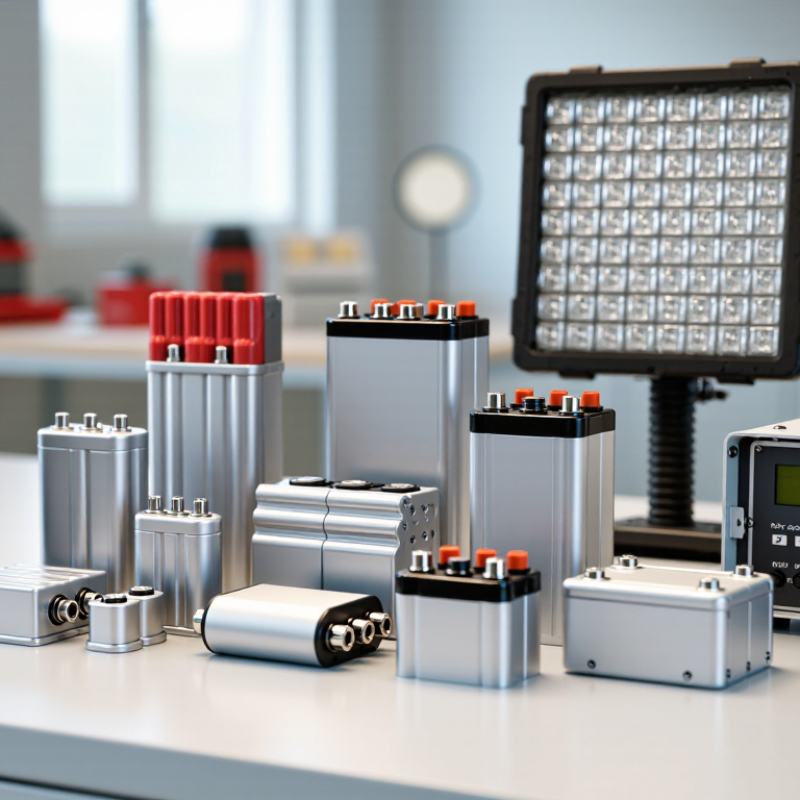
A nickel-metal hydride (NiMH) pack combines rechargeable cells to meet a device’s voltage and runtime needs. Each cell is nominally 1.2 volts, though its voltage changes during charging and use. Series connections raise voltage; parallel connections add capacity and current capability.
Simple idea.
The finished pack still needs to match the device’s operating limits.
Capacity, measured in amp-hours or milliamp-hours, estimates stored charge but cannot guarantee a fixed runtime. High motor loads, cold conditions, and aging cells can all shorten use.
Heat changes things.
When specifying a pack, note normal and peak current, desired runtime, available space, connector type, and operating temperature.
A few millimeters can matter inside a tight enclosure.
Check the charging method, too. NiMH packs need compatible charging control and sensible temperature limits; a charger made for another chemistry may be unsuitable.
Cell matching and assembly quality affect consistency, especially in larger packs. Ask how capacity, discharge performance, insulation, wiring, and temperature sensing are checked.
Small details matter.
NiMH cells self-discharge during storage, and repeated deep discharge can stress a pack. The “memory effect” is often overstated; actual usage and charging conditions are more useful to assess. It is worth verifying the real duty cycle before choosing capacity, since a paper estimate may miss brief current peaks.
Start with the device, not a catalog number. Record its normal current draw, startup surge, daily run time, and lowest acceptable voltage. NiMH cells have a nominal voltage of about 1.2 volts each; the number of cells in series determines pack voltage. Check the device’s voltage limits under load, since voltage can sag during a motor start or another brief demand. A “12-volt” label alone is not enough. Capacity, measured in amp-hours, estimates stored charge but cannot guarantee a specific runtime. Estimate energy use from the real load profile, then allow margin for cold conditions, aging, and conversion losses. Test it.
Operating requirements shape the pack as much as capacity does. Note peak and continuous current, charging method, ambient temperature, available space, connector type, and vibration exposure. A pack may fit the enclosure yet run hot during repeated high-current cycles. Confirm that the charger suits the selected NiMH cell arrangement, and consider temperature monitoring or protection for the application. Specify a low-voltage cutoff that matches the equipment and cell guidance. Test a prototype under the actual load, including startup and the longest duty cycle. Bench results can be imperfect; that is useful. They may reveal a forgotten surge or an overly optimistic runtime estimate before the pack is finalized.
Comparing nominal voltage and stored energy helps define the required capacity, voltage, and operating requirements.
Nickel-metal hydride cells typically provide a nominal voltage of about 1.2 V per cell. Pack voltage is determined by the number of cells connected in series, while stored energy is estimated as voltage multiplied by capacity. Select the configuration that matches the equipment's voltage range, runtime target, discharge current, charging method, temperature conditions, and available space.
For a custom nickel metal hydride pack, start with the device’s voltage, runtime, and peak-current needs. Each cell provides about 1.2 volts nominally, so cells connected in series set the pack voltage. Parallel groups increase capacity and can support higher current. More cells are not automatically better. Extra size and weight may create problems inside a tight enclosure.
Match cells within each parallel group for capacity, age, and condition. Uneven cells can charge and discharge differently, reducing pack performance. Check the real load, not just the device’s average current. A motor may draw a sharp surge when it starts. Measure twice. Leave room for insulation, wiring, and a temperature sensor near the cells, especially where airflow is limited.
Pack design includes more than cell count. Choose a layout that keeps connections short and secure, then consider vibration, heat, and how the pack will be replaced. Charging requirements matter too: NiMH charging control should suit the cell count and use temperature or voltage behavior to help avoid overcharging. A tidy CAD drawing can still overlook a pinched wire or awkward service access. I would test a prototype under the device’s actual duty cycle, then revisit the layout if it runs warmer than expected.
A custom nickel-metal hydride battery pack must fit the equipment electrically and physically. Confirm the required voltage, capacity, peak current, connector polarity, and available space. A pack with the right dimensions can still fail if its charger uses an incompatible charging method. Check the cell count and charger specifications together. Include suitable temperature monitoring and protection against excessive heat. Small details matter.
Tips: Record the device’s normal and peak current, then verify both against the pack specification. Check connector polarity with a meter before installation. Test under load.
Environmental conditions affect performance and service life. Cold temperatures can reduce available capacity, while prolonged heat can accelerate aging. A sealed enclosure may trap heat around the cells, especially during repeated high-current use. Consider humidity, vibration, and the airflow available inside the device. Test the assembled pack in conditions close to actual use, and monitor its temperature during charging and operation. A tidy CAD fit is useful, but it does not prove the pack will stay cool. I would revisit that assumption after a real load test.
How to Choose Custom Nickel Metal Hydride Battery Packs
Assessing Manufacturers, Quality Standards, and Testing Needs
A reliable manufacturer should document cell origin, production controls, and pack-level inspection. Request sample capacity records, weld checks, and traceability from cells to finished packs. The IEA’s Global EV Outlook 2024 reports that electric-car battery demand exceeded 750 GWh in 2023, up about 40% from 2022. That figure is not specific to nickel-metal hydride, but it highlights why clear sourcing and repeatable quality checks matter. Numbers alone are not enough.
Ask which standards apply to the cells and the complete pack. IEC 61951-2 covers portable sealed nickel-metal hydride cells and batteries; pack integration still needs separate validation for the intended device. Request test results for capacity, cycle life, temperature performance, vibration, and protection behavior. Confirm the test conditions match real use, such as a warm enclosure or repeated short charging cycles. A spreadsheet can look reassuring; test setup details are easy to overlook.
Tips: Test the finished pack, not only individual cells. Ask for sample reports with dates, methods, and pass criteria. Compare results across production batches, and revisit the specification when your device changes.
| Assessment Area | What to Check | Useful Evidence | Relevant Standard or Test | Decision Guidance |
|---|---|---|---|---|
| Application requirements | Operating voltage, capacity, peak and continuous current, duty cycle, temperature range, dimensions, connector, and expected service life. | Written product specification, load profile, installation drawings, and defined operating and storage conditions. | Application-specific requirements; agree on test conditions before design approval. | Compare proposals against the same requirements. Avoid selecting by nominal capacity alone. |
| Cell selection and matching | Cell format, rated capacity, internal resistance, production traceability, and matching within each series or parallel group. | Cell specifications, incoming inspection records, lot identification, and pack-level configuration drawing. | Capacity and resistance measurements using documented methods and agreed conditions. | Confirm that cell limits and matching criteria are documented; request traceability from pack to cell lot. |
| Manufacturer capability | Experience with NiMH pack assembly, process controls, change management, corrective action, and production capacity. | Process flow, inspection plan, sample test reports, equipment calibration records, and quality-system audit evidence. | ISO 9001 certification may indicate a quality management system; it does not certify the battery pack itself. | Check certificate scope and validity, and assess whether the actual production site and processes are covered. |
| Safety and standards | Intended use, enclosure, insulation, wiring, protection devices, foreseeable misuse, and applicable market requirements. | Risk assessment, safety test reports, construction details, and a documented standards applicability review. | IEC 62133-1 addresses safety requirements for portable sealed secondary cells and batteries containing alkaline or other non-acid electrolytes, including nickel systems. Confirm the applicable edition and product scope. | Do not assume a cell-level report covers the finished custom pack or its end-use equipment. |
| Capacity and discharge performance | Delivered capacity, voltage under load, discharge duration, and performance at the application's specified temperature and current. | Representative pack test results with charge method, rest period, discharge rate, temperature, and cutoff voltage recorded. | IEC 61951-2 covers portable sealed secondary cells and batteries containing alkaline or other non-acid electrolytes—nickel-metal hydride. Verify applicability to the pack and intended use. | Set acceptance limits using the agreed test method and the actual load profile; capacity results are condition-dependent. |
| Charge and thermal behavior | Compatibility with the charger, charge termination method, temperature sensing, charge duration, and behavior under expected ambient conditions. | Charge profile, charger specification, temperature-rise records, and results from representative pack testing. | Application-specific charge-cycle and temperature tests; assess the complete cell, pack, and charger combination. | Confirm that charge controls are appropriate for the selected NiMH cells and that limits are defined for the intended environment. |
| Mechanical and environmental durability | Vibration, shock, drop, connector retention, enclosure integrity, and exposure to humidity or dust where relevant. | Test plan reflecting the installed product, inspection criteria, and before-and-after electrical checks. | Application-specific mechanical and environmental tests; use relevant equipment or industry requirements where applicable. | Define severities and pass/fail criteria from the real use environment rather than applying arbitrary test levels. |
| Production verification | Polarity, voltage, wiring, weld or connection integrity, labeling, appearance, and sampling or end-of-line checks. | Approved control plan, inspection records, serial or lot coding, and nonconformance handling procedure. | Documented incoming, in-process, and final inspection procedures. | Require measurable acceptance criteria and a process for notifying customers about design or material changes. |
| Regulatory and material compliance | Target sales regions, restricted substances, labeling, end-of-life obligations, and transport classification. | Material declarations, compliance statements, labels, and transport documentation appropriate to the destination and shipment. | Check applicable regional rules, including RoHS where relevant. Do not treat UN 38.3 as a NiMH battery test; it applies to lithium batteries. | Confirm obligations with a qualified compliance or transport specialist for the specific product, market, and shipping route. |
| Lifecycle and support | Cycle-life conditions, storage guidance, warranty terms, replacement availability, and end-of-life handling. | Cycle-life test protocol, warranty policy, product change notices, and recycling or disposal guidance for the sales region. | Application-specific cycle-life testing with defined charge, discharge, temperature, and end-of-life criteria. | Compare lifecycle claims only when the test conditions and failure criteria are comparable. |
Note: Standards, certification, and regulatory requirements depend on the finished pack, its intended use, and the markets where it will be sold. Confirm current editions and applicability with an accredited testing laboratory or qualified compliance specialist.
Each cell provides about 1.2 volts nominally. Series connections raise voltage; parallel groups increase capacity and current capability. Simple idea.
Capacity offers an estimate, not a guaranteed runtime. Motor surges, cold conditions, and aging cells can shorten use. Check the real duty cycle.
Share voltage, normal and peak current, target runtime, available space, connector type, and operating temperature. A few millimeters can matter.
Motors may draw a sharp surge at startup. Measure the actual load, then confirm the pack can support it. Measure twice.
Cells in each parallel group should have similar capacity, age, and condition. Uneven cells may charge or discharge differently. Small details matter.
No. The charging control must suit the cell count and chemistry. Check temperature limits, especially in a warm enclosure. Don’t assume.
Request capacity records, weld checks, and traceability from cells to finished packs. Ask for dated test reports, methods, and pass criteria.
Not necessarily. Extra cells can add weight and exceed tight enclosure limits. I would test a prototype under real use, then reconsider the layout if it runs warm.
Choosing Custom Nickel Metal Hydride Battery Packs starts with understanding how the pack will be used. Define the required capacity, voltage, discharge rate, runtime, and charging conditions, along with the space and weight available. These requirements help determine the number and arrangement of cells and guide decisions about wiring, connectors, enclosure design, and other pack features.
Next, consider safety, compatibility, and the conditions in which the battery will operate, including temperature, vibration, and moisture exposure. Check that the design suits the device’s electrical and mechanical interfaces, and identify any protection or monitoring needs. When comparing manufacturers, review their quality controls, relevant standards, and testing procedures for capacity, performance, and durability. A clear specification and careful evaluation help ensure the finished pack meets practical operating needs and can be integrated reliably.